

Introduction:
South Africa’s construction and real estate industry continues to experience remarkable growth, driven by increasing urban development, residential expansion, commercial investments, and infrastructure modernization. Whether it is luxury homes in Cape Town, modern apartments in Johannesburg, hospitality projects in Durban, or commercial developments in Pretoria, property owners are seeking building materials that combine aesthetics, durability, and long-term value.
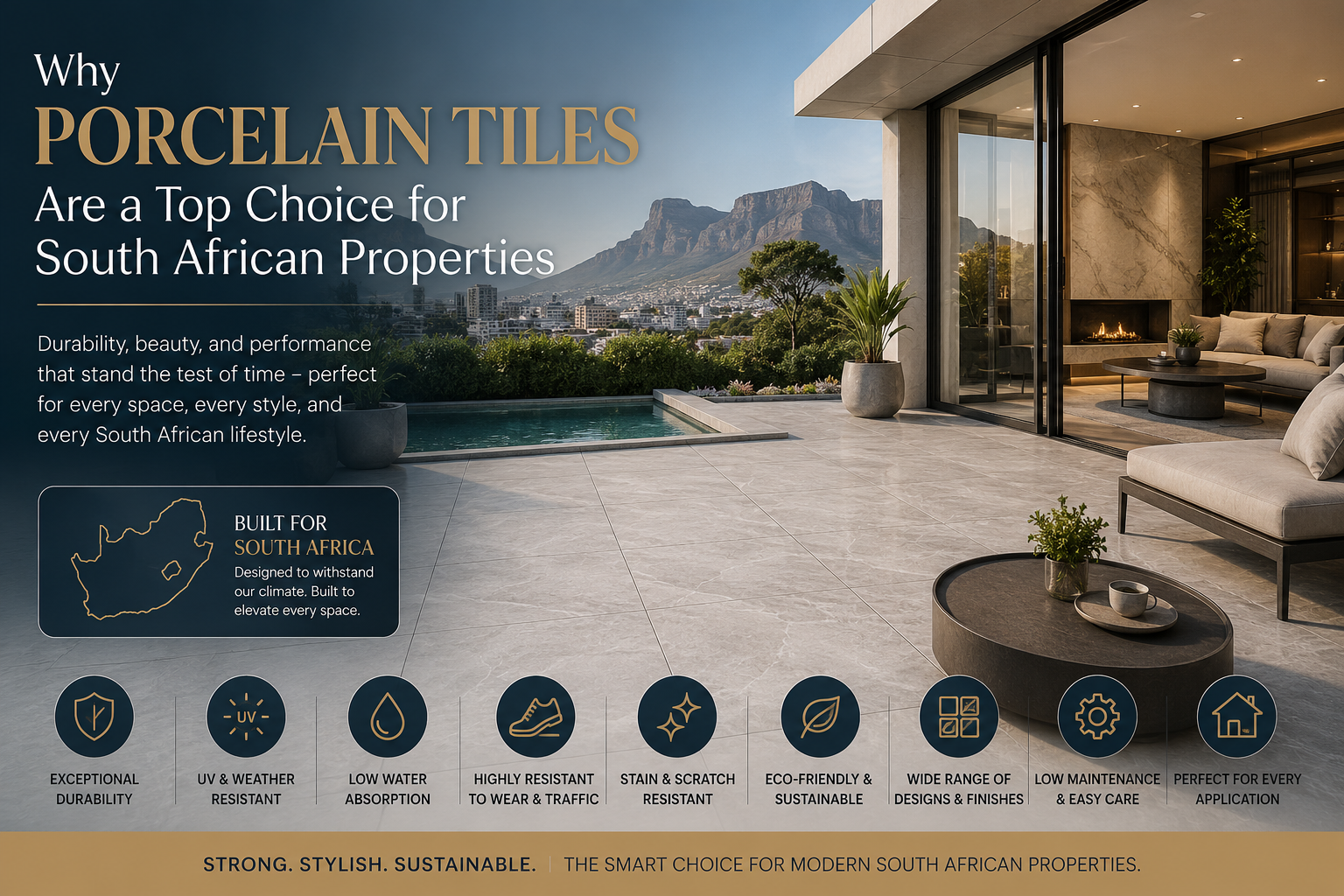
Among the many flooring and wall solutions available today, porcelain tiles have established themselves as one of the most reliable and versatile choices for South African properties. Manufactured under extremely high temperatures and pressure, porcelain tiles offer exceptional strength, low water absorption, superior resistance to wear, and an impressive variety of modern designs. These qualities make them ideal for South Africa’s diverse environmental conditions, which range from hot and dry inland regions to humid coastal areas and heavy rainfall zones.
In addition to their outstanding performance, porcelain tiles provide architects, interior designers, builders, and homeowners with endless creative possibilities. Available in marble-inspired finishes, natural stone textures, timber-look surfaces, concrete effects, and contemporary large-format designs, porcelain tiles effortlessly complement both traditional and modern architectural styles.
As sustainability and energy efficiency become increasingly important in construction, porcelain tiles also contribute to environmentally responsible building practices due to their long lifespan, minimal maintenance requirements, and recyclable composition. Their ability to retain beauty while withstanding heavy daily use makes them a practical investment for residential, commercial, and public infrastructure projects alike.
This article explores the key reasons why porcelain tiles continue to be a top choice for South African properties and how they deliver outstanding performance, style, and value across a wide range of applications.
1. South Africa’s Growing Demand for Premium Porcelain Tiles:
South Africa’s property sector has witnessed significant transformation over the past decade. Rapid urbanization, increasing residential developments, commercial expansion, tourism infrastructure, and public construction projects have created a growing demand for high-quality construction materials. Among these materials, premium porcelain tiles have become one of the most preferred choices due to their combination of durability, elegance, and long-term performance.
Several factors contribute to this rising demand. Modern homeowners seek flooring that enhances property value while requiring minimal maintenance. Commercial developers prioritize materials capable of handling heavy daily traffic without losing their visual appeal. Hospitality businesses require luxurious surfaces that create memorable guest experiences while remaining practical and easy to maintain.
Porcelain tiles satisfy all of these requirements. Their dense composition makes them highly resistant to scratches, stains, moisture, and impact, ensuring reliable performance in demanding environments. Furthermore, continuous advancements in manufacturing technology have introduced highly realistic stone, marble, timber, and concrete-inspired finishes that replicate natural materials without their associated maintenance challenges.
Architects and interior designers also appreciate the flexibility porcelain tiles offer. Large-format slabs, seamless layouts, decorative feature walls, and sophisticated flooring patterns enable creative freedom while maintaining structural durability. This versatility makes porcelain tiles suitable for both contemporary urban developments and classic residential architecture.
As South Africa continues investing in housing, commercial centers, healthcare facilities, educational institutions, hotels, and public infrastructure, the demand for premium porcelain tiles is expected to increase steadily. Their ability to combine functionality with luxurious aesthetics positions them as an essential component of modern construction projects.
2. Exceptional Durability for South Africa’s Diverse Climate:
South Africa experiences a wide range of climatic conditions, including intense sunlight, high summer temperatures, seasonal rainfall, coastal humidity, and cooler mountain regions. Building materials must therefore withstand significant environmental stress while maintaining their structural integrity and appearance over many years. Porcelain tiles excel in these demanding conditions because of their exceptional durability and weather resistance.
Unlike many traditional flooring materials, porcelain tiles are manufactured through high-pressure compaction and fired at extremely high temperatures. This process creates a dense, non-porous structure that resists cracking, fading, warping, and surface deterioration even when exposed to harsh weather conditions.
In regions with intense UV exposure, porcelain tiles maintain their original colours without fading. This is particularly important for outdoor patios, balconies, terraces, and building facades where continuous sunlight can damage fewer durable materials. Similarly, in areas receiving heavy rainfall or coastal moisture, porcelain tiles resist water penetration and minimize the risk of swelling, mould growth, or structural damage.
Their excellent resistance to abrasion and heavy usage also makes porcelain tiles suitable for busy households with children and pets, as well as commercial environments experiencing constant pedestrian traffic. Furniture movement, daily cleaning, and frequent use rarely affect their appearance.
This remarkable durability significantly reduces replacement frequency, lowers maintenance expenses, and ensures that South African property owners enjoy attractive flooring and wall surfaces for decades, making porcelain tiles one of the most dependable investments in modern construction.
3. Water Resistance for Indoor and Outdoor Applications:
One of the defining characteristics of porcelain tiles is their exceptionally low water absorption rate. This unique feature makes them one of the most reliable flooring and wall materials for both indoor and outdoor environments across South Africa’s diverse climate conditions.
Unlike porous materials that readily absorb moisture, porcelain tiles resist water penetration due to their dense manufacturing process. This minimizes the likelihood of stains, mould growth, mildew, and moisture-related damage, making them especially suitable for wet environments where hygiene and durability are essential.
In residential settings, porcelain tiles perform exceptionally well in kitchens, bathrooms, laundry rooms, balconies, patios, swimming pool surroundings, and outdoor entertainment areas. Homeowners appreciate the confidence of installing surfaces that maintain their beauty despite regular exposure to water, humidity, and cleaning chemicals.
Commercial properties also benefit significantly from this moisture resistance. Hotels, restaurants, hospitals, shopping centers, wellness facilities, and office buildings require flooring materials capable of handling continuous cleaning and occasional spills without deterioration. Porcelain tiles provide both hygiene and long-lasting performance under these demanding conditions.
Outdoor installations further highlight their versatility. Rainfall, changing temperatures, and environmental exposure have minimal impact on properly installed porcelain tiles. Their resistance to moisture also helps reduce issues associated with cracking or surface degradation over time.
By combining water resistance with attractive finishes and exceptional strength, porcelain tiles provide South African property owners with a dependable solution suitable for virtually every indoor and outdoor application.
4. Modern Designs That Complement South African Architecture:
Today’s porcelain tiles offer far more than outstanding durability, they provide limitless design possibilities that enhance virtually every architectural style found throughout South Africa. Advances in digital printing technology have transformed porcelain tile manufacturing, allowing manufacturers to reproduce natural materials with extraordinary realism while maintaining superior performance.
Modern South African homes frequently embrace open-plan layouts, contemporary finishes, and seamless indoor-outdoor living spaces. Large-format porcelain tiles create spacious visual effects with fewer grout lines, making interiors appear cleaner, brighter, and more sophisticated. Neutral colour palettes, subtle textures, and minimalist finishes further contribute to elegant modern living environments.
For homeowners seeking timeless luxury, marble-look porcelain tiles provide the elegance of natural stone without the maintenance challenges associated with genuine marble. Wood-look porcelain tiles bring the warmth of timber into moisture-prone spaces such as kitchens and bathrooms while eliminating concerns related to swelling, termites, or refinishing. Stone-look and concrete-inspired porcelain tiles are equally popular for contemporary commercial developments and industrial-style interiors.
Architects also use porcelain tiles for decorative feature walls, exterior cladding, staircases, reception areas, and landscape elements to create visually cohesive designs across entire properties.
With an extensive selection of colours, finishes, textures, sizes, and patterns, porcelain tiles empower designers and property owners to create personalized environments that perfectly reflect South Africa’s evolving architectural identity.
5. Low Maintenance and Easy Cleaning Benefits:
One of the primary reason’s porcelain tiles remain a preferred flooring solution across South Africa is their remarkably low maintenance. In today’s fast-paced lifestyles, homeowners and commercial property managers increasingly seek building materials that retain their appearance without requiring extensive upkeep. Porcelain tiles meet these expectations exceptionally well.
Their dense, non-porous surface naturally resists stains, dirt, moisture, grease, and common household spills. Everyday cleaning typically requires only sweeping and occasional mopping with mild cleaning solutions. Unlike natural stone, porcelain tiles do not require regular sealing, polishing, waxing, or specialized maintenance products, reducing both maintenance time and long-term ownership costs.
For busy households, this ease of cleaning provides significant advantages. Families with children and pets appreciate surfaces that resist scratches, food spills, muddy footprints, and accidental stains while maintaining their original appearance. Commercial facilities—including offices, hotels, healthcare centers, retail stores, and educational institutions—also benefit from flooring that withstands continuous cleaning without surface deterioration.
Additionally, porcelain tiles resist bacterial growth and allergen accumulation more effectively than some alternative flooring materials, contributing to cleaner and healthier indoor environments. Their colour stability ensures that even after years of regular maintenance, the tiles continue to look attractive and professionally finished.
By combining durability with effortless maintenance, porcelain tiles offer South African property owners a practical flooring solution that saves time, reduces maintenance expenses, and preserves aesthetic appeal for decades.
6. High Strength for Residential and Commercial Spaces:
Porcelain tiles are renowned for their exceptional strength, making them one of the most dependable flooring and wall solutions for both residential and commercial properties across South Africa. Manufactured under extremely high pressure and fired at temperatures exceeding 1,200°C, porcelain tiles develop a dense and durable structure capable of withstanding substantial loads and continuous daily use.
For homeowners, this strength translates into flooring that remains beautiful even in high-traffic areas such as living rooms, hallways, kitchens, and entrances. Heavy furniture, frequent foot traffic, children’s activities, and pet movement have minimal impact on the surface, ensuring that the tiles maintain their original appearance for many years.
Commercial environments place even greater demands on flooring materials. Shopping malls, office complexes, hotels, restaurants, airports, educational institutions, healthcare facilities, and retail outlets experience constant pedestrian traffic, equipment movement, and daily wear. Porcelain tiles are specifically designed to perform under these challenging conditions without cracking, chipping, or showing excessive signs of wear.
The availability of high PEI-rated porcelain tiles further enhances their suitability for demanding applications. These tiles provide superior resistance to abrasion, scratches, and impact, making them ideal for both indoor and outdoor commercial spaces.
By investing in high-strength porcelain tiles, South African property owners benefit from reduced maintenance costs, fewer replacements, and long-lasting performance, making porcelain an economical and reliable solution for projects of every scale.
7. Energy Efficiency and Comfortable Living Environments:
As sustainability and energy conservation become increasingly important in South Africa’s construction industry, porcelain tiles are gaining recognition for their contribution to energy-efficient buildings and comfortable indoor environments. While often appreciated for their visual appeal and durability, porcelain tiles also offer practical thermal properties that improve overall building performance.
Porcelain naturally possesses excellent thermal mass, meaning it can absorb, store, and gradually release heat. During warmer days, porcelain tile surfaces remain relatively cool underfoot, helping maintain comfortable indoor temperatures without relying heavily on-air conditioning systems. This characteristic is particularly beneficial in many South African regions where high summer temperatures are common.
During cooler evenings or winter months, porcelain tiles work efficiently with underfloor heating systems by distributing heat evenly throughout the space. This creates a comfortable living environment while reducing unnecessary energy consumption compared to conventional heating methods.
Large-format porcelain tiles also contribute to brighter interiors by reflecting natural light more effectively than darker or textured flooring materials. Improved light reflection reduces dependence on artificial lighting during daytime hours, contributing to lower electricity usage.
For commercial buildings pursuing green building certifications or sustainable design standards, porcelain tiles support environmentally responsible construction through their longevity, low maintenance requirements, and energy-efficient performance.
By combining thermal comfort, natural cooling properties, compatibility with modern heating systems, and enhanced indoor brightness, porcelain tiles help South African homeowners and developers create energy-efficient properties that remain comfortable throughout the year.
8. Sustainable and Eco-Friendly Flooring Solution:
Environmental responsibility has become a major consideration in modern construction, and porcelain tiles have emerged as a sustainable flooring solution that aligns with green building practices. As South Africa continues promoting environmentally conscious development, architects, builders, and homeowners increasingly choose materials that offer long-term performance while minimizing environmental impact.
Porcelain tiles are manufactured primarily from natural raw materials such as refined clay, feldspar, silica, and other naturally occurring minerals. Many manufacturers have also adopted environmentally responsible production processes that reduce water consumption, recycle manufacturing waste, and improve overall energy efficiency during production.
One of porcelain tile’s greatest environmental advantages is its exceptionally long lifespan. Unlike flooring materials that require frequent replacement due to wear, fading, or moisture damage, porcelain tiles can maintain their appearance and structural integrity for several decades. This extended durability significantly reduces waste generation and lowers the demand for replacement materials over time.
Additionally, porcelain tiles do not release harmful volatile organic compounds (VOCs), helping maintain healthier indoor air quality. Their non-porous surface also discourages mould, mildew, and bacterial growth, creating cleaner indoor environments for families, employees, and visitors.
Many porcelain products can also be recycled at the end of their service life, supporting circular construction practices and reducing landfill waste.
Choosing porcelain tiles allows South African property owners to invest in a flooring solution that combines environmental sustainability, exceptional durability, and timeless aesthetic appeal while contributing to responsible building practices.
9. Slip-Resistant Options for Enhanced Safety:
Safety remains one of the most important considerations when selecting flooring materials, particularly for environments exposed to water, heavy foot traffic, or changing weather conditions. Modern porcelain tiles address these concerns by offering a wide range of textured and slip-resistant finishes that improve safety without compromising visual appeal.
South Africa’s diverse climate includes rainy seasons, coastal humidity, swimming pool areas, and outdoor entertainment spaces where slippery surfaces can pose significant risks. Slip-resistant porcelain tiles are specifically engineered with textured surfaces that improve grip and reduce the likelihood of accidental slips and falls.
These safety-focused tiles are widely used in residential bathrooms, kitchens, laundry rooms, patios, balconies, gardens, pool surrounds, driveways, and entrance areas where moisture is commonly present. Homeowners benefit from greater peace of mind, particularly in households with children, elderly family members, or individuals with limited mobility.
Commercial applications are equally important. Hotels, shopping centres, restaurants, hospitals, schools, office buildings, and public infrastructure projects require flooring that complies with safety standards while maintaining an attractive appearance. Anti-slip porcelain tiles provide excellent traction even under challenging conditions, supporting safer environments for employees, customers, and visitors.
Available in numerous colours, textures, sizes, and design styles, slip-resistant porcelain tiles ensure that property owners do not have to sacrifice aesthetics to achieve superior safety performance. This combination of beauty and functionality makes them an ideal flooring solution for modern South African properties.
10. Versatile Applications Across Different Property Types:
One of the defining strengths of porcelain tiles is their incredible versatility. Their durability, design flexibility, moisture resistance, and low maintenance requirements make them suitable for virtually every type of property found throughout South Africa, from luxury residences to large-scale commercial developments.
In residential construction, porcelain tiles are commonly installed in living rooms, bedrooms, kitchens, bathrooms, dining areas, balconies, staircases, patios, garages, and outdoor entertainment spaces. Their wide variety of colours, textures, and finishes allows homeowners to create cohesive interior and exterior designs while enjoying exceptional durability.
Apartment developments also benefit from porcelain tiles due to their easy maintenance, sound performance, and modern visual appeal. Property developers appreciate their ability to enhance project value while reducing long-term maintenance expenses.
Commercial spaces rely heavily on porcelain tiles because of their ability to withstand continuous foot traffic and demanding operational conditions. Offices, shopping malls, retail stores, restaurants, hotels, airports, educational institutions, hospitals, and healthcare facilities all require flooring materials that combine strength with professional aesthetics. Porcelain tiles consistently meet these requirements while maintaining their appearance over years of intensive use.
Hospitality projects often utilise marble-look porcelain tiles to create luxurious lobbies, guest rooms, and reception areas, while wood-look and concrete-look collections provide distinctive interior themes that appeal to modern travellers.
Whether the project involves residential construction, public infrastructure, healthcare, education, hospitality, or commercial development, porcelain tiles offer unmatched flexibility, performance, and long-term value. Their ability to adapt to different environments makes them one of the most versatile building materials available for South African construction projects.
11. Cost-Effective Long-Term Investment:
When selecting flooring materials for residential or commercial projects, the initial purchase price is only one part of the overall investment. Long-term performance, maintenance expenses, repair costs, and product lifespan all contribute to the true value of a flooring solution. Porcelain tiles consistently outperform many alternative materials by offering exceptional durability and minimal maintenance, making them a highly cost-effective investment for South African properties.
Although premium porcelain tiles may have a slightly higher upfront cost than some conventional flooring options, they provide outstanding value over time. Their dense composition resists scratches, stains, moisture, fading, and heavy wear, significantly reducing the need for repairs or replacements. This durability allows homeowners and business owners to avoid recurring renovation expenses that are often associated with lower-quality flooring materials.
Maintenance costs are also considerably lower. Unlike natural stone that requires periodic sealing or wooden flooring that may need refinishing, porcelain tiles require only routine sweeping and mopping to maintain their appearance. Their stain-resistant surface eliminates the need for specialized cleaning products, helping property owners save both time and money.
For commercial buildings such as hotels, retail stores, offices, healthcare facilities, and educational institutions, long-lasting flooring reduces operational disruptions and maintenance budgets. Residential homeowners similarly benefit from flooring that retains its elegance for decades without extensive upkeep.
By combining long service life, low maintenance, and superior durability, porcelain tiles deliver an excellent return on investment while enhancing the overall value and appeal of South African properties.
12. Technological Innovations in Modern Porcelain Tile Manufacturing:
The porcelain tile industry has experienced remarkable technological advancements over the past decade, resulting in products that combine outstanding performance with sophisticated design. These innovations have transformed porcelain tiles into one of the most advanced building materials available for modern South African construction projects.
One of the most significant developments is high-definition digital printing technology. This manufacturing process accurately replicates the intricate patterns and textures of natural marble, granite, wood, slate, and concrete, allowing property owners to enjoy luxurious aesthetics without the maintenance challenges of natural materials. Every tile is produced with exceptional detail, creating realistic and visually striking surfaces.
Large-format porcelain tiles have also become increasingly popular. Their expansive dimensions minimize grout lines, creating seamless and elegant interiors that make rooms appear larger and more refined. These tiles are widely used in luxury homes, commercial buildings, hotels, and corporate offices where contemporary design is a priority.
Modern manufacturing has also introduced antibacterial and hygienic porcelain tile surfaces that help inhibit bacterial growth. These innovative tiles are particularly valuable in hospitals, clinics, schools, kitchens, restaurants, and other environments where cleanliness is essential.
Advanced surface finishes, including matte, polished, satin, textured, and anti-slip options, further expand design possibilities while improving functionality. Some porcelain tiles also feature enhanced scratch resistance, stain protection, and UV stability for superior long-term performance.
These continuous technological innovations ensure that porcelain tiles remain at the forefront of architectural design, delivering beauty, durability, and functionality for South Africa’s evolving construction industry.
13. Choosing the Right Porcelain Tiles for South African Projects:
Selecting the ideal porcelain tile requires careful consideration of several important factors to ensure optimal performance, durability, and aesthetic appeal. Every construction project has unique functional requirements, making informed product selection essential for achieving long-lasting results.
The intended application should always be the first consideration. Indoor flooring, outdoor paving, wall cladding, bathrooms, kitchens, swimming pool surrounds, and commercial spaces each require porcelain tiles with specific technical characteristics. For example, outdoor areas generally benefit from textured, slip-resistant finishes, while polished surfaces are often preferred for elegant interior spaces.
Tile size also influences the final appearance. Large-format porcelain tiles create spacious, modern interiors with fewer grout joints, making them ideal for open-plan living areas and commercial buildings. Smaller tiles are well suited for decorative patterns, compact spaces, and intricate layouts.
Surface finish plays a significant role in both aesthetics and functionality. Matte finishes offer a contemporary appearance with improved slip resistance, polished tiles provide luxurious reflections, while textured surfaces enhance safety in wet environments.
Colour selection should complement the overall architectural design. Neutral shades such as white, beige, grey, and earthy tones remain popular because they create timeless interiors that adapt to changing design trends. Stone-look, marble-look, wood-look, and concrete-look collections further expand design flexibility.
Buyers should also evaluate tile thickness, PEI (Porcelain Enamel Institute) rating, abrasion resistance, water absorption, frost resistance where applicable, and manufacturer quality standards before making a purchase.
By carefully considering these factors, South African homeowners, architects, and developers can select porcelain tiles that provide outstanding visual appeal, superior performance, and long-term value for every project.
14. Future Trends Driving the South African Porcelain Tile Market:
South Africa’s construction industry continues to evolve, and porcelain tiles are expected to play an increasingly important role in future residential, commercial, and infrastructure developments. Emerging architectural trends, sustainability initiatives, and technological innovation are shaping the next generation of porcelain tile solutions.
Large-format porcelain slabs are becoming more popular as architects pursue seamless interiors and sophisticated minimalist aesthetics. These oversized tiles create elegant spaces with fewer grout joints while enhancing the perception of openness in both residential and commercial properties.
Sustainability will remain a key market driver. Developers increasingly seek environmentally responsible materials that support green building certifications and reduce long-term environmental impact. Porcelain tiles, with their durability, recyclability, and low maintenance requirements, align perfectly with these objectives.
Digital printing technology will continue advancing, producing even more realistic stone, timber, terrazzo, marble, and artistic finishes that provide limitless design possibilities. Manufacturers are also expanding collections featuring antibacterial surfaces, self-cleaning technologies, and enhanced stain-resistant coatings to meet growing demand for hygienic building materials.
Smart construction practices are further influencing tile selection. Prefabricated building systems, modular construction, and modern architectural techniques require durable, lightweight, and high-performance finishing materials that can be installed efficiently while delivering consistent quality.
As South Africa continues investing in housing developments, commercial complexes, hospitality projects, healthcare facilities, educational institutions, and public infrastructure, premium porcelain tiles will remain a preferred choice for architects, builders, designers, and property owners seeking a balance of beauty, innovation, sustainability, and exceptional performance.
Conclusion:
Porcelain tiles have become one of the most trusted and versatile building materials for South African properties, offering an ideal combination of durability, style, functionality, and long-term value. From modern residential homes and luxury apartments to commercial complexes, hospitality venues, healthcare facilities, educational institutions, and public infrastructure, porcelain tiles consistently deliver outstanding performance in a wide range of applications.
Their exceptional resistance to moisture, scratches, stains, heavy foot traffic, and changing weather conditions makes them perfectly suited to South Africa’s diverse climate and evolving architectural landscape. Combined with advanced manufacturing technologies, realistic natural-look finishes, energy-efficient properties, and environmentally responsible production practices, porcelain tiles provide a future-ready solution for contemporary construction.
Whether the goal is to create elegant interiors, durable outdoor spaces, or high-performance commercial environments, porcelain tiles offer unmatched flexibility and reliability. Their low maintenance requirements, impressive lifespan, and ability to retain their beauty for decades make them a smart investment for property owners looking to maximize both aesthetics and long-term returns.
As the South African construction industry continues to embrace innovation, sustainability, and premium design, porcelain tiles are set to remain a leading choice for projects that demand quality, sophistication, and lasting performance. Choosing high-quality porcelain tiles today is not just a design decision, it is an investment in the future of every property.