

Introduction
The global tile industry is experiencing a significant transformation as wooden plank tiles continue to gain momentum across international markets. Combining the aesthetic appeal of natural wood with the durability of porcelain and ceramic, these tiles have become a preferred choice for architects, designers, and homeowners alike. Countries like the USA, UK, and those in the Middle East are driving demand with distinct preferences shaped by lifestyle, climate, and design trends. For exporters, understanding these regional variations is crucial to staying competitive and capturing market share. This blog explores the key export trends, market insights, and opportunities in these regions while highlighting how manufacturers can align their strategies with evolving global demands.
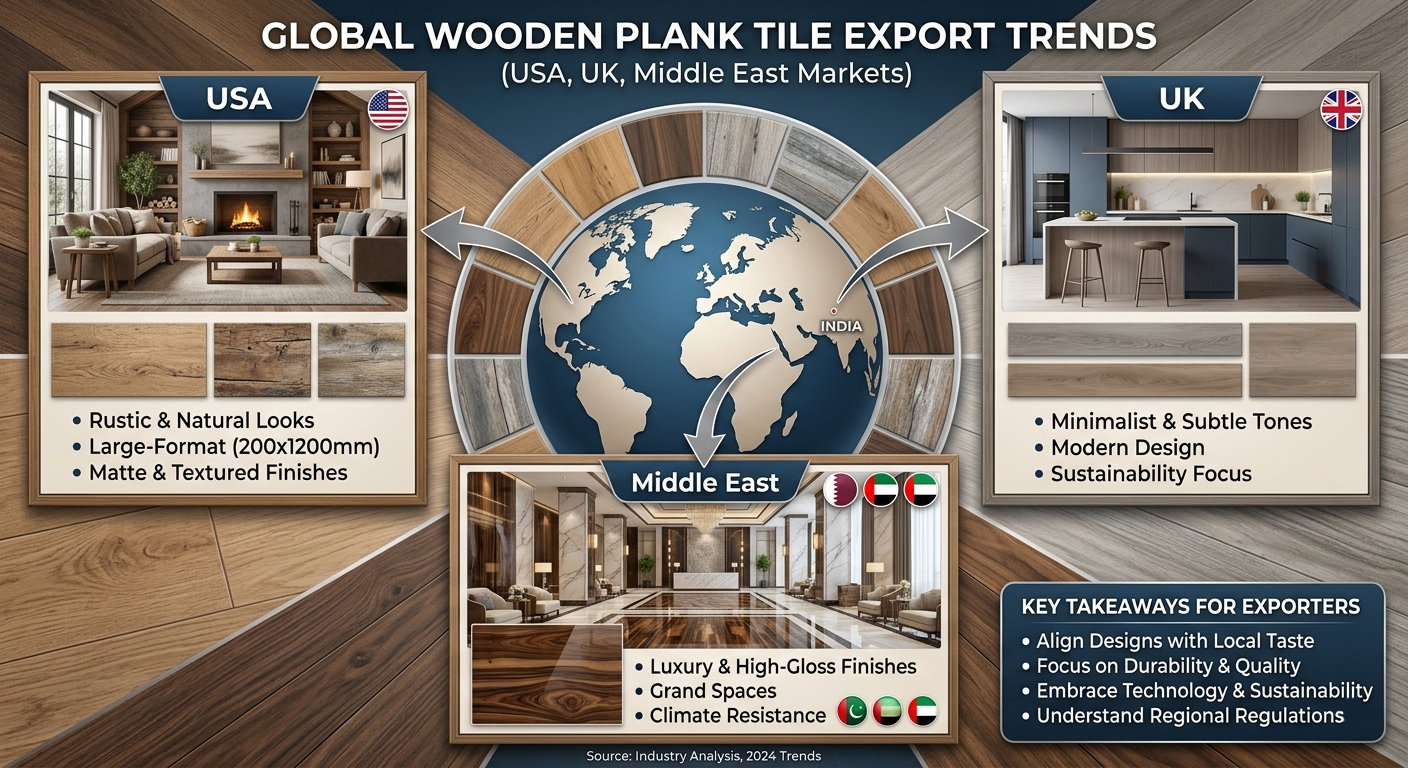
Table: Market Insights at a Glance
| Region | Key Preferences | Popular Sizes | Finish Trends | Key Drivers |
| USA | Rustic, natural wood looks | 200x1200mm, 150x900mm | Matte, textured | Renovation trends, durability |
| UK | Minimalist, subtle tones | 150x900mm | Matte, satin | Sustainability, modern design |
| Middle East | Luxury, glossy finishes | 200x1200mm+ | High-gloss, polished | Climate resistance, luxury |
1. Overview of Global Wooden Plank Tile Market:
The global wooden plank tile market has witnessed substantial growth over the past decade, driven by changing consumer preferences and technological advancements. These tiles offer the warmth and elegance of wood while eliminating common drawbacks such as termite damage, moisture sensitivity, and maintenance challenges. Increasing urbanization, along with a surge in residential and commercial construction projects, has further boosted demand.
Additionally, the versatility of wooden plank tiles allows them to be used in diverse settings, from living rooms to outdoor patios. Manufacturers are also focusing on replicating natural wood grains with remarkable precision, making it difficult to distinguish between real wood and tiles. As sustainability becomes a priority, consumers are shifting toward eco-friendly alternatives, positioning wooden plank tiles as a long-term solution in modern construction and design.
2. Why Wooden Plank Tiles Are Preferred Over Natural Wood:
Wooden plank tiles have emerged as a superior alternative to natural wood due to their unmatched practicality and performance. Unlike traditional wood flooring, these tiles are highly resistant to water, scratches, and stains, making them ideal for both residential and commercial spaces. Their durability ensures a longer lifespan, reducing replacement and maintenance costs over time.
Another significant advantage is ease of maintenance. Wooden tiles do not require polishing, sealing, or special cleaning agents, making them cost-effective and user-friendly. Additionally, they are suitable for high-moisture areas such as bathrooms and kitchens, where natural wood would typically fail.
From an economic perspective, wooden plank tiles offer a premium look at a fraction of the cost of hardwood flooring. With advanced manufacturing techniques, they can replicate various wood species, textures, and finishes, allowing customers to achieve their desired aesthetic without compromising on quality or budget.
3. Export Growth Trends in the USA Market:
The United States has become one of the largest importers of wooden plank tiles, driven by strong demand in both residential remodelling and commercial construction sectors. Homeowners increasingly prefer tile flooring due to its durability and low maintenance, especially in high-traffic areas. The trend of replacing carpets and traditional hardwood floors with tile alternatives has significantly boosted imports.
Large-format tiles such as 200x1200mm are particularly popular in the USA, as they create a seamless and spacious look. Additionally, there is a growing demand for tiles that mimic natural wood textures with high realism.
E-commerce platforms and large retail chains have also made it easier for international exporters to enter the US market. However, compliance with quality standards and certifications remains essential. Exporters who can offer consistent quality, competitive pricing, and innovative designs are well-positioned to capitalize on the expanding US market.
4. Popular Wooden Tile Designs in the USA:
Design trends in the USA strongly favour natural and rustic aesthetics that bring warmth and character to interiors. Wooden plank tiles with oak finishes, weathered textures, and distressed looks are particularly in demand. These designs complement both traditional and contemporary spaces, making them versatile choices for homeowners and designers.
Wide plank formats are also gaining popularity, as they enhance the visual appeal of larger spaces by reducing grout lines and creating a more continuous look. Light and neutral shades such as beige, grey, and soft brown are widely preferred, as they align with modern interior design trends.
Additionally, textured surfaces that replicate real wood grains are highly valued in the US market. Consumers seek authenticity, and manufacturers are responding by offering high-definition prints and advanced surface treatments. This focus on realism and design innovation continues to shape the demand for wooden plank tiles in the region.
5. UK Market Demand for Wooden Plank Tiles:
The UK market is characterized by a strong inclination toward minimalist and contemporary design. Consumers prefer wooden plank tiles that feature subtle textures, neutral tones, and understated elegance. Unlike the US, where rustic designs dominate, the UK leans toward clean and modern aesthetics.
Tiles with matte finishes and soft wood patterns are especially popular, as they create a calm and sophisticated ambiance. The demand is driven by both residential renovations and commercial projects, including offices and retail spaces.
Another key factor influencing the UK market is space optimization. Smaller living spaces encourage the use of tiles that create an illusion of openness, making lighter shades and uniform patterns more desirable. Exporters targeting the UK must focus on simplicity, consistency, and high-quality finishes to meet the expectations of this design-conscious market.
6. Sustainability and Eco-Friendly Demand in the UK:
Sustainability is a major driving force in the UK tile market. Consumers are increasingly aware of environmental issues and prefer products that align with eco-friendly practices. Wooden plank tiles made from sustainable materials and manufactured using energy-efficient processes are gaining popularity.
Certifications and compliance with environmental standards play a crucial role in influencing purchasing decisions. Buyers often look for products that meet green building requirements and contribute to sustainable construction practices.
Additionally, the longevity of wooden plank tiles makes them an environmentally responsible choice, as they reduce the need for frequent replacements. Manufacturers who emphasize eco-friendly production methods, recyclable materials, and low carbon footprints can gain a competitive edge in the UK market. Sustainability is no longer optional, it is a key factor in shaping future demand.
7. Middle East Market Trends and Preferences:
The Middle East market is known for its preference for luxury and premium aesthetics. Wooden plank tiles in this region often feature rich textures, deep colours, and high-gloss finishes that reflect opulence and sophistication.
Large-format tiles are particularly popular, as they enhance the grandeur of expansive spaces commonly found in residential villas and commercial properties. Additionally, there is a strong demand for tiles that can withstand high temperatures and heavy usage.
Design trends in the Middle East often blend traditional elements with modern styles, creating unique and visually striking interiors. Exporters targeting this region must focus on high-quality finishes, durability, and innovative designs that cater to the region’s preference for luxury and elegance.
8. Climate Impact on Tile Selection in Middle Eastern Countries:
The extreme climate conditions in the Middle East significantly influence tile selection. High temperatures and humidity levels require materials that can maintain their structural integrity and appearance over time. Wooden plank tiles made from porcelain are particularly suitable, as they are resistant to heat, moisture, and wear.
Anti-slip properties are also important, especially for outdoor and poolside applications. Tiles must provide safety without compromising on aesthetics. Additionally, lighter shades are often preferred for outdoor use, as they reflect heat and help maintain cooler surface temperatures.
Manufacturers must consider these climatic factors when designing products for the Middle East. Offering tiles with enhanced durability, thermal resistance, and specialized finishes can help exporters meet the unique requirements of this region.
9. Popular Tile Sizes and Formats Across Export Markets:
Tile size plays a crucial role in defining the overall look and functionality of a space. Across global markets, there is a clear preference for plank-style tiles that replicate the dimensions of natural wood flooring. Sizes such as 200x1200mm, 150x900mm, and 150x600mm are widely due to their versatility and aesthetic appeal.
Large-format tiles are particularly popular in the USA and Middle East, where they create a seamless and spacious appearance. In contrast, the UK market often favours medium-sized tiles that suit smaller spaces.
The choice of size also affects installation efficiency and cost. Larger tiles reduce grout lines, enhancing visual continuity, while smaller formats offer flexibility in design. Exporters must offer a diverse range of sizes to cater to different regional preferences and project requirements.
10. Surface Finishes Trending Globally:
Surface finishes are a key factor influencing the appeal and functionality of wooden plank tiles. Matte finishes are widely preferred for their natural look and anti-slip properties, making them suitable for residential and commercial spaces. Satin finishes offer a subtle sheen, striking a balance between elegance and practicality.
Textured and structured surfaces are gaining popularity due to their ability to replicate real wood grains with high accuracy. These finishes enhance the tactile experience and add depth to the design.
In contrast, high-gloss finishes are more popular in the Middle East, where they contribute to a luxurious and polished appearance. The choice of finish often depends on regional preferences, usage, and design trends. Manufacturers must offer a variety of finishes to meet diverse customer needs across global markets.
11. Technological Advancements in Wooden Plank Tile Manufacturing:
Advancements in manufacturing technology have revolutionized the production of wooden plank tiles. Digital printing techniques enable the creation of highly realistic wood patterns, capturing intricate details such as grains, knots, and textures.
High-definition printing and advanced glazing methods further enhance the visual appeal and durability of tiles. These technologies allow manufacturers to produce a wide range of designs with consistent quality.
Automation and precision engineering have also improved production efficiency, reducing costs and lead times. As technology continues to evolve, manufacturers can offer innovative products that meet the changing demands of global markets. Staying updated with the latest advancements is essential for maintaining competitiveness in the industry.
12. Key Export Challenges and Opportunities:
Exporting wooden plank tiles presents both challenges and opportunities for manufacturers. Logistics and transportation costs can be significant, especially when dealing with large volumes and international shipments. Additionally, compliance with different regulations and quality standards across countries can be complex.
Pricing competition is another challenge, as global markets are highly competitive. Exporters must balance cost efficiency with product quality to remain competitive.
However, these challenges also present opportunities for growth. Expanding into new markets, leveraging digital platforms, and offering customized solutions can help exporters gain a competitive edge. Building strong relationships with distributors and understanding local market dynamics are key to success in the global tile export industry.
13. Role of Indian Tile Manufacturers in Global Exports:
India has emerged as a major player in the global tile export market, thanks to its strong manufacturing capabilities and cost advantages. Indian manufacturers offer a wide range of high-quality wooden plank tiles at competitive prices, making them attractive to international buyers.
The country’s focus on innovation and technology has further strengthened its position in the global market. Many manufacturers are adopting advanced production techniques to meet international standards and customer expectations.
Additionally, India’s strategic location and well-developed export infrastructure make it easier to serve markets in the USA, UK, and Middle East. As demand for wooden plank tiles continues to grow, Indian manufacturers are well-positioned to expand their global footprint and contribute to the industry’s growth.
14. Future Trends in Wooden Plank Tile Exports:
The future of wooden plank tile exports looks promising, with several trends shaping the industry. Sustainability will continue to play a key role, with increasing demand for eco-friendly products and manufacturing processes.
Design innovation will also drive growth, with manufacturers exploring new textures, patterns, and finishes. The integration of smart technologies and digital tools will further enhance production efficiency and product quality.
Additionally, the growing popularity of large-format tiles and realistic wood-look designs will influence market trends. Exporters who can adapt to these changes and anticipate customer needs will be better positioned to succeed in the evolving global market.
15. Tips for Exporters Targeting USA, UK & Middle East Markets:
Exporters looking to succeed in international markets must adopt a strategic approach. Understanding regional preferences and customizing products accordingly is essential. For example, offering rustic designs for the USA, minimalist styles for the UK, and luxury finishes for the Middle East can help meet market demands.
Compliance with quality standards and certifications is also crucial for building trust and credibility. Proper packaging and efficient logistics can reduce damage and ensure timely delivery.
Additionally, leveraging digital marketing and online platforms can help exporters reach a wider audience and generate leads. Building strong relationships with distributors and maintaining consistent quality are key to long-term success. By aligning their strategies with market trends, exporters can maximize their growth potential in global markets.
Conclusion:
The global demand for wooden plank tiles is on a steady rise, driven by their aesthetic appeal, durability, and versatility. Markets like the USA, UK, and Middle East each present unique opportunities and challenges, shaped by their distinct preferences and environmental conditions. For exporters, success lies in understanding these regional dynamics and adapting product offerings accordingly.
With advancements in technology, growing emphasis on sustainability, and increasing demand for innovative designs, the future of wooden plank tile exports looks highly promising. By focusing on quality, customization, and strategic market positioning, manufacturers can strengthen their presence in international markets and achieve long-term growth.