

Introduction:
Tiles are one of the most important elements in modern interior and exterior design. Whether used in bathrooms, kitchens, living rooms, commercial spaces, or outdoor areas, tiles must offer durability, beauty, and long-lasting performance. One of the most critical factors that determine tile quality is water absorption. Understanding tile water absorption helps homeowners, architects, and designers choose the right tiles for every environment.
Water absorption directly affects a tile’s strength, moisture resistance, hygiene, maintenance, and lifespan. Tiles with lower water absorption rates generally perform better in wet and humid areas, making them ideal for bathrooms, kitchens, swimming pools, and outdoor spaces. Premium tile manufacturers focus heavily on advanced low-absorption technology to improve durability and performance.
In this detailed guide, we will explore everything about tile water absorption, including tile types, testing methods, moisture resistance, durability, installation tips, maintenance practices, and how to select the perfect tiles for residential and commercial projects.
1. Introduction to Tile Water Absorption:
Tile water absorption refers to the amount of water a tile can absorb compared to its total weight. This characteristic plays a major role in determining where a tile should be installed and how well it will perform over time. Water absorption is especially important in moisture-prone spaces such as bathrooms, kitchens, balconies, swimming pools, and outdoor areas exposed to rain and humidity.
Tiles with low water absorption rates are denser, stronger, and more resistant to stains, cracks, and mould growth. Porcelain tiles are widely preferred because they absorb very little water, making them ideal for both residential and commercial spaces. On the other hand, tiles with high absorption rates may weaken over time when continuously exposed to moisture.
Understanding water absorption helps homeowners and designers select tiles that provide long-term durability, better hygiene, easier maintenance, and superior aesthetic performance. Choosing the right tile based on absorption levels ensures a safe, attractive, and long-lasting interior or exterior environment.
2. What Does Water Absorption Mean in Tiles?
Water absorption in tiles refers to the percentage of water a tile can absorb after being submerged in water for a specified period. This percentage indicates the density and porosity of the tile material. The lower the absorption rate, the less porous and more durable the tile becomes.
Tiles absorb water through microscopic pores present in their body structure. Dense tiles such as porcelain have very few pores, which makes them highly moisture-resistant. Ceramic tiles usually have slightly higher absorption rates because they are less compact compared to porcelain tiles.
Water absorption affects many aspects of tile performance, including durability, stain resistance, freeze resistance, maintenance, and hygiene. Tiles with high water absorption may crack, discolour, or develop mould in wet conditions. Therefore, manufacturers classify tiles according to their absorption percentages to help consumers choose the right products for different environments.
Understanding this technical factor is essential when selecting tiles for bathrooms, kitchens, outdoor patios, commercial areas, and high-moisture locations where long-term performance is required.
3. Why Water Absorption Matters in Tile Selection:
Water absorption is one of the most important considerations when selecting tiles because it directly impacts durability, safety, and maintenance. Different areas of a home or commercial project require tiles with varying levels of moisture resistance. For example, bathrooms and kitchens require tiles with low absorption rates to prevent water damage and staining.
Tiles with higher water absorption may weaken over time, especially in humid climates or areas exposed to constant moisture. Water can penetrate the tile body, leading to cracks, mould growth, and discoloration. Low-absorption tiles, especially porcelain tiles, offer excellent strength and moisture resistance, making them ideal for long-term use.
Choosing tiles based on water absorption also improves hygiene and cleanliness. Moisture-resistant tiles are easier to clean and help prevent bacteria and fungus build-up. In outdoor applications, low water absorption prevents damage caused by rain, temperature changes, and freeze-thaw cycles.
Proper tile selection ensures better performance, reduced maintenance costs, enhanced aesthetics, and longer-lasting surfaces for residential and commercial interiors.
4. Different Types of Tiles Based on Water Absorption Rates:
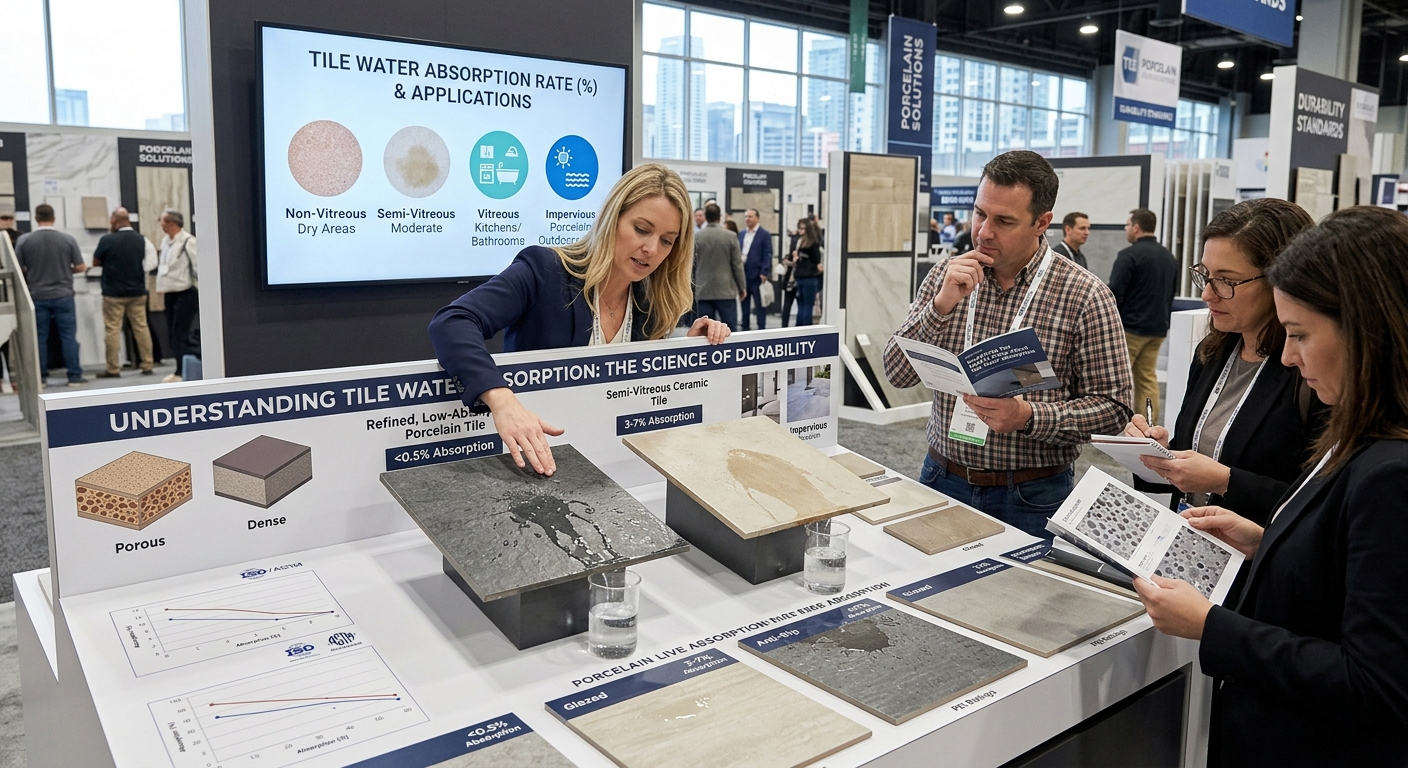
Tiles are classified into different categories based on their water absorption percentages. These classifications help determine where each tile type can be used effectively. The primary categories include non-vitreous, semi-vitreous, vitreous, and impervious tiles.
Non-vitreous tiles have water absorption rates above 7% and are generally suitable for indoor dry areas. Semi-vitreous tiles absorb between 3% and 7% water and are used in moderate-moisture environments. Vitreous tiles absorb between 0.5% and 3%, making them suitable for bathrooms and kitchens.
Impervious tiles, such as porcelain tiles, absorb less than 0.5% water and are considered the most durable and moisture-resistant option. These tiles are ideal for outdoor areas, swimming pools, commercial projects, and heavy-use environments.
Understanding these categories helps homeowners and designers select tiles that match specific environmental conditions. Choosing the correct tile absorption category improves performance, prevents damage, and ensures long-term beauty and functionality across all types of spaces.
5. Porcelain Tiles vs Ceramic Tiles: Water Absorption Comparison:
Porcelain and ceramic tiles are among the most popular flooring and wall tile options, but they differ significantly in water absorption rates. Porcelain tiles are manufactured using refined clay and fired at extremely high temperatures, making them denser and less porous than ceramic tiles.
Porcelain tiles typically absorb less than 0.5% water, which makes them highly resistant to moisture, stains, and temperature changes. This low absorption rate makes porcelain ideal for bathrooms, kitchens, outdoor spaces, swimming pools, and commercial areas.
Ceramic tiles, while still durable and attractive, generally have higher water absorption rates compared to porcelain. They are more suitable for indoor dry or moderately wet areas. Ceramic tiles are often easier to cut and more budget-friendly, making them popular for residential walls and light-traffic floors.
When selecting between porcelain and ceramic, water absorption should be carefully considered based on the intended application. For high-moisture or heavy-use environments, porcelain tiles offer superior performance, durability, and long-term value.
6. How Water Absorption Affects Tile Durability:
Water absorption has a direct impact on tile durability and structural strength. Tiles with high absorption rates tend to absorb moisture into their internal structure, which can weaken the material over time. Continuous exposure to water may lead to cracks, chipping, staining, and surface damage.
Low water absorption tiles are denser and stronger, allowing them to withstand heavy foot traffic, humidity, and temperature changes. Porcelain tiles are especially known for their exceptional durability because their compact composition prevents moisture penetration.
In outdoor installations, absorbed water may freeze during colder temperatures and expand inside the tile body, causing cracks and breakage. Low-absorption tiles reduce this risk and maintain their strength for years.
Moisture-resistant tiles also perform better in commercial spaces where constant cleaning and water exposure are common. By selecting tiles with low absorption rates, homeowners and builders can improve surface longevity, reduce maintenance costs, and ensure long-lasting visual appeal in both indoor and outdoor environments.
7. Best Low Water Absorption Tiles for Bathrooms and Kitchens:
Bathrooms and kitchens are constantly exposed to water, humidity, steam, and spills, making low water absorption tiles the best choice for these spaces. Porcelain tiles are widely considered the most reliable option because of their dense composition and superior moisture resistance.
Glazed porcelain tiles provide additional protection against stains and water penetration while offering elegant finishes such as marble, wood, stone, and concrete effects. Matte anti-slip porcelain tiles are highly recommended for bathroom floors to improve safety and prevent slipping.
Large-format porcelain tiles are also popular in modern kitchens and bathrooms because they reduce grout lines, making surfaces easier to clean and more hygienic. Ceramic wall tiles can also be used in bathrooms and kitchens, especially on walls where water exposure is moderate.
Choosing low absorption tiles helps prevent mould growth, discoloration, cracking, and bacterial build-up. These tiles maintain their beauty for years while requiring minimal maintenance, making them ideal for contemporary residential and commercial wet-area applications.
8. Water Absorption Standards and Tile Testing Methods:
Tile manufacturers follow international standards to measure and classify water absorption rates. These tests ensure that tiles meet quality, durability, and safety requirements for different applications. Organizations such as ISO and ASTM provide guidelines for tile testing procedures.
The most common testing method involves weighing a dry tile, submerging it in water for a specific duration, and then weighing it again after absorption. The increase in weight determines the water absorption percentage. This process helps manufacturers classify tiles into impervious, vitreous, semi-vitreous, and non-vitreous categories.
These standards help architects, builders, and consumers compare tile performance accurately. Tiles used in wet areas or outdoor environments must meet strict absorption requirements to ensure long-term durability and moisture resistance.
Reliable testing methods also help manufacturers improve product quality and maintains consistency. Choosing tiles that comply with recognized standards guarantees better performance, enhanced durability, and safer installations in residential, commercial, and industrial spaces.
9. Understanding Tile PEI Ratings and Moisture Resistance:
PEI ratings measure the wear resistance of glazed tiles and indicate how well tiles can withstand foot traffic and surface abrasion. While PEI ratings focus on durability, they are also important when selecting tiles for moisture-prone environments.
Tiles with higher PEI ratings generally offer better strength and surface protection, making them suitable for kitchens, bathrooms, commercial spaces, and outdoor areas. Combining low water absorption with high PEI ratings ensures maximum performance and longevity.
For example, porcelain tiles often feature both low absorption rates and high PEI classifications, making them highly durable in wet and high-traffic areas. Bathroom and kitchen floors require tiles that can resist both moisture and daily wear.
Understanding PEI ratings alongside water absorption helps homeowners make informed decisions regarding tile selection. This combination ensures the chosen tiles remain attractive, strong, hygienic, and resistant to scratches, stains, and water damage over long periods of use.
10. Impact of Water Absorption on Outdoor Tile Applications:
Outdoor tiles are constantly exposed to rain, sunlight, humidity, temperature fluctuations, and environmental stress. Therefore, water absorption becomes a crucial factor when selecting tiles for balconies, patios, terraces, swimming pools, and garden areas.
Tiles with high water absorption may crack or deteriorate due to moisture penetration and changing weather conditions. During cold weather, absorbed water can freeze and expand, causing severe structural damage. Low water absorption tiles, especially porcelain tiles, are highly resistant to these issues.
Outdoor porcelain tiles are specifically designed to withstand harsh weather while maintaining their colour, texture, and strength. They also resist stains, moss growth, and fading caused by sunlight exposure.
Selecting outdoor tiles with low absorption ensures long-lasting durability, safety, and aesthetic appeal. Properly chosen outdoor tiles reduce maintenance requirements and deliver reliable performance in all climatic conditions, making them an excellent investment for residential and commercial exterior spaces.
11. How Climate and Humidity Influence Tile Performance:
Climate and humidity levels significantly influence tile performance and lifespan. In regions with high humidity or heavy rainfall, tiles are continuously exposed to moisture, which increases the risk of water penetration and damage if unsuitable tiles are used.
Tiles with low water absorption rates perform better in humid climates because they resist moisture infiltration, mould growth, and surface discoloration. Porcelain tiles are especially effective in tropical and coastal environments where humidity levels remain high throughout the year.
In colder climates, freeze-thaw conditions can damage porous tiles when absorbed water expands during freezing temperatures. Impervious tiles minimize this risk and maintain structural integrity.
Climate-aware tile selection improves durability, hygiene, and long-term performance. Homeowners and designers should consider environmental conditions before choosing tiles for indoor and outdoor applications. Selecting moisture-resistant tiles suitable for local weather conditions ensures better functionality, reduced maintenance, and longer-lasting beauty in every space.
12. Role of Tile Glazing in Preventing Water Penetration:
Tile glazing plays a vital role in improving moisture resistance and protecting tile surfaces from water penetration. A glaze is a protective coating applied to the tile surface during manufacturing, creating a smooth, sealed, and decorative finish.
Glazed tiles resist stains, moisture, scratches, and bacterial build-up more effectively than unglazed tiles. The glaze layer acts as a barrier that prevents water from entering the tile body, making glazed porcelain and ceramic tiles ideal for kitchens, bathrooms, and commercial spaces.
Modern glazing technologies also enhance aesthetics by offering polished, matte, textured, marble-look, and wood-look finishes. However, while glazing improves surface protection, the tile body itself should also have low absorption properties for maximum durability.
Combining low-absorption tile bodies with high-quality glazing ensures superior performance, easier cleaning, and long-lasting beauty. Properly glazed tiles provide both functionality and style while maintaining hygiene and resistance against moisture-related damage.
13. Common Problems Caused by High Water Absorption Tiles:
Tiles with high water absorption rates can develop several problems over time, especially in wet or humid environments. Moisture penetration weakens the tile structure and may lead to cracks, chipping, and surface deterioration.
One common issue is mould and mildew growth, which occurs when water remains trapped inside porous tiles or grout lines. This can create hygiene concerns and unpleasant doors in bathrooms and kitchens. High absorption tiles may also develop stains, discoloration, and efflorescence caused by mineral deposits.
In outdoor areas, excessive moisture absorption increases the risk of freeze-thaw damage and surface breakage. Porous tiles may also loosen due to adhesive failure when water continuously penetrates beneath the surface.
Using low-quality or highly absorbent tiles often results in higher maintenance costs and shorter tile lifespan. Selecting low absorption tiles helps prevent these issues and ensures stronger, cleaner, and more durable surfaces for residential and commercial applications.
14. Tips for Choosing Water-Resistant Tiles for Residential Spaces:
Choosing water-resistant tiles requires careful consideration of tile material, finish, absorption rate, durability, and intended application. Porcelain tiles are usually the best option for wet areas because they combine low water absorption with high strength and easy maintenance.
For bathrooms, anti-slip matte porcelain tiles provide better safety and moisture resistance. Kitchens benefit from stain-resistant glazed tiles that are easy to clean and maintain. Large-format tiles reduce grout lines, improving hygiene and minimizing water penetration.
Homeowners should also check tile certifications, PEI ratings, and manufacturer specifications before purchasing. Selecting reputable tile brands ensures better quality and long-term performance.
Colour and finish selection should complement interior design while maintaining functionality. Textured or matte finishes are ideal for wet floors, while glossy finishes work well for walls.
Choosing the right water-resistant tiles enhances durability, hygiene, safety, and overall visual appeal while reducing maintenance and replacement costs over time.
15. Importance of Proper Tile Installation and Grouting:
Even the best moisture-resistant tiles can fail if they are not installed correctly. Proper installation and grouting are essential to prevent water seepage, tile loosening, and long-term structural damage.
A high-quality adhesive suitable for wet environments should always be used during installation. Waterproof membranes and proper surface preparation help create a secure and moisture-resistant foundation beneath the tiles.
Grouting also plays a major role in preventing water penetration. Epoxy grout is often preferred in bathrooms, kitchens, and swimming pools because it offers superior water resistance and stain protection compared to traditional cement grout.
Incorrect tile spacing, uneven installation, or poor sealing can allow moisture to enter beneath the tiles, causing cracks and adhesive failure. Professional installation ensures proper alignment, drainage, and long-term durability.
Investing in correct installation techniques improves tile performance, enhances aesthetics, and protects interiors from moisture-related problems for many years.
16. Maintenance Tips to Protect Tiles from Moisture Damage:
Regular maintenance is important for preserving tile appearance, hygiene, and moisture resistance. Even low water absorption tiles require proper cleaning and care to maintain long-term durability.
Tiles should be cleaned regularly using mild cleaners that do not damage the surface glaze or grout. Excess water should be wiped away in bathrooms and kitchens to prevent mould growth and water stains. Grout lines should also be inspected periodically for cracks or discoloration.
Sealing grout joints helps reduce moisture penetration and improves stain resistance. Proper ventilation in wet areas minimizes humidity build-up and prevents mildew formation.
Outdoor tiles should be cleaned to remove dirt, moss, and debris that may trap moisture. Using harsh chemicals or abrasive tools should be avoided because they can damage tile finishes.
Consistent maintenance not only improves tile lifespan but also keeps spaces hygienic, attractive, and resistant to moisture-related issues for years.
17. Advantages of Porcelain Tiles for Wet Areas:
Porcelain tiles are considered one of the best tile options for wet areas because of their extremely low water absorption rate and exceptional durability. Their dense composition makes them highly resistant to moisture, stains, scratches, and temperature changes.
These tiles are ideal for bathrooms, kitchens, balconies, swimming pools, and commercial wet zones. Porcelain tiles also offer excellent hygiene because their non-porous surface prevents bacterial and mould growth.
Modern porcelain tiles are available in a wide range of designs, including marble-look, wood-look, stone-look, and concrete finishes, allowing homeowners to achieve luxurious interiors without compromising functionality.
Anti-slip porcelain tiles improve safety in wet areas, while large-format options reduce grout lines and simplify maintenance. Their long lifespan and minimal upkeep requirements make them a cost-effective investment.
Due to their superior performance and elegant appearance, porcelain tiles remain a preferred choice for modern residential and commercial moisture-prone spaces.
18. How Water Absorption Affects Tile Lifespan and Strength:
Water absorption directly influences tile strength, durability, and overall lifespan. Tiles that absorb excessive moisture become vulnerable to internal damage, weakening their structure over time. This can result in cracks, chips, stains, and surface deterioration.
Low water absorption tiles maintain their strength because moisture cannot easily penetrate their dense composition. Porcelain tiles, for example, retain their structural integrity even under constant exposure to water, humidity, and temperature changes.
Tiles with low absorption rates are also more resistant to chemical damage, bacterial growth, and surface wear. This makes them ideal for both residential and commercial environments where durability is essential.
Investing in high-quality low-absorption tiles may initially cost more, but it significantly reduces future maintenance and replacement expenses. Choosing durable moisture-resistant tiles ensures longer-lasting beauty, improved safety, and superior long-term performance across various applications.
19. Choosing the Right Tile Finish for Moisture-Prone Areas:
Tile finish selection is just as important as water absorption when designing moisture-prone spaces. Different finishes offer varying levels of slip resistance, maintenance, and aesthetic appeal.
Matte and textured finishes are highly recommended for bathroom floors, pool decks, balconies, and outdoor spaces because they provide better grip and reduce slipping risks. These finishes are practical for wet environments where safety is important.
Glossy finishes are commonly used for bathroom and kitchen walls because they reflect light beautifully and are easier to clean. However, glossy floor tiles may become slippery when wet.
Natural stone-look and wood-look porcelain finishes combine elegant aesthetics with excellent moisture resistance, making them popular in luxury interiors.
Selecting the correct finish enhances both functionality and visual appeal. Homeowners should balance safety, maintenance, and design preferences to achieve attractive and durable moisture-resistant interiors and exteriors.
20. Why Premium Tile Brands Focus on Low Water Absorption Technology:
Premium tile brands invest heavily in advanced manufacturing technologies to produce tiles with extremely low water absorption rates. This focus improves product quality, durability, hygiene, and overall customer satisfaction.
Modern porcelain tile production uses refined raw materials, high-pressure compaction, and high-temperature firing processes to create dense and highly resistant tiles. These technologies minimize porosity and improve resistance to moisture, stains, and wear.
Low absorption technology also enhances tile performance in outdoor environments and high-traffic commercial spaces. Premium brands prioritize these innovations because customers demand long-lasting, low-maintenance, and visually appealing surfaces.
Advanced moisture-resistant tiles also contribute to healthier living environments by preventing mould and bacterial growth. By combining technology with modern design trends, premium tile manufacturers deliver products that offer both luxury aesthetics and superior technical performance for contemporary interiors and exteriors.
21. Tile Water Absorption and Its Impact on Hygiene and Cleanliness:
Water absorption has a major impact on tile hygiene and cleanliness. Highly porous tiles can trap moisture, dirt, bacteria, and mould within their surface and grout lines, making cleaning more difficult and reducing indoor hygiene standards.
Low water absorption tiles, especially porcelain tiles, resist moisture penetration and help maintain cleaner surfaces. Their non-porous structure prevents bacteria build-up, unpleasant doors, and fungal growth in bathrooms, kitchens, and healthcare environments.
Tiles with moisture resistance are easier to sanitize because spills and stains remain on the surface instead of penetrating the tile body. This improves maintenance efficiency and supports healthier indoor spaces.
Hygienic tile surfaces are particularly important in homes with children, elderly family members, or commercial areas where cleanliness is essential. Selecting low-absorption tiles enhances both visual cleanliness and long-term indoor hygiene while reducing maintenance efforts significantly.
22. Best Tile Sizes and Surfaces for Wet Environments:
Tile size and surface texture play an important role in the performance of wet-area installations. Large-format tiles are increasingly popular because they reduce grout lines, minimizing moisture penetration and making cleaning easier.
For bathrooms and kitchens, 600x1200mm porcelain tiles are widely preferred due to their seamless appearance and modern aesthetic. Fewer grout joints improve hygiene and create a more luxurious look.
Textured and matte surfaces are ideal for wet floors because they improve slip resistance and provide better safety. Glossy surfaces work best for walls where water exposure is less likely to create slipping hazards.
Mosaic tiles are commonly used in shower floors and swimming pools because their multiple grout lines improve traction and drainage. Choosing the right combination of tile size and surface finish enhances functionality, safety, durability, and overall design quality in moisture-prone spaces.
23. Eco-Friendly and High-Performance Moisture-Resistant Tiles:
Modern tile manufacturers are increasingly focusing on eco-friendly production methods while maintaining high moisture resistance and durability. Sustainable tiles are produced using recycled materials, energy-efficient manufacturing processes, and environmentally responsible technologies.
Eco-friendly porcelain tiles offer excellent low water absorption properties while reducing environmental impact. These tiles are long-lasting, minimizing waste generated from frequent replacements. Their durability also reduces maintenance costs and chemical cleaning requirements.
Many high-performance tiles now combine sustainability with luxury aesthetics, offering finishes inspired by natural stone, marble, wood, and concrete. These products provide environmentally conscious homeowners with attractive and durable design solutions.
Choosing sustainable moisture-resistant tiles supports green building practices and healthier living spaces. Eco-friendly tiles deliver long-term performance, excellent hygiene, reduced environmental impact, and modern visual appeal for residential and commercial interiors.
24. Common Myths About Waterproof and Water-Resistant Tiles:
There are many misconceptions surrounding waterproof and water-resistant tiles. One common myth is that all tiles are completely waterproof. In reality, most tiles are water-resistant rather than fully waterproof, especially if installation and grouting are not done properly.
Another misconception is that glossy tiles are always better for wet areas. While glossy tiles resist stains well, matte and textured finishes often provide better safety because they reduce slipping risks.
Some people also believe that expensive tiles automatically guarantee low water absorption. However, consumers should always verify technical specifications and absorption ratings before purchasing.
Another myth is that grout does not require maintenance. In fact, damaged or unsealed grout can allow moisture penetration even when high-quality tiles are used.
Understanding these myths helps homeowners make smarter tile choices based on technical performance, safety, and long-term durability rather than assumptions or misleading information.
Conclusion: Selecting the Right Tiles Based on Water Absorption Levels:
Choosing the right tiles based on water absorption levels is essential for creating durable, hygienic, and visually appealing spaces. Water absorption affects every aspect of tile performance, including strength, moisture resistance, maintenance, hygiene, and lifespan.
Porcelain tiles remain one of the best options for modern interiors and exteriors because of their extremely low absorption rates and superior durability. Bathrooms, kitchens, balconies, swimming pools, and outdoor spaces especially benefit from moisture-resistant tiles that can withstand daily exposure to water and humidity.
Homeowners and designers should consider tile material, finish, PEI ratings, installation quality, climate conditions, and maintenance requirements before making a final selection. Investing in premium low-absorption tiles reduces long-term repair costs and enhances overall comfort and safety.
By understanding tile water absorption and selecting suitable products, you can create elegant, long-lasting, and high-performance spaces that maintain their beauty and functionality for many years.