

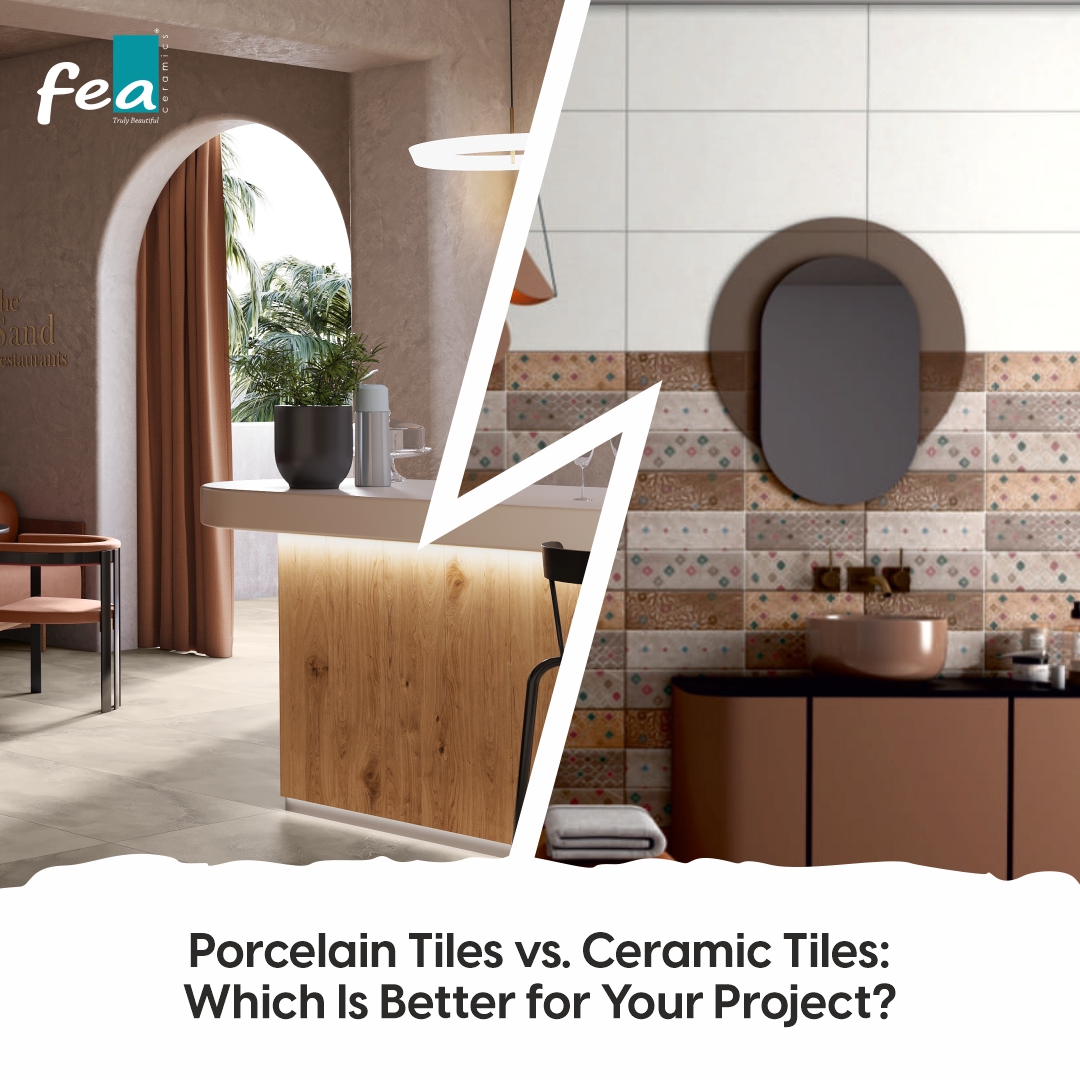
Porcelain vs. Ceramic Tiles: Which is Right for You?
If you are planning a renovation, you have likely stood in a tile aisle wondering: What is the actual difference between porcelain and ceramic?
While they look similar and are often grouped together, they are distinct materials with different strengths. Choosing the wrong one can lead to cracked floors or water damage, while choosing the right one ensures a finish that lasts for decades.
Choosing between Porcelain and Ceramic Tiles can make or break your renovation. Both are popular for floors, walls and even patios, but they differ in durability, cost, and ideal uses.
Key Differences:
| Feature | Ceramic Tiles | Porcelain Tiles |
| Material | Made from clay, fired at lower temps (around 1000 | Denser clay mix, fired hotter (1200-1400) |
| Water Absorption | Higher (0.5-3%) – more porous | Very Low (≤0.5%) – highly dense |
| Durability | Good for indoor, low – traffic areas | Excellent for high – traffic, moisture – prone spots |
| Cost | Cheaper ($2-$10/sq ft) | Pricier ($3-$15/sq ft) |
| Thickness | Thinner (6-8mm) | Thicker, stronger (8-12mm) |
| Best Application | Walls, Backsplashes, Low-traffic | Bathrooms, Floors, Outdoors |
The Core Difference:
Technically, porcelain is a specific type of ceramic. The difference lies in how they are made.
Ceramic: Made of coarser clay and fired at lower temperatures. It is softer and more porous.
Porcelain: Made of finer clay and fired at extremely high temperatures. This makes it denser, harder, and virtually waterproof.
1.Water Resistance
Porcelain: This is the clear winner for wet areas. To be certified as porcelain, a tile must have a water absorption rate of 0.5% or less. It is nearly impervious to water.
Ceramic: More porous. Unglazed ceramic absorbs water easily, though glazed ceramic handles moisture well. It is generally not recommended for outdoors or constantly wet environments (like steam showers) unless specifically rated for it.
2.Durability & Hardness
Porcelain: Extremely hard and scratch-resistant. It is ideal for high-traffic areas (commercial spaces, hallways, kitchens). However, its hardness makes it brittle and difficult to cut without professional tools.
Ceramic: Softer and easier to cut. This makes it friendlier for DIY installations, but it is more prone to cracking if a heavy object is dropped on it.
3.Cost
Porcelain: Generally, more expensive (often 30–50% more) due to the manufacturing process.
Ceramic: More budget-friendly. A great option for large areas where cost is a primary concern.
The Verdict: Where to Use Which?
Choose Porcelain If:
- You are tiling a bathroom or shower: The water resistance is essential here.
- You are tiling outdoors: Porcelain is frost-resistant and won’t crack in freezing temperatures.
- It’s a high-traffic area: Entryways, kitchens, or commercial floors need the durability of porcelain.
Choose Ceramic If:
- You are on a strict budget: You can get a great look for less money.
- You are tiling walls or backsplashes: These areas don’t see foot traffic, so the superior hardness of porcelain isn’t necessary.
- It’s a DIY project: Ceramic is much easier to cut with a standard snap cutter.
How to Maintain Your Tiles (and Keep Them Sparking)
Regardless of which tile you choose; proper care will extend its life by years. Here’s how to handle each:
For Ceramic (Wall & Backsplash):
- Keep it simple: A soft sponge and warm, soapy water are usually enough to remove grease and splashes.
- Avoid abrasives: Since ceramic has a softer glaze, avoid steel wool or harsh scouring pads that can dull the finish over time.
For Porcelain (Floors & Wet Areas):
- Sweep often: Porcelain is tough, but sand and grit can act like sandpaper under your shoes. Frequent sweeping prevents micro-scratches.
- Deep cleaning: Use a pH-neutral cleaner. While porcelain is chemical-resistant, harsh acids can damage the grout between the tiles, even if the tile itself stays fine.
The Golden Rule for Both:
- Seal your grout: Most tiles are waterproof, but grout is porous. Applying a sealer once a year prevents stains and mould from moving in.
