

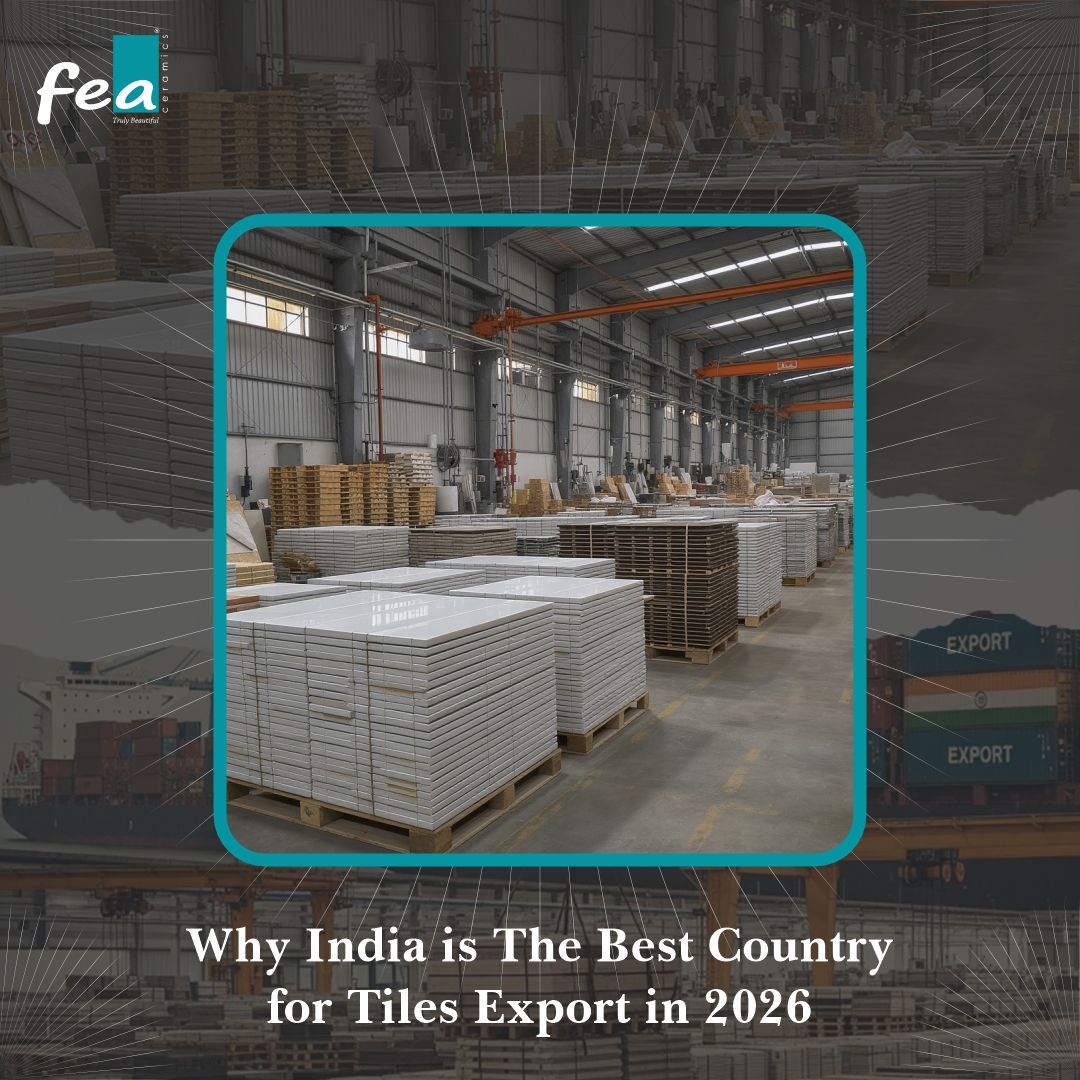
* The Export Revolution: Why 2026 is India’s Golden Year for Ceramic Tiles
The global tile industry is undergoing a massive transformation, and at the centre of this shift is India. As we move through 2026, Indian tile manufacturers have evolved from being mere participants to global trendsetters. If you are an international buyer searching for a tile’s exporter in India, here is why this year is the most strategic time to partner with Indian suppliers.
The global ceramic tile industry is evolving rapidly. Buyers today are not only looking for competitive pricing; they are seeking consistency, transparency, professionalism, and long-term partnerships. In this changing landscape, India has emerged as a dominant force — not just in production capacity, but in export reliability.
As we move toward 2026, our vision is clear and ambitious:
India is the most reliable manufacturer and exporter of tiles in the world for 2026.
This is not just a statement of pride. It is a responsibility.
1.Why India is Emerging as the Global Export Leader in 2026
The surge in ceramic tiles export from India is not an accident; it is the result of a decade of industrial maturity. In 2026, India has solidified its position as the world’s second-largest tile producer, but several new factors have pushed it to the #1 spot for export reliability:
- Supply Chain Diversification: Global buyers are moving away from “single-source” dependencies. India offers a stable, democratic, and scalable alternative with a production capacity exceeding 2.9 billion square meters.
- The Morbi 2.0 Phenomenon: The Morbi cluster has upgraded its infrastructure. In 2026, it isn’t just about volume; it’s about high-end porcelain slabs and specialized finishes that rival Italian and Spanish craftsmanship at a 30-40% cost advantage
2.Tools & Factors Enabling High-Performance Exports
What specific “tools” are making India so successful this year? It is a mix of technology and government policy:
- Hydrogen-Ready Kilns & Green Tech: To meet international ESG (Environmental, Social, and Governance) standards, many Indian factories have adopted sustainable manufacturing tools. This makes Indian tiles the preferred choice for eco-conscious projects in Europe and North America.
- Digital Sourcing & Transparency: In 2026, the best tiles exporters in India utilize AI-driven tracking and digital catalogues, allowing international buyers to conduct virtual factory tours and real-time quality inspections.
- Trade Agreements: New bilateral trade deals have lowered import duties for Indian tiles in key markets like the UAE, Australia, and parts of the EU, making the “landed cost” of Indian tiles incredibly competitive.
3.Key Factors for International Buyers to Consider
For those searching for reliable Indian tile manufacturers, 2026 offers specific advantages that weren’t available before:
- Customization (Private Labelling): Indian manufacturers have moved toward a “boutique” approach for bulk orders. You can now request custom sizes, specific slip-resistance ratings (R9-R13), and exclusive designs tailored to your local market.
- Logistical Superiority: With the expansion of the Mundra and Kandla ports, shipping lead times have been slashed. In 2026, the logistics “tool” is a seamless digital integration between the factory and the port, ensuring faster turnaround times.
* Why the World Trusts “Made in India” Tiles in 2026
The “good name” India is earning in the export market comes down to consistency. While India was once known for “cheap” tiles, in 2026, it is known for Value-for-Money Excellence. The shift toward Glazed Vitrified Tiles (GVT) and Polished Porcelain has proven that India can meet the most rigorous technical specifications (ISO 13006/EN 14411) required by global architects.
* Summary Checklist for International Buyers
If you are looking for a supplier this year, ensure they offer:
- CE and ISO Certifications for hassle-free customs.
- Third-party inspection reports (SGS/Intertek) as a standard tool.
- Low Water Absorption (<0.5%) porcelain for high-traffic projects.
* What Today’s Buyers Truly Value — And Why India Is Leading
* What Buyers Expect Beyond Price
1.Consistency
Consistency is the foundation of trust in international trade. Global buyers expect uniform shade, precise calibration, stable quality across batches, and repeatable results in every shipment. They cannot afford variations that disrupt their distribution network or project timelines. Indian manufacturers have strengthened quality control systems, automated production processes, and batch tracking mechanisms to ensure that every container reflects predictable and reliable standards. Consistency transforms one-time orders into repeat business.
2.Transparency
Transparency builds long-term commercial confidence. Buyers today expect clear pricing structures, honest communication regarding lead times, and full disclosure of specifications and terms. Hidden costs, unclear policies, or last-minute changes damage credibility. Indian exporters are increasingly adopting professional documentation practices, structured quotations, and open communication models that reinforce trust. Transparency ensures that business relationships are built on clarity rather than uncertainty.
3.On-Time Shipment
In global trade, delivery timelines directly impact distributor planning, retailer commitments, and project execution. Delayed shipments can lead to financial losses and reputational damage for buyers in their local markets. Indian tile exporters have enhanced production planning, container management, and logistics coordination to ensure timely dispatch. Reliable shipment schedules strengthen distributor confidence and position India as a dependable sourcing partner.
4.Quality Commitment
Quality is no longer negotiable — it is expected. Buyers demand durable surfaces, strong glaze performance, proper packaging, and adherence to international standards. A genuine quality commitment means not only meeting specifications but also addressing complaints responsibly and proactively. Indian manufacturers are investing in advanced machinery, laboratory testing, and continuous process improvements to maintain consistent quality levels. A strong quality culture signals long-term reliability.
5.Long-Term Partnership
Modern buyers seek strategic partnerships rather than transactional suppliers. They value exporters who understand their market, protect their margins, and support sustainable growth. Long-term collaboration requires mutual respect, steady communication, and shared objectives. Indian exporters are increasingly focusing on relationship-building strategies that go beyond price discussions and emphasize stability, loyalty, and joint expansion.
* How India Competes Differently
* Competitor Approach
1.Price Wars
Many global competitors rely heavily on aggressive pricing strategies to capture short-term market share. While price competition can generate quick orders, it often leads to unstable relationships and margin pressures. Such strategies may attract buyers initially but rarely create sustainable partnerships.
2.Temporary Advantage
Some markets compete on temporary factors such as currency fluctuations, seasonal discounts, or limited-time production benefits. These advantages may provide short-term gains but lack structural strength. Without strong infrastructure and export experience, such competitiveness is difficult to sustain over time.
* India’s Core Competitive Strength
1.Production Strength
India’s ceramic industry operates on a large-scale manufacturing base with advanced machinery and high production capacity. This infrastructure enables manufacturers to handle bulk requirements efficiently while maintaining consistent output. Strong production capability provides stability, scalability, and supply assurance to global buyers.
2.Capacity Flexibility
One of India’s major advantages is its ability to adapt to diverse order sizes and customization needs. Whether serving large distributors or mid-sized importers, Indian manufacturers can adjust production planning accordingly. This flexibility allows exporters to cater to multiple markets without compromising efficiency.
* Fast Customization
Design trends evolve quickly across international markets. Indian tile manufacturers have developed agile design and sampling processes, enabling faster product development and customization. Rapid response to market trends helps buyers remain competitive in their local regions.
* Export Experience
India’s long-standing presence in international markets has built strong expertise in documentation, compliance, packaging standards, and logistics management. Export experience reduces risk, minimizes errors, and ensures smoother transactions. This operational maturity enhances buyer confidence.
* Relationship Trust
Trust is the ultimate competitive advantage. Indian exporters increasingly focus on consistent follow-up, transparent communication, and problem resolution. By prioritizing long-term cooperation over short-term gain, they foster durable partnerships that sustain growth across multiple business cycles.
* Competitive Advantage of Indian Tiles
India’s tile industry offers a balanced combination of scale, flexibility, and affordability. Unlike purely cost-driven markets, Indian exporters provide:
- Strong production infrastructure
- Wide design variety
- Fast product development cycles
- Flexible minimum order quantities
- Experience across diverse global markets
This ability to adapt to different market requirements gives India a structural advantage in global trade.
* The 2026 Vision: From Volume Leader to Trust Leader
The future of Indian tile exports lies not only in increasing container volumes but in strengthening reputation. Customer retention, complaint reduction, payment discipline, and repeat business growth are the real indicators of sustainable success.
Every order shipped represents India’s credibility. Every commitment fulfilled strengthens India’s global image.
If manufacturers, exporters, and sales teams collectively focus on discipline, professionalism, and long-term relationship building, India will not only remain a leading exporter — it will become the most trusted exporter worldwide.
* What Makes India the Most Reliable Exporter?
Reliability in global trade goes beyond shipment numbers. It is built through consistent execution at every stage of the supply chain.
Production Reliability
Indian manufacturers today emphasize strict quality control, shade consistency, accurate calibration, and durable packaging standards. With scalable production capacity, factories can fulfill bulk requirements while maintaining quality stability.
Commercial Reliability
Transparent pricing structures, clear payment terms, and commitment to agreed policies build trust with international buyers. Predictability in commercial dealings strengthens long-term partnerships.
Shipment Reliability
Efficient planning, proactive logistics coordination, and accurate documentation ensure timely dispatch and smooth customs clearance. On-time delivery enhances distributor confidence and market reputation.
Communication Reliability
Professional communication, quick response time, clear quotations, and timely updates create a strong perception of credibility. In international business, responsiveness directly influences brand value.
