

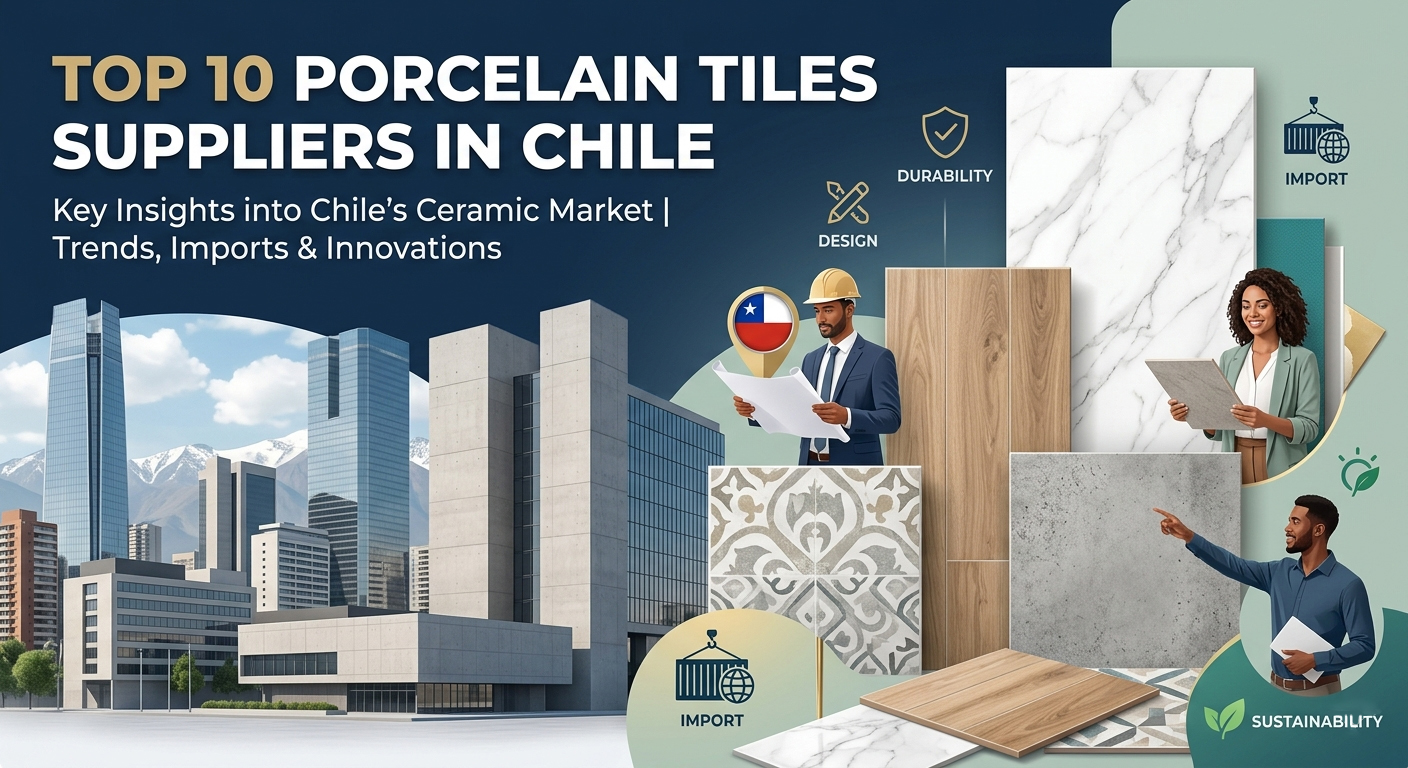
Introduction:
The porcelain tile market in Chile has experienced remarkable growth over the past decade due to rapid urbanization, modern infrastructure development, and increasing demand for premium interior and exterior surfaces. Porcelain tiles are widely preferred in residential, commercial, and industrial projects because of their exceptional durability, low maintenance, elegant appearance, and water-resistant properties. From luxury homes and shopping malls to hotels and office buildings, porcelain tiles have become a key element in modern Chilean architecture and interior design.
Chile imports a significant quantity of porcelain tiles from international markets, especially from countries like India, Spain, Italy, and China, to meet growing consumer expectations for high-quality and innovative tile designs. Modern buyers in Chile seek stylish finishes, larger tile formats, eco-friendly manufacturing, and advanced digital printing technology. As a result, selecting the right porcelain tile supplier has become increasingly important for builders, architects, interior designers, and importers.
This blog explores the top porcelain tile suppliers in Chile, current market trends, design innovations, pricing factors, export standards, and important tips for choosing the best supplier for bulk orders and long-term business partnerships.
Understanding the Porcelain Tile Market in Chile
| Focus Area | Key Highlights |
| Market Growth | Rising demand in residential and commercial sectors |
| Popular Tile Types | Glazed porcelain, polished tiles, matte tiles |
| Import Sources | India, Spain, Italy, China |
| Trending Designs | Marble-look, wood-look, concrete finish |
| Popular Sizes | 600x600mm, 600x1200mm, large slabs |
| Key Buyers | Builders, architects, interior designers |
| Main Applications | Kitchens, bathrooms, outdoor flooring |
| Technology Trends | Digital printing and anti-slip surfaces |
| Important Features | Water resistance, durability, stain resistance |
| Future Outlook | Strong growth in premium tile imports |
1. Introduction to the Porcelain Tile Market in Chile:
The porcelain tile industry in Chile has evolved significantly due to changing consumer lifestyles and modern construction trends. Porcelain tiles are now one of the most preferred surfacing materials because they offer superior strength, aesthetic appeal, and long-term performance. The Chilean market includes a wide variety of imported and locally distributed porcelain tiles designed for homes, offices, retail spaces, hotels, and public infrastructure projects.
One of the key reasons for the market’s expansion is the growing preference for premium architectural finishes. Modern homeowners and commercial developers in Chile are increasingly choosing porcelain tiles over natural stone and traditional ceramic materials because porcelain tiles provide a luxurious appearance with lower maintenance requirements. Their resistance to moisture, scratches, and stains makes them highly suitable for both indoor and outdoor applications.
Imported porcelain tiles dominate the Chilean market because international manufacturers offer wider design collections, advanced digital textures, and better-quality consistency. Countries such as India and Italy have become major export hubs for Chilean tile importers due to competitive pricing and innovative manufacturing technologies. As construction activities continue to rise across urban areas, the demand for stylish and durable porcelain tiles is expected to grow steadily in the coming years.
2. Growing Demand for Porcelain Tiles in Residential & Commercial Projects:
The demand for porcelain tiles in Chile has increased rapidly across residential and commercial construction sectors. Modern apartments, luxury villas, office spaces, hotels, shopping centres, and restaurants are increasingly incorporating porcelain tiles because of their elegant appearance and practical benefits. The versatility of porcelain tiles allows them to complement various architectural themes, ranging from minimalist contemporary designs to classic luxury interiors.
In residential projects, homeowners prefer porcelain tiles for kitchens, living rooms, bathrooms, balconies, and outdoor patios due to their stain resistance and low maintenance properties. Large-format porcelain tiles have become particularly popular because they create seamless visual continuity and make spaces appear larger and more sophisticated.
Commercial projects also contribute significantly to the growing market demand. Hotels, hospitals, educational institutions, and retail outlets require durable flooring solutions capable of handling heavy foot traffic. Porcelain tiles provide excellent strength and wear resistance, making them ideal for such environments. Anti-slip and matte-finish tiles are especially favoured in commercial areas where safety is a priority.
Additionally, the rise of modern interior design trends and increasing investments in infrastructure development continue to boost porcelain tile consumption throughout Chile. Importers and suppliers are now focusing on premium designs, customized textures, and innovative finishes to meet evolving market expectations.
3. Why Chile Imports Premium Porcelain Tiles from Global Manufacturers:
Chile relies heavily on imported porcelain tiles because international manufacturers provide advanced designs, consistent quality, and competitive pricing. Countries such as India, Italy, Spain, and China have established themselves as major suppliers due to their strong manufacturing capabilities and innovative production technologies.
One of the primary reasons behind Chile’s preference for imported tiles is design diversity. Global manufacturers continuously introduce new collections inspired by natural marble, wood, concrete, metal, and stone textures. These modern aesthetics appeal to Chilean architects and interior designers who seek contemporary materials for high-end projects.
Another important factor is manufacturing technology. International tile producers use advanced digital printing systems, high-pressure pressing, and precision firing techniques that improve tile durability and visual quality. This ensures better consistency in colour, size, and surface finish across large production batches.
Indian porcelain tile manufacturers have become particularly popular in Chile because they offer a balanced combination of affordability and premium quality. Indian exporters provide extensive product catalogues, customized packaging, and reliable shipping solutions, making them attractive partners for Chilean importers.
Additionally, imported porcelain tiles often comply with international quality standards related to water absorption, abrasion resistance, and environmental sustainability. This gives buyers confidence in the long-term performance and reliability of the products used in both residential and commercial applications.
4. Key Features to Look for in a Porcelain Tile Supplier:
Choosing the right porcelain tile supplier is essential for ensuring product quality, timely delivery, and long-term business success. Buyers in Chile should carefully evaluate several important factors before selecting a supplier for residential, commercial, or wholesale projects.
One of the first aspects to consider is product quality consistency. A reliable supplier should offer porcelain tiles with accurate dimensions, uniform colour tones, strong surface finishes, and low water absorption rates. Consistency is particularly important for large-scale projects where visual uniformity is critical.
Another important feature is design variety. Leading suppliers usually provide extensive collections that include marble-look tiles, wood-effect surfaces, textured finishes, polished tiles, matte designs, and large-format slabs. A broad product range allows importers and designers to meet different customer preferences and market trends.
Production capacity and export experience are also crucial factors. Suppliers with advanced manufacturing facilities and strong logistics support can efficiently manage bulk orders and international shipments. Buyers should also verify whether the supplier follows international quality certifications and packaging standards.
Excellent customer service is another sign of a professional supplier. Quick communication, technical assistance, after-sales support, and flexible customization options help build long-term business relationships. Suppliers who understand international market requirements and provide reliable documentation processes are generally preferred by Chilean importers and distributors.
5. Importance of Tile Quality, Durability & Water Resistance:
Quality and durability are among the most important considerations when selecting porcelain tiles for residential and commercial projects in Chile. High-quality porcelain tiles offer long-lasting performance, aesthetic consistency, and superior resistance to environmental conditions. Since porcelain tiles are manufactured using refined clay materials and fired at extremely high temperatures, they become denser and more durable than traditional ceramic tiles.
Water resistance is one of the major advantages of porcelain tiles. Their low porosity helps prevent moisture absorption, making them ideal for kitchens, bathrooms, swimming pool areas, balconies, and outdoor spaces. In regions with changing weather conditions, water-resistant tiles help reduce the risk of cracks, stains, and surface damage over time.
Durability is equally important in commercial environments where flooring surfaces experience heavy foot traffic. Hotels, malls, airports, restaurants, and office buildings require tiles that can withstand continuous use without losing their appearance. Porcelain tiles offer excellent scratch resistance, abrasion resistance, and structural strength, making them suitable for high-traffic areas.
Tile quality also affects maintenance requirements. Premium porcelain tiles are easier to clean and maintain because they resist dirt accumulation, chemical exposure, and staining. Investing in high-quality tiles ultimately reduces long-term repair and replacement costs while maintaining the visual appeal of the property for many years.
6. Latest Porcelain Tile Design Trends in Chile:
Modern design trends in Chile are strongly influencing the porcelain tile market. Consumers today seek stylish, luxurious, and natural-looking surfaces that enhance both residential and commercial interiors. As a result, manufacturers are continuously introducing innovative tile collections inspired by global architectural trends.
Marble-look porcelain tiles remain one of the most popular choices in Chile because they provide the elegance of natural stone at a lower cost and with easier maintenance. White marble designs with grey veining are especially preferred in luxury homes, hotels, and office spaces.
Wood-look porcelain tiles are another growing trend. These tiles replicate the warmth and texture of natural wood while offering better durability and moisture resistance. They are commonly used in living rooms, bedrooms, and hospitality projects.
Concrete-effect and industrial-style tiles are also gaining popularity among architects who prefer minimalist and urban-inspired interiors. Matte finishes, textured surfaces, and neutral colour palettes such as grey, beige, and charcoal are widely used in modern spaces.
Large-format porcelain slabs are becoming increasingly fashionable because they create seamless surfaces with fewer grout lines. Additionally, digital printing technology allows manufacturers to produce highly realistic textures and customized designs that meet evolving consumer preferences in the Chilean market.
7. Popular Tile Sizes & Finishes in the Chilean Market:
The Chilean porcelain tile market offers a wide range of tile sizes and finishes designed to suit different architectural and interior applications. Consumer preferences have evolved significantly in recent years, with increasing demand for large-format tiles and premium surface textures.
Among the most popular tile sizes are 600x600mm and 600x1200mm formats. These sizes are widely used in residential and commercial projects because they provide a modern appearance while maintaining installation efficiency. Large slabs are also becoming increasingly common in luxury spaces due to their seamless and elegant visual impact.
Finish selection plays a major role in design aesthetics and functionality. Polished porcelain tiles are highly popular for living rooms, hotel lobbies, and premium commercial spaces because they create a glossy and sophisticated appearance. Matte-finish tiles, on the other hand, are preferred for bathrooms, kitchens, and outdoor areas due to their anti-slip properties and natural look.
Textured and rustic finishes are widely used in exterior landscaping and outdoor patios where durability and slip resistance are essential. Wood-look and stone-finish porcelain tiles continue to dominate modern design projects because they combine natural beauty with the practical benefits of porcelain material.
Manufacturers are also offering customized finishes and digital surface technologies to meet the growing demand for unique and visually appealing architectural solutions in Chile.
8. Top 10 Porcelain Tile Suppliers in Chile – Company Overview:
Chile’s porcelain tile market includes several well-established suppliers and importers offering premium collections for residential and commercial projects. These companies provide a wide range of products, including polished porcelain, glazed vitrified tiles, marble-look surfaces, and outdoor paving solutions.
Some suppliers focus on luxury European collections, while others specialize in cost-effective imports from India and Asia. The top suppliers generally maintain strong inventories, modern showrooms, and efficient logistics networks to serve builders, architects, retailers, and interior designers across Chile.
Leading suppliers often collaborate directly with international manufacturers to provide exclusive designs and customized product solutions. Many companies also offer technical guidance, installation support, and project consultation services to enhance customer satisfaction.
Indian porcelain tile exporters have gained strong recognition among Chilean importers because of their affordable pricing, extensive product ranges, and reliable export systems. Italian and Spanish brands continue to dominate the premium luxury segment due to their innovative textures and high-end aesthetics.
As competition increases, suppliers are focusing more on digital marketing, faster delivery systems, eco-friendly production, and customer service improvements. Businesses that successfully combine quality, pricing, and design innovation continue to strengthen their position in the growing Chilean porcelain tile market.
9. Comparison of Local Suppliers vs International Tile Exporters:
Both local suppliers and international tile exporters play important roles in Chile’s porcelain tile industry. However, each category offers different advantages depending on project requirements, budget, and design expectations.
Local suppliers provide faster availability, easier communication, and quicker delivery times. They usually maintain warehouses and showrooms within Chile, allowing customers to inspect products physically before purchasing. Local suppliers are often preferred for smaller projects or urgent construction timelines because they can provide immediate stock availability and local customer support.
International exporters, particularly from India, Italy, Spain, and China, offer significantly wider product ranges and more competitive pricing. These exporters provide access to advanced digital designs, large-format slabs, and innovative finishes that may not always be available through local distributors. Importers working directly with overseas manufacturers can also benefit from bulk pricing advantages.
One of the key challenges with international sourcing is shipping time and logistics management. Importers must carefully evaluate packaging quality, export documentation, and delivery schedules to avoid delays or product damage during transit.
Ultimately, the choice between local suppliers and international exporters depends on project scale, budget requirements, design preferences, and long-term business goals. Many Chilean businesses now combine both sourcing methods to achieve better flexibility and product variety.
10. Role of Indian Porcelain Tile Manufacturers in Chile:
Indian porcelain tile manufacturers have become major contributors to the Chilean tile import market due to their competitive pricing, advanced production capabilities, and extensive design collections. India is now recognized as one of the world’s largest tile manufacturing hubs, supplying products to numerous international markets including Chile.
One of the biggest strengths of Indian manufacturers is their ability to produce premium-quality porcelain tiles at affordable prices. This pricing advantage allows Chilean importers and distributors to maintain strong profit margins while offering attractive products to customers.
Indian manufacturers also invest heavily in digital printing technology, automated production systems, and innovative surface finishes. As a result, they can produce highly realistic marble, wood, and stone-effect porcelain tiles that meet modern architectural trends.
Another important factor is export flexibility. Indian exporters usually offer customized packaging, private labelling, mixed-container loading options, and efficient documentation support for international shipments. This makes them reliable partners for wholesalers and bulk importers in Chile.
Additionally, Indian tile companies frequently participate in global trade exhibitions and maintain strong logistics networks, helping strengthen their international presence. As Chile’s demand for affordable premium porcelain tiles continues to grow, Indian manufacturers are expected to play an even more significant role in the future.
11. Best Porcelain Tiles for Kitchens, Bathrooms & Outdoor Spaces:
Different areas of a property require specific types of porcelain tiles based on functionality, moisture exposure, and design preferences. Choosing the right tile improves both aesthetics and long-term performance.
For kitchens, stain-resistant and easy-to-clean porcelain tiles are highly recommended. Matte or semi-polished finishes are often preferred because they provide better grip while maintaining a modern appearance. Marble-look and concrete-style porcelain tiles are particularly popular in contemporary kitchen designs.
Bathrooms require water-resistant and anti-slip surfaces to ensure safety and durability. Textured matte tiles are commonly used for bathroom floors, while polished wall tiles create a luxurious visual effect. Neutral tones and natural stone-inspired textures remain among the most preferred bathroom design choices in Chile.
Outdoor spaces such as patios, balconies, terraces, and garden walkways require high-strength porcelain tiles capable of withstanding weather exposure and heavy usage. Anti-slip outdoor porcelain pavers with textured finishes provide excellent safety and durability. Stone-look and rustic-style tiles are especially popular for exterior landscaping projects.
Large-format porcelain tiles are increasingly being used across all these applications because they reduce grout lines and create a cleaner, more seamless appearance. Selecting the right combination of design, texture, and performance characteristics ensures both beauty and functionality for every space.
12. Sustainability & Eco-Friendly Tile Manufacturing Practices:
Sustainability has become an important factor in the global porcelain tile industry, including the Chilean market. Modern consumers and construction companies increasingly prefer environmentally responsible building materials that minimize environmental impact while maintaining high performance standards.
Many porcelain tile manufacturers now use recycled raw materials and energy-efficient production technologies to reduce carbon emissions and industrial waste. Advanced kiln systems and water recycling processes help manufacturers improve production efficiency while conserving natural resources.
Eco-friendly porcelain tiles also contribute to healthier indoor environments because they do not emit harmful chemicals or volatile organic compounds. Their long lifespan further supports sustainability by reducing replacement frequency and construction waste generation over time.
International manufacturers exporting to Chile are increasingly adopting green certifications and sustainable manufacturing standards to meet global environmental expectations. Builders and architects often prioritize suppliers who follow environmentally responsible production methods and offer recyclable packaging materials.
Another advantage of porcelain tile is their durability. Since high-quality porcelain surfaces can last for decades without significant deterioration, they reduce the need for repeated renovation and material replacement. This long-term performance makes porcelain tiles a sustainable and cost-effective solution for modern construction and interior design projects.
13. Factors Affecting Porcelain Tile Prices in Chile:
Several factors influence porcelain tile pricing in the Chilean market. Understanding these elements helps importers, retailers, and consumers make better purchasing decisions based on budget and project requirements.
One of the primary pricing factors is tile quality and manufacturing technology. Premium porcelain tiles produced using advanced digital printing systems and high-density materials generally cost more because they offer superior durability and realistic surface textures.
Tile size and thickness also affect pricing. Large-format slabs and thicker outdoor pavers usually require more raw materials and specialized production techniques, increasing their market value. Similarly, polished and high-gloss finishes often cost more than standard matte tiles due to additional processing requirements.
Import costs significantly influence tile prices in Chile. Shipping expenses, customs duties, container charges, and currency fluctuations all contribute to the final market price of imported porcelain tiles. Tiles imported from Europe are typically more expensive than products sourced from India or China.
Brand reputation and design exclusivity also play important roles. Luxury European collections with unique textures and limited-edition finishes usually command premium pricing. In contrast, bulk imports from large-scale manufacturing hubs often provide more economical solutions for commercial and wholesale projects.
14. How to Choose the Right Porcelain Tile Supplier for Bulk Orders:
Selecting the right porcelain tile supplier for bulk orders requires careful planning and evaluation. Importers and wholesalers in Chile must consider product quality, pricing, production capacity, export experience, and long-term reliability before finalizing a supplier partnership.
The first step is verifying manufacturing standards and product certifications. A professional supplier should provide detailed technical specifications related to water absorption, durability, slip resistance, and dimensional accuracy. Requesting product samples is essential for assessing quality consistency.
Production capacity is another important factor for bulk buyers. Suppliers with advanced automated factories and strong inventory management systems can handle large orders efficiently while maintaining consistent quality standards.
Pricing transparency and logistics support also influence supplier selection. Reliable exporters should provide clear quotations, packaging details, shipping timelines, and documentation assistance for customs clearance. Efficient packaging is especially important for preventing tile damage during international transportation.
Communication and after-sales service are equally valuable. Suppliers who respond quickly, provide technical guidance, and offer flexible customization options usually create stronger long-term business relationships.
Importers should also review the supplier’s export history and international market presence. Companies with experience serving global markets are generally better prepared to manage large-scale orders and meet the specific requirements of Chilean buyers.
15. Export Standards, Packaging & Logistics for Chilean Imports:
Efficient export management is essential for ensuring smooth porcelain tile imports into Chile. International suppliers must follow proper packaging standards, documentation procedures, and logistics systems to guarantee safe and timely deliveries.
Packaging quality plays a critical role in protecting porcelain tiles during transportation. High-quality exporters use strong corrugated boxes, wooden pallets, corner protectors, and moisture-resistant wrapping materials to minimize the risk of breakage. Proper labelling and container loading techniques further improve shipment safety.
Export documentation is another important aspect of international trade. Suppliers must provide accurate invoices, packing lists, certificates of origin, and shipping documents to ensure efficient customs clearance procedures in Chile. Delays in documentation can lead to shipment disruptions and increased costs.
Logistics planning is equally important for bulk tile imports. Reliable suppliers work with experienced freight forwarding companies and shipping partners to manage container transportation efficiently. Timely production scheduling and accurate delivery timelines help importers maintain smooth inventory management.
Many Indian and European tile exporters now offer advanced export support services, including customized packaging, private labelling, and digital shipment tracking. These services help strengthen business relationships and improve customer satisfaction within the Chilean porcelain tile market.
16. Digital Tile Technology & Modern Surface Innovations:
Technological innovation has transformed the porcelain tile industry by introducing highly realistic textures, advanced surface finishes, and improved manufacturing precision. Digital printing technology is one of the most significant advancements influencing modern tile production.
Using high-definition digital printing systems, manufacturers can create porcelain tiles that closely replicate natural marble, wood, granite, metal, and concrete surfaces. These designs offer exceptional visual realism while maintaining the practical benefits of porcelain materials.
Modern surface technologies also improve tile functionality. Anti-slip coatings, antibacterial surfaces, scratch-resistant layers, and stain-resistant finishes enhance both safety and durability. These innovations are especially valuable in commercial spaces, healthcare facilities, and high-traffic environments.
Large-format porcelain slabs represent another major trend in surface innovation. These oversized tiles create seamless architectural surfaces with minimal grout lines, making interiors appear more spacious and luxurious.
Manufacturers are also experimenting with 3D textures, synchronized surface patterns, and soft-touch finishes to create more natural and tactile experiences. Such innovations allow architects and interior designers in Chile to achieve unique visual effects while maintaining long-term performance standards.
As digital manufacturing technology continues to evolve, the porcelain tile industry is expected to introduce even more sophisticated and customizable design solutions for global markets.
17. Customer Support & After-Sales Service in the Tile Industry:
Customer support and after-sales service are essential elements of a successful porcelain tile business. In a highly competitive market like Chile, suppliers who provide reliable service and technical assistance often build stronger long-term relationships with clients.
Professional suppliers usually offer product consultation services to help customers select suitable tile sizes, finishes, and designs based on project requirements. Architects, contractors, and interior designers frequently rely on technical guidance when choosing materials for large-scale developments.
After-sales support becomes particularly important for bulk importers and commercial projects. Reliable suppliers assist with claims management, replacement procedures, technical documentation, and installation recommendations whenever necessary. Prompt problem resolution improves customer trust and business credibility.
Digital communication tools have also enhanced customer service efficiency within the tile industry. Many suppliers now provide online catalogues, virtual showroom presentations, shipment tracking systems, and real-time customer support to improve the overall buying experience.
Strong after-sales service contributes to repeat business opportunities and long-term partnerships. Suppliers who consistently maintain product quality, timely deliveries, and responsive communication are more likely to succeed in the growing Chilean porcelain tile market.
18. Future Growth Opportunities in Chile’s Ceramic & Porcelain Tile Market:
The future of the porcelain tile market in Chile appears highly promising due to continued urban development, infrastructure expansion, and rising consumer interest in premium construction materials. As modern architectural trends continue evolving, demand for stylish and durable porcelain surfaces is expected to grow steadily.
Luxury residential projects, commercial developments, hospitality infrastructure, and public construction initiatives are creating strong opportunities for tile suppliers and importers. Large-format porcelain slabs, sustainable products, and digitally printed designs are likely to dominate future market trends.
The increasing influence of smart homes and modern interior concepts will also drive demand for innovative surface materials with advanced functionality. Features such as anti-bacterial coatings, anti-slip technologies, and easy-maintenance finishes are expected to become more important in future product development.
Indian tile manufacturers are likely to strengthen their market position further due to their competitive pricing and expanding global export capabilities. At the same time, European brands will continue attracting premium buyers seeking luxury aesthetics and exclusive designs.
Overall, Chile’s growing construction sector and evolving consumer preferences create significant opportunities for businesses involved in porcelain tile manufacturing, importing, distribution, and architectural design services.
19. Tips for Importers, Architects & Interior Designers in Chile:
Importers, architects, and interior designers in Chile should carefully evaluate market trends and project requirements when selecting porcelain tile products. Understanding customer preferences, quality standards, and supplier capabilities is essential for achieving successful project outcomes.
Importers should prioritize suppliers with strong export experience, reliable logistics systems, and consistent product quality. Requesting samples, certifications, and technical specifications before placing bulk orders can help reduce risks and improve customer satisfaction.
Architects and interior designers should focus on selecting tile collections that balance aesthetics, durability, and functionality. Large-format tiles, natural stone effects, and matte finishes are currently among the most popular design trends in Chile.
It is also important to consider environmental conditions when choosing tiles for outdoor applications. Anti-slip and weather-resistant porcelain surfaces provide better long-term performance in exterior spaces.
Collaboration with experienced suppliers can significantly improve project efficiency. Suppliers who offer technical support, customized solutions, and flexible design options help professionals achieve better architectural results while meeting client expectations.
By staying informed about global design innovations and sustainable manufacturing trends, Chilean industry professionals can continue delivering modern and high-quality architectural spaces.
Conclusion – Finding the Best Porcelain Tile Supplier in Chile:
Finding the best porcelain tile supplier in Chile requires careful consideration of quality, pricing, design variety, export capabilities, and customer service. As the Chilean construction and interior design industries continue to expand, the demand for premium porcelain tiles is expected to grow significantly across residential, commercial, and infrastructure projects.
International manufacturers, particularly from India, Italy, and Spain, are playing a major role in shaping the Chilean tile market by offering innovative designs, advanced manufacturing technologies, and competitive pricing. At the same time, local suppliers continue supporting the market through fast delivery systems and customer-focused services.
Whether for kitchens, bathrooms, luxury interiors, or outdoor applications, porcelain tiles provide an ideal combination of durability, beauty, and long-term value. Businesses and consumers who partner with reliable suppliers can benefit from consistent quality, modern designs, and efficient logistics support.
As sustainability, digital innovation, and architectural creativity continue influencing the industry, the future of the porcelain tile market in Chile looks highly promising. Choosing the right supplier today can create long-term advantages for builders, importers, architects, and interior designers looking to succeed in this competitive and rapidly evolving market.