

Introduction:
Tiles play a major role in defining the beauty, functionality, and personality of modern homes. From luxurious living rooms to compact bathrooms, the right tile size can completely transform the appearance of a space. Today, homeowners, architects, and interior designers often face one common question should they choose small tiles or large tiles? Both tile sizes offer unique advantages in terms of design, maintenance, durability, and visual appeal.
Large format tiles are known for their seamless and luxurious appearance, while small tiles add texture, creativity, and detailed aesthetics. The decision depends on factors such as room size, interior style, budget, and maintenance preferences. In modern architecture, both options are widely used for different purposes, creating beautiful and functional spaces.
This blog explores the complete comparison between small tiles and large tiles, helping homeowners choose the ideal option for their modern interiors and exterior spaces.
1. Introduction to Tile Sizes in Modern Interior Design:
Tile sizes have become one of the most important elements in modern interior design. Designers carefully select tile dimensions based on room size, lighting, furniture layout, and architectural style. In contemporary homes, tiles are not only functional surfaces but also decorative design features that enhance the overall ambiance of the space.
Small tiles traditionally dominated residential interiors because they were easier to install and highly versatile. However, modern trends have shifted toward large format tiles due to their clean, elegant, and spacious appearance. Today, homeowners use both small and large tiles creatively to achieve unique visual effects.
Modern tile manufacturing technology now offers countless size options, including mosaics, subway tiles, square tiles, plank tiles, and oversized slabs. This wide variety allows designers to experiment with patterns, textures, and finishes for customized interiors. Choosing the right tile size helps improve room aesthetics, comfort, and long-term practicality.
2. Understanding Small Tiles and Large Tiles: Key Differences:
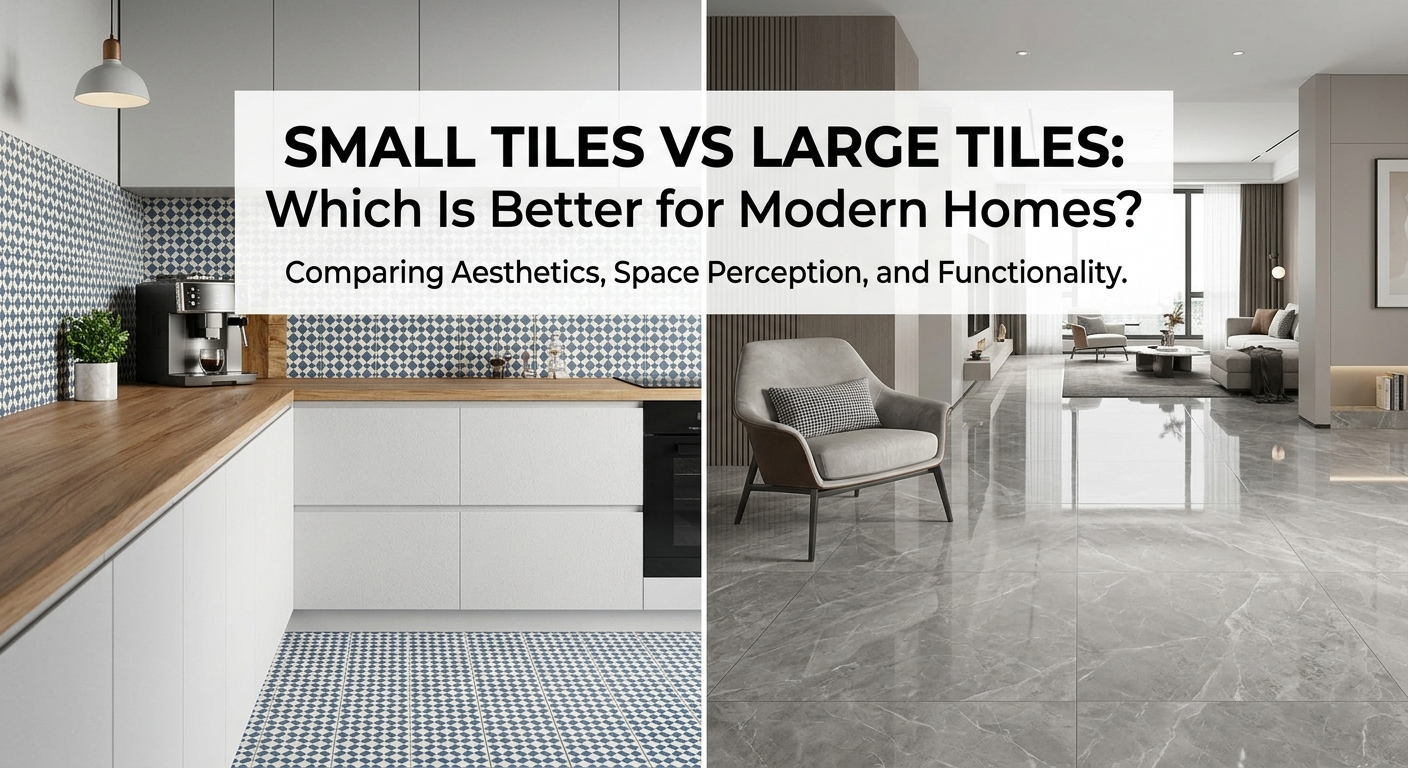
Small tiles generally include sizes such as 100×100 mm, 200×200 mm, subway tiles, and mosaics. They are commonly used in bathrooms, kitchen backsplashes, decorative walls, and areas requiring detailed patterns. Small tiles provide flexibility in design and allow creative layouts with textures and colours.
Large tiles typically include dimensions such as 600×600 mm, 600×1200 mm, 800×1600 mm, and large porcelain slabs. These tiles create a seamless look with fewer grout lines, making spaces appear larger and more luxurious. Large format tiles are highly popular in modern homes, commercial spaces, hotels, and luxury villas.
The primary difference lies in visual impact and installation style. Small tiles focus on detail and texture, while large tiles emphasize openness and minimalism. Maintenance, installation complexity, and costs also differ significantly between the two. Understanding these differences helps homeowners make informed decisions according to their interior requirements.
3. Visual Impact of Large Tiles in Contemporary Homes:
Large tiles create a sophisticated and elegant appearance that perfectly matches modern interior trends. Their seamless finish and reduced grout lines help achieve a clean, spacious, and uncluttered look. This is one reason why large format tiles are increasingly popular in luxury homes, hotels, and commercial projects.
Contemporary interiors often focus on simplicity and openness. Large tiles enhance these characteristics by creating uninterrupted surfaces that visually expand rooms. Polished large tiles also reflect more light, making interiors appear brighter and more premium.
These tiles work exceptionally well in open floor plans, large living rooms, dining areas, and modern kitchens. They complement minimalist furniture and modern architectural elements beautifully. Large marble-look or stone-look porcelain tiles especially provide a luxurious natural appearance without the maintenance issues of natural stone.
Because of their dramatic visual appeal, large tiles are now considered a symbol of modern luxury and contemporary sophistication.
4. How Small Tiles Add Detail, Texture & Character to Interiors:
Small tiles are ideal for adding creativity, detail, and personality to interior spaces. Unlike large tiles that focus on simplicity, small tiles create visually rich surfaces with patterns, textures, and artistic designs. This makes them highly popular for decorative walls, backsplashes, and feature areas.
Mosaic tiles, subway tiles, and patterned ceramic tiles can instantly enhance the character of a room. They allow homeowners to experiment with colours, shapes, and layouts to create unique aesthetics. Small tiles are especially useful for vintage, rustic, industrial, and Mediterranean-inspired interiors.
Another advantage of small tiles is their ability to fit curved or uneven surfaces more effectively. They work beautifully in shower niches, kitchen backsplashes, and decorative bathroom walls. The additional grout lines also improve grip and slip resistance in wet areas.
For homeowners seeking artistic detail and visual texture, small tiles remain one of the best design solutions in modern interior decoration.
5. Space Perception: Which Tile Size Makes Rooms Look Bigger?
One of the most common interior design questions is which tile size makes a room appear larger. In most cases, large tiles create the illusion of a bigger and more open space. Their reduced grout lines minimize visual interruptions, allowing floors and walls to appear more continuous.
Large format tiles are especially effective in small apartments, compact bathrooms, and narrow hallways. Light-coloured large tiles further enhance spaciousness by reflecting natural and artificial light. Horizontal tile layouts can also visually widen rooms.
However, small tiles can still work well when used strategically. Simple patterns and lighter shades prevent small spaces from feeling crowded. In decorative applications, small tiles add depth and texture without overwhelming the room.
Ultimately, large tiles are generally better for maximizing visual space, while small tiles are ideal for adding detailed accents and focal points. The right balance depends on the room’s dimensions and overall design concept.
6. Best Tile Sizes for Small Apartments and Compact Spaces:
Compact homes and apartments require careful tile selection to avoid making interiors feel crowded. Large tiles are often recommended because they create visual continuity and reduce grout line distractions. Sizes like 600×600 mm and 600×1200 mm are widely used in modern apartments for this reason.
Light-coloured large tiles can make compact rooms feel more open and airier. Matte finishes are also preferred for maintaining a soft and elegant appearance. Rectangular tiles installed in horizontal layouts help visually expand narrow rooms.
Small tiles can still be useful in compact spaces when applied selectively. Mosaic tiles in bathrooms or backsplashes add character without dominating the entire room. Subway tiles also work beautifully in compact kitchens and wall designs.
The ideal strategy for small apartments is combining large floor tiles with smaller decorative wall tiles. This creates balance while maintaining a spacious and stylish environment.
7. Large Tiles for Luxury Living Rooms and Open Floor Plans:
Large format tiles are widely considered the best choice for luxury living rooms and open floor layouts. Their seamless appearance creates visual continuity across expansive spaces, making interiors look elegant and premium.
Open floor plans benefit greatly from fewer grout lines because they maintain uninterrupted visual flow. Large marble-look porcelain tiles, stone finishes, and glossy slabs are particularly popular in luxury villas and modern apartments. These tiles complement minimalist furniture and modern architectural designs beautifully.
Large tiles also improve natural light reflection, making living spaces brighter and more inviting. Their clean appearance enhances the sense of sophistication often associated with high-end interiors.
In addition to aesthetics, large tiles are durable and suitable for high-traffic areas. They provide a modern, hotel-inspired atmosphere that many homeowners desire today. For luxurious contemporary homes, large format tiles remain one of the most preferred flooring solutions.
8. Comparing Grout Lines: Maintenance, Cleaning & Appearance:
Grout lines significantly affect both the appearance and maintenance of tiled surfaces. Small tiles naturally require more grout joints, while large tiles minimize grout visibility. This difference plays an important role in cleaning and long-term upkeep.
Large tiles are easier to maintain because fewer grout lines mean less dirt accumulation. This makes them ideal for living rooms, kitchens, and commercial spaces where easy cleaning is important. Their cleaner appearance also contributes to a more modern aesthetic.
Small tiles require more frequent grout maintenance, especially in wet areas like bathrooms and kitchens. However, grout lines in small tiles improve traction and reduce slipping risks. Coloured grout can also become a decorative design element in creative interiors.
Modern grout technology offers stain-resistant and waterproof options, reducing maintenance concerns for both tile sizes. Choosing the right grout colour and quality is equally important for achieving long-lasting beauty and durability.
9. Slip Resistance and Safety Factors in Different Tile Sizes:
Safety is an essential factor when selecting tiles for homes and commercial environments. Tile size itself does not directly determine slip resistance, but the surface finish and grout lines play major roles.
Small tiles are often safer for wet areas because the additional grout joints provide better grip. Mosaic bathroom tiles, for example, offer excellent traction and are commonly used in shower floors, swimming pools, and outdoor pathways.
Large tiles can also be safe when manufactured with anti-slip matte or textured finishes. Many modern porcelain tiles now include advanced slip-resistant technologies suitable for bathrooms, kitchens, and outdoor areas.
For families with children or elderly members, selecting the correct finish becomes extremely important. Matte, rustic, and textured surfaces generally provide better safety than glossy finishes. Proper installation and maintenance further improve tile performance and long-term safety in residential spaces.
10. Small Tiles vs Large Tiles for Bathroom Design:
Bathrooms are among the most important areas where tile size selection directly impacts both functionality and aesthetics. Large tiles create a clean, spa-like appearance with fewer grout lines, making bathrooms look more luxurious and spacious.
Small tiles, especially mosaics, are highly effective for shower floors and decorative walls because they provide better grip and allow creative designs. Subway tiles remain a timeless choice for bathroom walls due to their classic and versatile appearance.
Large format wall tiles reduce visual clutter and are easier to clean. They also make compact bathrooms appear larger. On the other hand, small patterned tiles add personality and artistic detail to feature walls and shower niches.
Many modern bathroom designs combine both tile sizes for balance. Large tiles dominate floors and walls, while smaller tiles are used for accents and decorative zones, creating a stylish and functional bathroom environment.
11. Kitchen Applications: Which Tile Size Works Better?
Both small and large tiles offer unique benefits in modern kitchen design. Large tiles are commonly used for kitchen floors because they provide a seamless appearance and are easier to clean. Their minimal grout lines reduce maintenance and create a modern aesthetic.
Small tiles are especially popular for backsplashes because they allow intricate patterns and decorative details. Subway tiles, mosaics, and geometric tiles remain trending choices for kitchen walls. These tiles add texture and visual interest without overwhelming the space.
For compact kitchens, large light-coloured tiles help create a more open appearance. In luxury kitchens, marble-look porcelain slabs provide an elegant and premium atmosphere. Matte finishes are often preferred for flooring due to their slip resistance and practicality.
Combining large floor tiles with smaller backsplash tiles is one of the most effective ways to achieve a balanced and stylish kitchen design.
12. Durability and Installation Challenges of Large Format Tiles:
Large format tiles are highly durable and resistant to wear, making them ideal for modern homes and commercial spaces. Porcelain large tiles especially offer excellent strength, water resistance, and scratch resistance.
However, installing large tiles requires professional expertise. The floor or wall surface must be perfectly level to avoid lippage and uneven placement. Specialized adhesives and installation tools are often necessary for handling oversized slabs.
Transportation and cutting of large tiles can also be more challenging compared to smaller tiles. Improper installation may lead to cracks or hollow spots over time. Despite these challenges, the final visual result is often worth the additional effort and cost.
Small tiles are generally easier to install and replace individually if damaged. Their flexibility makes them suitable for curved surfaces and complex layouts. Choosing between durability and installation convenience depends on the project requirements and budget.
13. Cost Comparison: Material, Labour & Maintenance Expenses:
Tile costs vary depending on size, material, finish, and installation complexity. Large tiles are usually more expensive per piece due to advanced manufacturing and transportation requirements. Installation costs may also increase because skilled labour is necessary for accurate placement.
However, large tiles often reduce grout usage and long-term cleaning expenses. Their seamless appearance also adds premium value to the property. For luxury interiors, homeowners often consider them a worthwhile investment.
Small tiles may have lower individual material costs, but labour expenses can increase because installation takes more time. Additional grout lines also require more maintenance over the years.
Budget planning should include not only tile prices but also adhesive materials, grout quality, cutting requirements, and maintenance expectations. Comparing total project costs helps homeowners choose the most practical and visually appealing solution.
14. Popular Tile Trends in Modern Homes Across Global Markets:
Global tile trends continue evolving with modern architecture and lifestyle preferences. Large format porcelain tiles are currently dominating luxury residential and commercial markets due to their elegant and seamless appearance.
Marble-look slabs, concrete finishes, and stone-inspired textures are highly popular in Europe, the Middle East, and modern Asian interiors. Matte finishes are increasingly preferred for their sophisticated and practical qualities.
At the same time, small decorative tiles remain important for feature walls, backsplashes, and artistic interior designs. Handmade-look tiles, subway tiles, and patterned ceramics are especially trending in boutique-style homes and cafes.
Sustainability is also influencing modern tile production. Eco-friendly manufacturing processes and recyclable materials are becoming more important across global markets. Both small and large tiles now offer endless design possibilities for contemporary homes worldwide.
15. Choosing the Right Tile Size Based on Interior Style:
Interior style plays a major role in selecting the ideal tile size. Minimalist and contemporary interiors generally favour large format tiles because they create clean lines and uncluttered surfaces. These tiles complement modern furniture and open layouts beautifully.
Traditional, rustic, vintage, and Mediterranean interiors often benefit from smaller tiles because they add warmth, texture, and handcrafted appeal. Patterned tiles and mosaics enhance artistic details in these styles.
Industrial interiors frequently combine concrete-look large tiles with textured small wall tiles for contrast. Scandinavian homes usually prefer light-coloured large tiles for airy and natural aesthetics.
Understanding the overall design theme helps homeowners choose tile sizes that enhance visual harmony. A well-planned tile selection creates balanced interiors that feel stylish, functional, and timeless.
16. Wall Tiles vs Floor Tiles: Does Size Matter?
Tile size matters differently for walls and floors. Large floor tiles create visual continuity and spaciousness, making them ideal for living rooms, hallways, and commercial spaces. Their reduced grout lines contribute to a cleaner appearance.
On walls, tile size depends more on decorative goals. Large wall tiles provide a modern and luxurious finish, especially in bathrooms and feature walls. Small wall tiles, however, allow creative patterns, textures, and artistic detailing.
Bathroom shower areas often combine large wall tiles with smaller floor mosaics for safety and aesthetics. Kitchen backsplashes also commonly use small decorative tiles even when large tiles cover the floors.
The best approach is selecting tile sizes based on functionality, room dimensions, and visual balance between floors and walls.
17. Best Tile Combinations for Creating Unique Design Patterns:
Combining different tile sizes creatively can produce highly unique and visually attractive interiors. Many modern designers use large neutral floor tiles with decorative small wall tiles to achieve balance and contrast.
Popular combinations include:
- Large marble-look floor tiles with mosaic accents
- Subway tiles paired with large matte flooring
- Wood-look plank tiles combined with geometric mosaics
- Concrete-look slabs with patterned ceramic feature walls
Mixing textures, finishes, and tile sizes creates layered interiors full of personality and sophistication. However, maintaining colour harmony and design consistency is important to avoid visual clutter.
Creative tile combinations allow homeowners to personalize spaces while maintaining modern elegance and practicality.
18. Rustic, Matte, Glossy & Textured Finishes in Different Tile Sizes:
Tile finish selection significantly affects both aesthetics and functionality. Large glossy tiles create luxurious reflections and enhance brightness, making interiors appear more spacious and elegant.
Matte tiles offer a soft, sophisticated appearance and better slip resistance, making them highly suitable for modern homes. Rustic finishes add warmth and natural charm, especially in farmhouse and earthy interiors.
Textured small tiles are ideal for feature walls, outdoor areas, and anti-slip applications. Glossy small tiles are often used in kitchen backsplashes to reflect light and create decorative appeal.
The combination of tile size and surface finish determines the final visual impact. Selecting the correct finish helps balance beauty, comfort, and safety in different interior spaces.
19. Eco-Friendly and Sustainable Aspects of Modern Tile Selection:
Sustainability has become an important consideration in modern construction and interior design. Many tile manufacturers now focus on eco-friendly production methods, recyclable materials, and energy-efficient manufacturing processes.
Porcelain and ceramic tiles are long-lasting materials that reduce replacement frequency and construction waste. Large tiles can minimize grout usage and installation materials, while smaller tiles sometimes utilize leftover materials more efficiently.
Modern digital printing technology also reduces environmental impact by minimizing resource consumption during production. Many homeowners now prefer locally manufactured tiles to reduce transportation emissions and support sustainable practices.
Choosing durable, low-maintenance tiles contributes to environmentally responsible living while maintaining stylish and modern interiors.
20. Final Comparison: When to Choose Small Tiles or Large Tiles for Your Home:
Both small tiles and large tiles offer valuable advantages depending on the space and design requirements. Large tiles are ideal for modern, luxurious, and spacious interiors where seamless elegance and easy maintenance are priorities.
Small tiles are better suited for decorative applications, textured designs, artistic detailing, and wet areas requiring additional grip. They bring personality, creativity, and flexibility to interior spaces.
For many modern homes, the best solution is a balanced combination of both tile sizes. Large tiles can dominate floors and open spaces, while smaller tiles create decorative highlights and functional accents.
The final choice depends on room size, interior style, maintenance expectations, safety requirements, and budget. Understanding the strengths of each option helps homeowners create interiors that are both visually stunning and highly practical.
21. Comparison Table: Small Tiles vs Large Tiles
| Feature | Small Tiles | Large Tiles |
| Common Sizes | 100×100 mm, 200×200 mm, mosaics, subway tiles | 600×600 mm, 600×1200 mm, 800×1600 mm, slabs |
| Visual Appearance | Detailed, textured, decorative | Clean, seamless, modern |
| Best For | Bathrooms, backsplashes, feature walls | Living rooms, open spaces, luxury interiors |
| Room Perception | Adds depth and character | Makes rooms look bigger and more open |
| Grout Lines | More grout lines | Fewer grout lines |
| Maintenance | Requires more grout cleaning | Easier to clean and maintain |
| Slip Resistance | Better grip due to more joints | Depends more on surface finish |
| Installation | Easier to install on uneven surfaces | Requires skilled installation |
| Design Flexibility | Excellent for patterns and creativity | Ideal for minimal and modern aesthetics |
| Cost of Installation | Higher labour cost due to more pieces | Higher material and handling cost |
| Durability | Easy to replace damaged pieces | Strong and durable when properly installed |
| Bathroom Usage | Great for shower floors and accents | Best for walls and spacious bathroom looks |
| Kitchen Usage | Ideal for backsplashes | Perfect for kitchen flooring |
| Luxury Appeal | Artistic and stylish | Premium and elegant |
| Suitable Interior Styles | Rustic, vintage, Mediterranean, industrial | Contemporary, minimalist, modern luxury |
| Cleaning Convenience | More time-consuming | Faster and easier |
| Pattern Possibilities | High creative potential | Limited but elegant |
| Light Reflection | Moderate depending on finish | Better reflection in glossy finishes |
| Eco-Friendly Factors | Efficient for small decorative applications | Less grout and material usage in large areas |
| Overall Recommendation | Best for detail and decorative areas | Best for spacious, seamless modern interiors |
Conclusion:
Choosing between small tiles and large tiles is not simply about trends, it is about creating the perfect balance between beauty, functionality, comfort, and lifestyle needs. Large tiles provide modern elegance, spaciousness, and minimal maintenance, making them ideal for contemporary homes and luxury interiors. Small tiles, on the other hand, offer detailed craftsmanship, texture, creativity, and improved grip in wet areas.
Modern interior design increasingly combines both tile sizes to achieve visually balanced and highly functional spaces. From luxurious living rooms and stylish kitchens to decorative bathrooms and outdoor areas, each tile size has its own unique purpose.
By understanding room dimensions, interior themes, maintenance requirements, and design goals, homeowners can confidently select the perfect tile solution for their dream home