

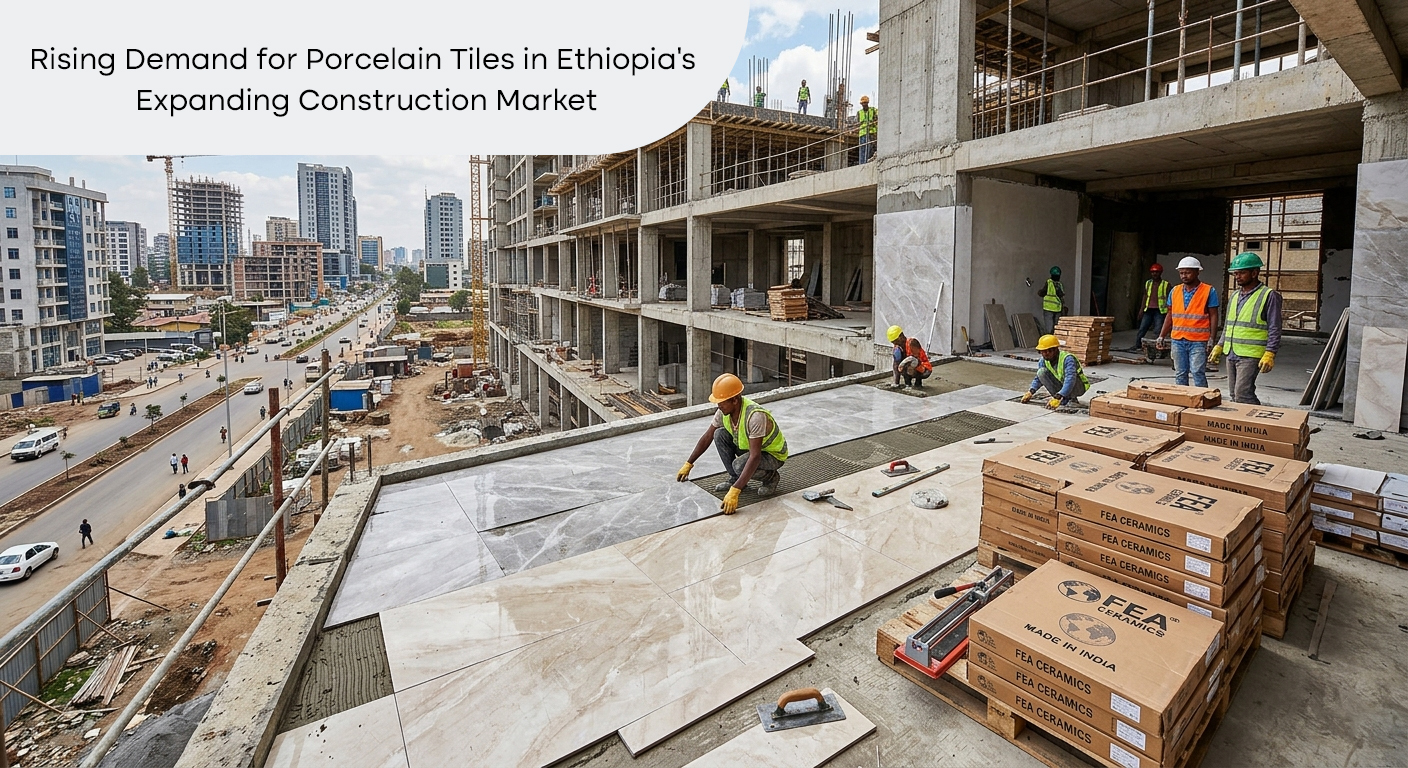
Introduction:
Ethiopia is experiencing a remarkable transformation in its construction and infrastructure sectors. Rapid urbanization, government-led development projects, expanding residential communities, and increasing commercial investments are reshaping the country’s architectural landscape. As modern construction standards continue to evolve, the demand for durable, aesthetically appealing, and cost-effective building materials has significantly increased. Among these materials, porcelain tiles have emerged as one of the most preferred solutions for flooring and wall applications across residential, commercial, and industrial projects.
Known for their durability, low maintenance requirements, elegant appearance, and versatility, porcelain tiles are becoming an essential component of Ethiopia’s growing construction market. Developers, architects, and homeowners increasingly recognize the long-term value these tiles offer. This growing preference is creating substantial opportunities for global tile manufacturers and exporters, particularly those capable of delivering innovative designs and superior quality products.
1. Overview of Ethiopia’s Rapidly Growing Construction Industry:
Ethiopia has become one of Africa’s most dynamic construction markets, supported by large-scale investments in infrastructure, transportation, housing, and commercial development. Government initiatives aimed at economic growth and urban expansion have accelerated the need for modern building materials. Major projects such as roads, industrial parks, airports, educational institutions, and healthcare facilities continue to contribute to construction activity throughout the country.
As the construction sector expands, developers seek materials that offer durability, functionality, and visual appeal. Porcelain tiles perfectly align with these requirements, making them increasingly popular across various project categories. Their ability to withstand heavy usage while maintaining their appearance makes them ideal for both public and private developments. The growth of Ethiopia’s construction industry is therefore creating a strong foundation for increased porcelain tile consumption.
2. Increasing Urbanization and Smart City Projects in Ethiopia:
Urbanization is rapidly changing Ethiopia’s demographic and architectural landscape. Cities such as Addis Ababa are expanding significantly, while new urban development projects continue to emerge across the country. Growing populations are increasing demand for housing, office spaces, shopping centers, educational institutions, and healthcare facilities.
Smart city initiatives are further driving the need for high-quality construction materials that support modern architectural standards. Porcelain tiles are increasingly used in these developments due to their sleek appearance, durability, and design flexibility. Architects appreciate their ability to create modern interiors and exteriors while meeting practical performance requirements. As Ethiopia continues to urbanize, porcelain tiles are expected to remain a preferred material in smart and sustainable urban developments.
3. Why Porcelain Tiles Are Becoming the Preferred Choice:
Porcelain tiles have gained widespread popularity because they combine beauty, strength, and functionality in a single product. Manufactured under high temperatures and pressure, these tiles offer exceptional durability and resistance to wear, moisture, stains, and scratches.
In Ethiopia’s diverse climate conditions, porcelain tiles perform exceptionally well, making them suitable for both residential and commercial environments. Their low maintenance requirements appeal to property owners seeking long-lasting flooring and wall solutions. Additionally, advancements in manufacturing technology allow porcelain tiles to replicate natural stone, marble, wood, and concrete surfaces, providing endless design possibilities. These advantages make porcelain tiles the preferred choice for modern construction projects across Ethiopia.
4. Role of Infrastructure Development in Boosting Tile Demand:
Infrastructure development remains one of the strongest drivers of construction material demand in Ethiopia. Ongoing investments in transportation networks, airports, government buildings, industrial facilities, and public infrastructure projects require durable and reliable building materials.
Porcelain tiles are widely used in such projects because they can withstand heavy foot traffic while maintaining their appearance over time. Their resistance to moisture, impact, and environmental conditions makes them ideal for public spaces and high-use environments. As infrastructure projects continue to expand nationwide, the demand for premium-quality porcelain tiles is expected to rise significantly, creating opportunities for manufacturers and suppliers serving the Ethiopian market.
5. Aesthetic Appeal of Porcelain Tiles in Modern Architecture:
Modern architecture increasingly emphasizes visual sophistication, functionality, and design innovation. Porcelain tiles contribute significantly to achieving these objectives by offering a wide variety of colours, textures, patterns, and finishes.
Architects and interior designers utilize porcelain tiles to create luxurious spaces that reflect contemporary design trends. Whether used in residential living rooms, hotel lobbies, office interiors, or commercial facades, porcelain tiles enhance overall aesthetics while maintaining practicality. Their ability to mimic premium natural materials at a lower cost further increases their appeal. This growing focus on architectural beauty is driving greater adoption of porcelain tiles throughout Ethiopia’s construction sector.
6. Growth of Residential Housing Projects in Ethiopia:
Ethiopia’s expanding middle-class population has generated increased demand for quality residential housing. Government housing programs and private residential developments continue to contribute to a growing construction market focused on modern living standards.
Homeowners increasingly seek durable and stylish materials that provide long-term value. Porcelain tiles fulfil these expectations by offering attractive designs, easy maintenance, and excellent performance. They are commonly used in living areas, kitchens, bathrooms, balconies, and outdoor spaces. As residential construction activity accelerates, porcelain tile demand continues to grow, positioning the product as a key component of modern Ethiopian homes.
7. Commercial Construction Boom (Hotels, Offices, Malls):
Commercial construction is another major factor supporting porcelain tile demand in Ethiopia. The growth of tourism, retail, hospitality, and corporate sectors has led to increased development of hotels, office complexes, shopping centers, and entertainment venues.
Commercial property developers prioritize materials that combine durability with premium aesthetics. Porcelain tiles provide both, making them suitable for high-traffic environments where appearance and performance are equally important. Their ability to maintain a professional and elegant look over many years makes them a preferred choice for commercial projects seeking long-term value and reduced maintenance costs.
8. Cost-Effectiveness and Long-Term Value of Porcelain Tiles:
Although porcelain tiles may involve a higher initial investment than some traditional flooring materials, their long-term economic benefits make them highly cost-effective. Their exceptional durability reduces the need for frequent repairs and replacements, resulting in significant savings over time.
Porcelain tiles also require minimal maintenance, reducing cleaning and upkeep expenses. Their resistance to moisture, stains, and scratches helps preserve their appearance for many years. For developers, contractors, and property owners in Ethiopia, porcelain tiles offer a practical solution that balances affordability, quality, and long-term performance, making them a smart investment for construction projects.
9. Technological Advancements in Tile Manufacturing:
The global tile industry continues to benefit from significant technological innovation. Advanced digital printing technologies now allow manufacturers to produce highly realistic designs that replicate natural materials with remarkable accuracy.
Modern production processes have also improved tile strength, consistency, and surface finishes. Large-format tiles, anti-slip surfaces, polished finishes, and customized textures are increasingly available to meet diverse architectural requirements. These innovations enhance the appeal of porcelain tiles among Ethiopian developers and architects seeking contemporary design solutions that combine functionality with visual excellence.
10. Import Trends and Global Supply Chain Influence:
As construction activity grows, Ethiopia increasingly relies on international suppliers to meet rising demand for premium building materials. Porcelain tile imports from leading manufacturing countries help ensure access to a diverse range of products, designs, and technical specifications.
Global supply chains play a crucial role in maintaining product availability and supporting construction schedules. International manufacturers continue to strengthen their presence in Ethiopia by offering competitive pricing, innovative designs, and reliable product quality. This growing import activity contributes significantly to the expansion of Ethiopia’s porcelain tile market.
11. Sustainability and Eco-Friendly Construction Materials:
Sustainability is becoming an important consideration in modern construction practices worldwide, including Ethiopia. Developers increasingly seek environmentally responsible materials that support green building initiatives and long-term environmental goals.
Porcelain tiles contribute to sustainable construction through their durability, long lifespan, and minimal maintenance requirements. Many manufacturers utilize energy-efficient production methods and recyclable raw materials to reduce environmental impact. Additionally, porcelain tiles improve indoor hygiene and air quality by resisting allergens and mould growth. These sustainability benefits enhance their appeal among environmentally conscious developers and property owners.
12. Role of Indian Tile Manufacturers in Ethiopia’s Market:
India has emerged as one of the world’s leading porcelain tile manufacturing hubs, supplying high-quality products to international markets. Indian manufacturers are known for combining advanced technology, innovative designs, and competitive pricing.
Fea Ceramics contributes to this growing global presence by offering premium porcelain tile solutions that meet international quality standards. With a commitment to excellence, product innovation, and customer satisfaction, Fea Ceramics supports the evolving needs of Ethiopia’s construction sector. By delivering durable, aesthetically appealing, and technologically advanced tiles, the company helps developers achieve world-class construction outcomes.
13. Customization and Design Flexibility in Modern Tiles:
Modern construction projects increasingly require unique design elements that reflect specific architectural visions. Porcelain tiles provide exceptional customization opportunities through various sizes, colours, textures, patterns, and finishes.
Developers and designers in Ethiopia can select from wood-look, marble-look, stone-look, and contemporary decorative tile collections to create distinctive spaces. Large-format tiles and customized surfaces further enhance design possibilities. This flexibility allows architects to achieve creative objectives while maintaining the performance advantages associated with porcelain tiles.
14. Challenges in the Ethiopian Construction Material Market:
Despite strong growth prospects, Ethiopia’s construction material market faces several challenges. Supply chain disruptions, transportation costs, import regulations, and fluctuating raw material prices can impact product availability and project timelines.
Logistical complexities may occasionally affect the distribution of imported building materials, including porcelain tiles. However, improvements in infrastructure, trade policies, and supply chain management are gradually addressing these issues. Manufacturers and suppliers that can provide consistent product availability and reliable service are well-positioned to capitalize on market opportunities.
15. Future Outlook of Porcelain Tile Industry in Ethiopia:
The future of Ethiopia’s porcelain tile market appears highly promising. Continued urbanization, infrastructure expansion, commercial development, and residential construction are expected to sustain strong demand for premium building materials.
Growing awareness of the benefits offered by porcelain tiles, including durability, aesthetic appeal, sustainability, and long-term value, will further support market growth. International manufacturers and exporters have significant opportunities to expand their presence in Ethiopia by offering innovative products tailored to local market needs. As construction standards continue to evolve, porcelain tiles are likely to play an increasingly important role in shaping Ethiopia’s modern architectural future.
Conclusion:
Ethiopia’s expanding construction market is creating substantial opportunities for the global porcelain tile industry. Rapid urbanization, infrastructure development, residential housing growth, and commercial construction projects are driving increased demand for high-performance building materials that combine durability, beauty, and value.
Porcelain tiles have emerged as a preferred solution due to their exceptional strength, low maintenance requirements, sustainability benefits, and design versatility. As the country continues its journey toward modernization, the adoption of premium porcelain tile products is expected to accelerate across all construction segments. Companies like Fea Ceramics are well-positioned to support this growth by delivering innovative, high-quality tile solutions that meet the evolving needs of Ethiopia’s dynamic construction industry. With strong market fundamentals and long-term development prospects, the future of porcelain tiles in Ethiopia remains exceptionally bright.