

Description
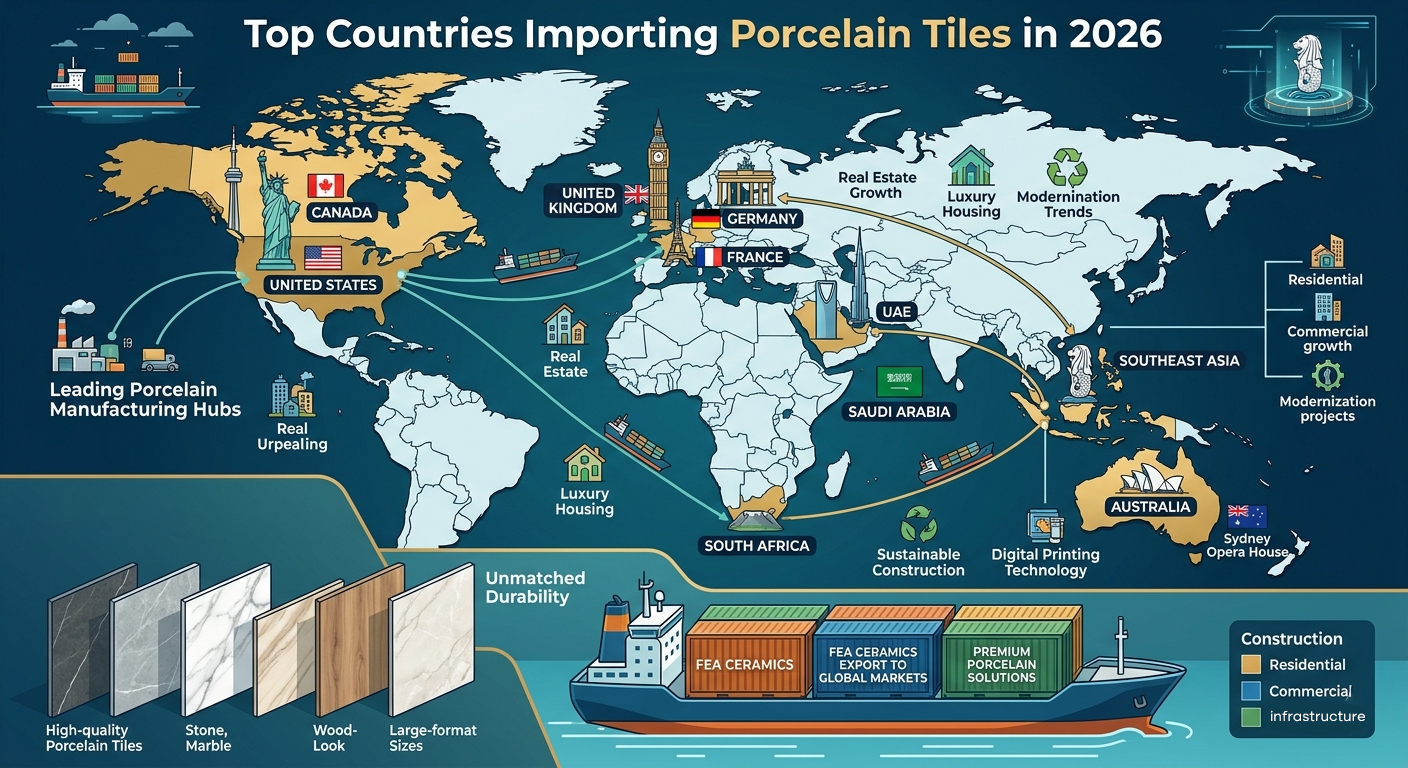
The global porcelain tile industry continues to expand in 2026 as demand for premium, durable, and aesthetically appealing building materials rises across residential, commercial, and infrastructure sectors. From North America and Europe to the Middle East and Asia-Pacific, countries are increasingly importing porcelain tiles to meet evolving construction and interior design requirements. Factors such as urbanization, real estate growth, luxury housing developments, sustainability trends, and modernization projects are driving this demand worldwide.
As one of the most versatile and long-lasting surface solutions, porcelain tiles have become a preferred choice for architects, builders, contractors, and homeowners alike. This blog explores the top countries importing porcelain tiles in 2026, the factors influencing global trade, and future market opportunities. It also highlights how Fea Ceramics continues to serve international buyers with premium-quality porcelain tile solutions designed to meet the demands of modern construction projects around the world.
1. Introduction to the Global Porcelain Tile Market in 2026
The global porcelain tile market in 2026 is witnessing remarkable growth, driven by increasing construction activities, modernization projects, and rising consumer preference for durable and stylish building materials. Porcelain tiles have become one of the most sought-after products in both residential and commercial sectors due to their exceptional strength, low maintenance requirements, and versatile design options. As urban populations continue to grow worldwide, governments and private developers are investing heavily in housing, infrastructure, hospitality, and commercial developments, creating substantial demand for imported porcelain tiles.
International trade has become an essential component of the porcelain tile industry, allowing countries to access premium-quality products from leading manufacturing hubs. Advancements in production technologies, digital printing techniques, and sustainable manufacturing practices have further increased the popularity of porcelain tiles across global markets. In 2026, countries with booming construction sectors and evolving design preferences continue to drive significant porcelain tile imports, shaping the future of the global tile industry.
2. Why Porcelain Tiles Are Popular Worldwide
Porcelain tiles have earned global recognition because of their unmatched combination of durability, beauty, and functionality. Manufactured under high temperatures and pressure, porcelain tiles offer superior resistance to moisture, stains, scratches, and heavy foot traffic, making them suitable for a wide range of applications. Whether used in residential homes, commercial buildings, hotels, retail spaces, or outdoor environments, porcelain tiles provide long-lasting performance and visual appeal.
Another key reason for their popularity is designs versatility. Modern manufacturing technologies enable porcelain tiles to replicate natural stone, marble, wood, concrete, and other premium materials while offering greater durability and easier maintenance. Homeowners and designers appreciate the wide range of colours, textures, finishes, and sizes available in the market. Furthermore, porcelain tiles contribute to sustainable construction by providing long service life and reducing replacement costs. These advantages continue to make porcelain tiles a preferred choice across developed and emerging markets worldwide.
3. Key Factors Driving Global Tile Imports
Several economic and industry-related factors are contributing to the rise in global porcelain tile imports in 2026. One of the primary drivers is rapid urbanization, particularly in developing economies where growing populations require new housing, commercial spaces, and public infrastructure. Governments and private investors are allocating substantial resources toward construction projects, increasing the demand for high-quality building materials such as porcelain tiles.
Another important factor is the growing preference for modern interior and exterior designs. Consumers are increasingly seeking premium flooring and wall solutions that combine aesthetics with functionality. Additionally, rising disposable incomes in many regions are encouraging homeowners to invest in renovation and remodelling projects. The hospitality and tourism sectors are also driving imports as hotels, resorts, and entertainment venues prioritize luxurious and durable surface materials. Improved international trade networks, efficient logistics systems, and global supply chain advancements further facilitate the movement of porcelain tiles across international markets, supporting continued import growth.
4. United States: A Leading Importer of Porcelain Tiles
The United States remains one of the largest importers of porcelain tiles in 2026, supported by its robust construction and renovation industry. Strong demand from residential housing developments, commercial buildings, office spaces, and hospitality projects continues to drive significant imports. Homeowners increasingly favour porcelain tiles for kitchens, bathrooms, living areas, and outdoor spaces due to their durability and sophisticated appearance.
Large-format porcelain tiles have become especially popular in the U.S. market, reflecting contemporary design trends that emphasize seamless aesthetics and spacious interiors. Architects and interior designers are also specifying premium imported porcelain collections that mimic natural stone and marble. The ongoing renovation of aging residential and commercial properties further contributes to import demand. Sustainability considerations are influencing purchasing decisions as well, with consumers seeking environmentally responsible building materials. As construction activity remains strong, the United States continues to represent a major growth opportunity for global porcelain tile manufacturers and exporters.
5. Canada’s Expanding Demand for Porcelain Tiles
Canada’s porcelain tile import market continues to expand in 2026, fuelled by residential construction growth, urban development projects, and increased investment in infrastructure. As major cities experience population growth and housing demand rises, builders and developers are utilizing porcelain tiles for both new construction and renovation projects. The material’s durability and resistance to extreme weather conditions make it particularly suitable for Canadian applications.
Canadian consumers are increasingly attracted to modern interior design trends that incorporate elegant and low-maintenance surfaces. Porcelain tiles offer an ideal solution for kitchens, bathrooms, entryways, and commercial environments where performance and aesthetics are equally important. Sustainability is another significant factor influencing purchasing decisions. Builders and architects are prioritizing environmentally friendly materials that contribute to long-term value and energy-efficient building practices. With strong demand for premium imported products and innovative tile designs, Canada remains one of the most important markets for porcelain tile exporters in 2026.
6. United Kingdom: Strong Market for Imported Tiles
The United Kingdom continues to be a strong importer of porcelain tiles in 2026, driven by evolving interior design trends and consistent construction activity. British homeowners increasingly favour sophisticated and contemporary living spaces, leading to greater demand for premium tile products that enhance both aesthetics and functionality. Porcelain tiles have become a popular choice for kitchens, bathrooms, hallways, and outdoor patios due to their durability and wide variety of design options.
Luxury residential developments and commercial renovation projects are further contributing to import growth. Designers are embracing large-format tiles, stone-look finishes, and minimalist styles that align with modern architectural preferences. The hospitality sector also plays a significant role, with hotels, restaurants, and retail establishments investing in high-quality surface materials to create attractive environments. Additionally, sustainability considerations are encouraging the use of long-lasting materials that reduce maintenance and replacement costs. These factors position the United Kingdom as a key destination for imported porcelain tiles in the global market.
7. Germany: Europe’s Construction Powerhouse
Germany remains one of the most influential importers of porcelain tiles in Europe in 2026, supported by its strong construction industry and commitment to high-quality building standards. The country continues to invest heavily in residential housing, commercial buildings, public infrastructure, and renovation projects. German architects, developers, and homeowners place significant emphasis on durability, functionality, and sustainability when selecting construction materials, making porcelain tiles an ideal choice.
Imported porcelain tiles are widely used in modern apartments, office buildings, retail spaces, healthcare facilities, and hospitality projects. Demand is particularly strong for premium products that offer innovative designs, large-format sizes, and natural stone-inspired finishes. Germany’s focus on environmentally responsible construction also supports the adoption of durable materials that contribute to long-term performance and reduced maintenance costs. As one of Europe’s largest economies, Germany continues to provide substantial opportunities for porcelain tile exporters seeking access to a sophisticated and quality-conscious market.
8. France: Growing Interest in Modern Tile Designs
France continues to experience growing demand for imported porcelain tiles in 2026, driven by evolving architectural styles and contemporary interior design preferences. French consumers value elegance, creativity, and premium aesthetics, encouraging the use of sophisticated tile solutions in both residential and commercial projects. Porcelain tiles are increasingly used in luxury apartments, villas, retail stores, restaurants, and hospitality developments across the country.
Modern French interiors often incorporate minimalist designs, natural textures, and neutral colour palettes, creating strong demand for stone-look, marble-look, and wood-look porcelain tiles. Sustainability also plays a key role in purchasing decisions, with builders and designers seeking environmentally friendly materials that support green building initiatives. Imported porcelain tiles offer a combination of beauty, durability, and low maintenance, making them an attractive option for various applications. As renovation activities and new construction projects continue to expand, France remains an important destination for international porcelain tile suppliers.
9. Australia: Rising Imports for Residential Projects
Australia’s porcelain tile imports continue to increase in 2026 as the country’s residential construction and renovation sectors maintain steady growth. Homeowners and developers increasingly choose porcelain tiles for their ability to withstand harsh weather conditions while delivering exceptional visual appeal. The popularity of open-plan living spaces and indoor-outdoor design concepts has further contributed to the demand for versatile tile solutions.
Porcelain tiles are widely used throughout Australian homes, including kitchens, bathrooms, living areas, balconies, patios, and swimming pool surroundings. Their resistance to moisture, stains, UV exposure, and heavy foot traffic makes them highly suitable for the Australian climate. Large-format tiles and natural stone-inspired finishes remain particularly popular among architects and interior designers. Additionally, commercial developments, hospitality projects, and retail spaces continue to drive import demand. With ongoing urban development and strong consumer interest in premium building materials, Australia remains a valuable market for global porcelain tile manufacturers.
10. United Arab Emirates: A Hub for Luxury Construction
The United Arab Emirates continues to be one of the most important importers of porcelain tiles in the Middle East in 2026. The country’s reputation for luxury construction, iconic architecture, and large-scale infrastructure projects creates consistent demand for premium building materials. Cities such as Dubai and Abu Dhabi continue to attract investment in residential, commercial, hospitality, and mixed-use developments.
Porcelain tiles play a critical role in these projects due to their luxurious appearance, durability, and versatility. High-end hotels, shopping malls, luxury villas, and commercial towers frequently incorporate imported porcelain tile collections that offer sophisticated designs and superior performance. The UAE’s tourism-driven economy further fuels construction activity, resulting in continuous demand for aesthetically appealing and long-lasting surface materials. As developers seek innovative and premium solutions for world-class projects, imported porcelain tiles remain a preferred choice throughout the country’s rapidly evolving construction landscape.
11. Saudi Arabia: Rapid Infrastructure Expansion
Saudi Arabia has emerged as one of the fastest-growing markets for imported porcelain tiles in 2026. The country’s ambitious Vision 2030 program continues to drive significant investment in infrastructure, housing, tourism, and economic diversification projects. Massive developments including smart cities, entertainment destinations, airports, hotels, and residential communities are generating substantial demand for high-quality construction materials.
Porcelain tiles are extensively used across these projects because of their durability, aesthetic appeal, and ability to perform in demanding environmental conditions. Developers increasingly seek imported products that meet international quality standards while offering modern designs suitable for luxury and large-scale developments. The growing middle class and rising urbanization rates also contribute to increased residential demand for premium tile solutions. As construction activities accelerate throughout the kingdom, Saudi Arabia represents a major opportunity for porcelain tile exporters looking to expand their presence in the Middle East region.
12. South Africa: Emerging Market for Porcelain Tiles
South Africa is steadily emerging as an important importer of porcelain tiles in 2026. Urban expansion, infrastructure development, and increased investment in commercial construction projects are creating new opportunities for tile suppliers. The growing demand for modern residential housing and improved public infrastructure is encouraging greater adoption of premium building materials across the country.
Consumers and developers are increasingly recognizing the long-term value offered by porcelain tiles, including durability, low maintenance requirements, and aesthetic versatility. Imported porcelain products are particularly attractive for high-end residential developments, shopping centers, office buildings, and hospitality projects. Modern design trends are influencing consumer preferences, resulting in higher demand for stylish and contemporary tile collections. As South Africa continues to modernize its construction sector and improve urban infrastructure, imported porcelain tiles are expected to play an increasingly significant role in shaping the country’s-built environment.
13. Southeast Asian Countries Driving Tile Demand
Southeast Asia has become one of the fastest-growing regions for porcelain tile imports in 2026. Countries such as Singapore, Malaysia, Vietnam, Thailand, and Indonesia are experiencing strong economic growth, urbanization, and expanding real estate markets. These factors are generating substantial demand for modern construction materials, including high-quality porcelain tiles.
The region’s thriving tourism industry also contributes significantly to tile consumption through the development of hotels, resorts, retail complexes, and entertainment facilities. Governments continue to invest in transportation infrastructure, smart city projects, and commercial developments, further supporting market growth. Consumers across Southeast Asia increasingly prefer modern interiors featuring durable and visually appealing surfaces. Imported porcelain tiles are often selected for their premium quality, advanced designs, and long-lasting performance. As economic development continues across the region, Southeast Asia is expected to remain a major growth driver for the global porcelain tile industry.
14. Global Trade Trends Affecting Porcelain Tile Imports
Global trade dynamics continue to influence porcelain tile imports in 2026. Advancements in shipping technology, logistics management, and supply chain optimization have improved the efficiency of international trade, allowing manufacturers to serve global markets more effectively. Faster transportation networks and digital supply chain systems are helping reduce delivery times and improve inventory management.
Trade agreements between countries also play a significant role in shaping import patterns. Favourable tariffs, customs policies, and economic partnerships can increase market accessibility and encourage cross-border commerce. At the same time, import regulations, environmental standards, and certification requirements influence purchasing decisions and supplier selection. Manufacturers that maintain compliance with international quality and sustainability standards are better positioned to compete in global markets. Understanding these evolving trade trends is essential for businesses seeking to capitalize on growing opportunities within the international porcelain tile industry.
15. Future Outlook for Porcelain Tile Imports Beyond 2026
The future of porcelain tile imports remains highly promising beyond 2026 as global construction activity continues to expand. Emerging economies are expected to contribute significantly to future demand as urban populations grow and infrastructure investments increase. New residential communities, commercial developments, transportation projects, and tourism-related construction will continue to drive the need for durable and aesthetically appealing building materials.
Technological innovations are also transforming the industry. Advanced digital printing techniques, large-format manufacturing capabilities, smart surface technologies, and sustainable production methods are creating exciting opportunities for manufacturers and buyers alike. Consumers increasingly seek products that combine visual sophistication with environmental responsibility, encouraging further innovation. As international trade becomes more interconnected and efficient, porcelain tile exporters that prioritize quality, design, and sustainability will be well-positioned to capture new opportunities across global markets in the years ahead.
16. Fea Ceramics: Delivering World-Class Porcelain Tiles
Fea Ceramics has established itself as a trusted manufacturer and exporter of premium porcelain tiles, serving customers across domestic and international markets. The company is committed to delivering products that combine exceptional durability, innovative design, and superior craftsmanship. By leveraging advanced manufacturing technologies and stringent quality control processes, Fea Ceramics ensures that every tile meets the highest industry standards.
The company’s diverse product portfolio includes modern, contemporary, and classic tile collections suitable for residential, commercial, and architectural applications. Continuous investment in research, development, and design innovation enables Fea Ceramics to stay ahead of changing market trends and customer expectations. With a strong focus on customer satisfaction, product excellence, and sustainable manufacturing practices, Fea Ceramics continues to strengthen its reputation as a reliable partner for buyers seeking world-class porcelain tile solutions.
17. Fea Ceramics’ Global Export Network
Fea Ceramics has developed a strong international export network that allows the company to efficiently serve customers across multiple continents. Through strategic logistics partnerships and streamlined supply chain management, the company ensures timely delivery of premium porcelain tiles to clients worldwide. Its export operations are designed to meet the diverse requirements of distributors, wholesalers, contractors, developers, and retailers operating in various markets.
The company understands the complexities of international trade and provides comprehensive support throughout the export process. From product selection and packaging to documentation and shipping coordination, Fea Ceramics maintains high standards of professionalism and reliability. By continuously expanding its global reach and strengthening relationships with international partners, the company remains well-positioned to meet the growing worldwide demand for high-quality porcelain tile products.
18. Why International Buyers Choose Fea Ceramics
International buyers consistently choose Fea Ceramics because of the company’s unwavering commitment to quality, innovation, and customer-focused service. Every porcelain tile is manufactured using premium raw materials and advanced production techniques to ensure outstanding durability, aesthetic appeal, and performance. The company offers an extensive range of designs, finishes, sizes, and collections that cater to diverse architectural and interior design requirements.
Competitive pricing, reliable delivery schedules, and customized solutions further enhance the value proposition offered by Fea Ceramics. Buyers benefit from responsive customer support, export expertise, and a strong understanding of global market expectations. Whether serving residential developments, commercial projects, hospitality facilities, or large-scale infrastructure initiatives, Fea Ceramics consistently delivers products that exceed customer expectations. These strengths have helped establish the company as a preferred supplier for international buyers seeking dependable and high-quality porcelain tile solutions.
Conclusion
The global porcelain tile market in 2026 reflects the continued expansion of construction, infrastructure, hospitality, and real estate sectors across major economies. Countries including the United States, Canada, the United Kingdom, Germany, France, Australia, the United Arab Emirates, Saudi Arabia, South Africa, and rapidly developing Southeast Asian nations are driving significant import demand for premium porcelain tiles.
Understanding these international market trends allows manufacturers, exporters, and buyers to identify growth opportunities and respond effectively to evolving customer needs. As demand for durable, stylish, and sustainable building materials continues to increase, porcelain tiles will remain a preferred choice across residential and commercial applications worldwide.
Fea Ceramics stands ready to support this global growth with innovative designs, exceptional quality standards, reliable export capabilities, and customer-focused solutions. By combining advanced manufacturing technology with a strong international presence, Fea Ceramics continues to deliver world-class porcelain tile products that meet the expectations of modern construction projects around the globe.
