

Tiles play an essential role in modern construction and interior design because they offer durability, aesthetic appeal, and long-term performance. Among the many types of tiles available in the market, vitrified tiles and porcelain tiles are two of the most popular choices used in residential, commercial, and industrial projects. Both tile types are known for their strength, low maintenance, and stylish finishes. However, many buyers, architects, and importers often wonder about the difference between them and which one is better for a particular application.
At Fea Ceramics, we frequently help global buyers understand the key differences between these two materials so they can choose the most suitable tile for their projects. Although vitrified and porcelain tiles may appear similar at first glance, they differ in composition, manufacturing process, water absorption rate, strength, and usage areas. Understanding these differences is important when selecting tiles for flooring, walls, outdoor spaces, or commercial environments.
This blog explains everything you need to know about vitrified and porcelain tiles, including their manufacturing process, durability, maintenance requirements, cost comparison, and ideal applications.
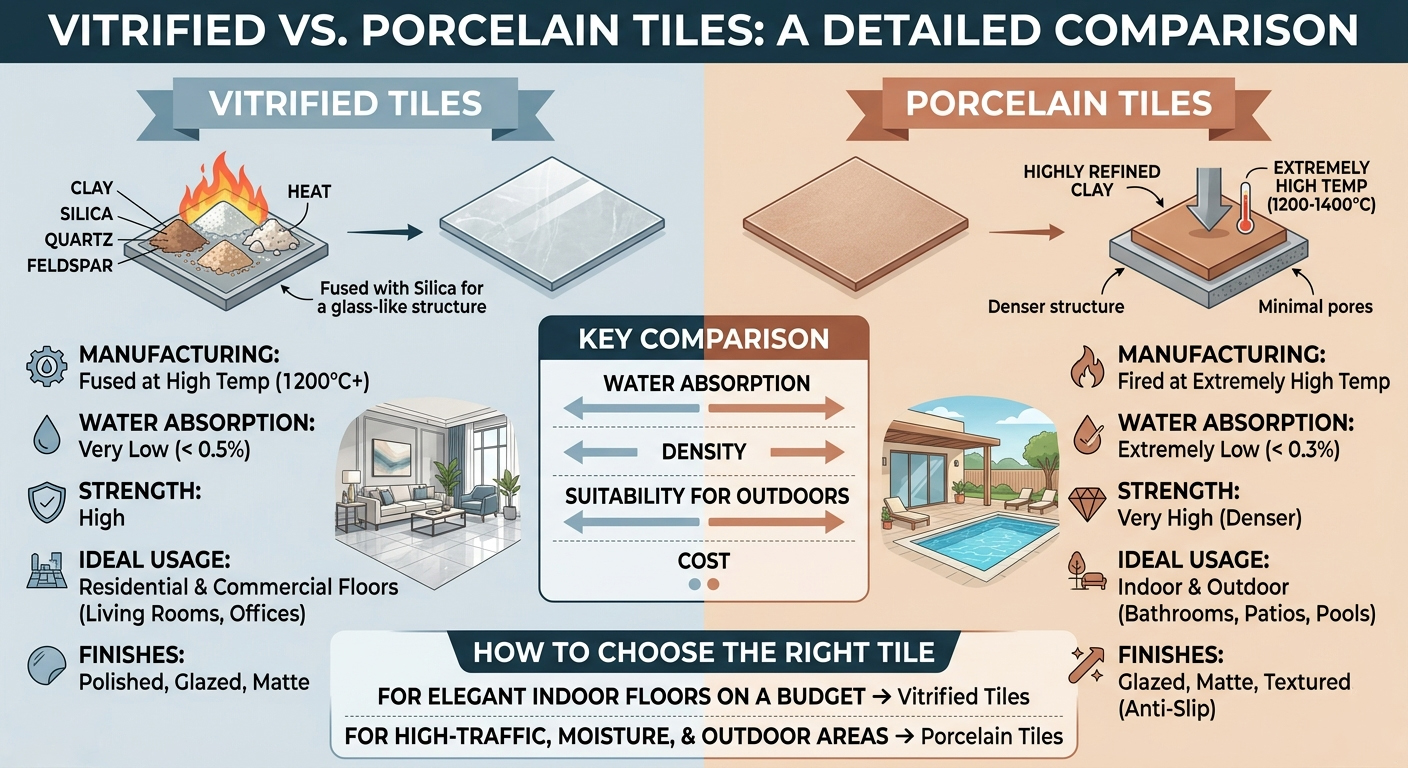
Vitrified vs. Porcelain Tiles – Key Comparison Table:
| Feature | Vitrified Tiles | Porcelain Tiles |
| Raw Material | Silica, clay, quartz, feldspar | Highly refined clay |
| Manufacturing Temperature | Very high temperature | Extremely high temperature |
| Water Absorption | Very low | Extremely low |
| Strength | High strength | Very high strength |
| Surface Finish | Polished, glazed, matte | Glazed, matte, textured |
| Applications | Residential and commercial floors | Indoor and outdoor spaces |
| Maintenance | Easy to clean | Very easy to maintain |
| Slip Resistance | Moderate depending on finish | Higher in textured finishes |
| Cost | Generally affordable | Slightly higher cost |
| Lifespan | Long-lasting | Extremely long-lasting |
1. Introduction to Vitrified and Porcelain Tiles:
Vitrified tiles and porcelain tiles are widely used flooring and wall materials in modern architecture. Vitrified tiles are ceramic tiles that undergo a vitrification process, which means they are fused with silica and other minerals at high temperatures to create a glass-like, dense surface. This process makes them highly durable, stain-resistant, and suitable for heavy foot traffic areas.
Porcelain tiles, on the other hand, are a type of ceramic tile made from refined clay and fired at extremely high temperatures. This process produces tiles that are very dense, highly durable, and almost non-porous. Because of their superior durability and water resistance, porcelain tiles are widely used in both indoor and outdoor environments.
Both types of tiles are popular in construction because they provide a combination of functionality, durability, and aesthetic beauty.
2. Manufacturing Process of Vitrified Tiles:
The production of vitrified tiles involves a specialized process designed to create strong and dense tiles. The primary raw materials used include silica, clay, quartz, and feldspar. These materials are mixed in precise proportions to form a uniform composition.
The mixture is then pressed under high pressure to create tile shapes. After pressing, the tiles are fired in a kiln at extremely high temperatures, usually above 1200°C. During this process, the silica and other minerals melt and form a glass-like structure that fills the pores of the tile.
This vitrification process results in tiles that are extremely strong, non-porous, and resistant to stains and scratches. The finished product is smooth, shiny, and ideal for modern flooring applications.
3. Manufacturing Process of Porcelain Tiles:
Porcelain tiles are manufactured using a similar but more refined process. They are made primarily from high-quality refined clay, along with minerals such as feldspar and quartz. The raw materials are finely ground and mixed with water to form a dense paste.
The mixture is then pressed into moulds under extremely high pressure and fired at temperatures exceeding 1200 – 1400°C. This intense firing process creates a highly compact structure with minimal pores.
Because of this manufacturing method, porcelain tiles become incredibly dense, strong, and resistant to water. These properties make them suitable for heavy-duty environments such as commercial buildings, outdoor spaces, and high-traffic areas.
4. Composition and Raw Materials:
The composition of vitrified and porcelain tiles plays a major role in determining their performance and characteristics.
Vitrified tiles are made from a mixture of clay, silica, quartz, and feldspar, which helps create a glass-like finish during the firing process. The presence of silica contributes to the strength and glossy appearance of vitrified tiles.
Porcelain tiles use highly refined clay and mineral additives, which give them higher density and lower porosity. The refined materials allow porcelain tiles to achieve superior hardness and resistance to environmental conditions.
The difference in raw materials results in porcelain tiles generally being denser and stronger than vitrified tiles.
5. Water Absorption Rate Comparison:
Water absorption is one of the most important factors when choosing tiles. Tiles with low water absorption are more durable and resistant to moisture damage.
Vitrified tiles have very low water absorption, usually less than 0.5%, making them resistant to moisture and suitable for kitchens and bathrooms.
Porcelain tiles have an even lower water absorption rate, often below 0.3%, which makes them almost completely waterproof. Because of this property, porcelain tiles are ideal for outdoor applications and areas exposed to heavy moisture.
6. Strength and Durability:
Both vitrified and porcelain tiles are known for their durability, but porcelain tiles generally have a slight advantage in terms of strength.
Vitrified tiles are extremely strong and resistant to scratches, stains, and heavy foot traffic. They are commonly used in living rooms, offices, malls, and commercial spaces.
Porcelain tiles are even more durable because of their dense composition. They can withstand extreme conditions, heavy loads, and outdoor weather changes, making them suitable for exterior floors and public spaces.
7. Surface Finish and Design Variety:
Both vitrified and porcelain tiles are available in a wide range of finishes and designs. Manufacturers produce tiles in different textures and patterns to suit modern interior design trends.
Vitrified tiles often come in polished, double-charged, glazed, and full-body finishes, giving them a glossy and luxurious appearance. They are commonly used to replicate marble, stone, and wooden textures.
Porcelain tiles are available in matte, glazed, textured, and anti-slip finishes, making them highly versatile for indoor and outdoor applications. Their designs often mimic natural materials such as stone, wood, and concrete.
8. Applications and Ideal Usage Areas:
Choosing the right tile type depends largely on where it will be installed.
Vitrified tiles are ideal for living rooms, bedrooms, office floors, shopping malls, and residential interiors because of their polished finish and elegant look.
Porcelain tiles are suitable for bathrooms, kitchens, outdoor patios, balconies, swimming pool areas, and commercial spaces due to their superior water resistance and strength.
9. Maintenance and Cleaning Requirements:
Both tile types are relatively easy to maintain, which makes them popular in modern homes and commercial buildings.
Vitrified tiles require regular cleaning with mild detergents and water to maintain their shine. Because they are non-porous, they resist stains and dirt accumulation.
Porcelain tiles are even easier to maintain because their dense structure prevents water and stains from penetrating the surface. Regular sweeping and occasional mopping are usually enough to keep them clean.
10. Slip Resistance and Safety:
Safety is an important factor when selecting tiles, especially for wet or outdoor areas.
Polished vitrified tiles can sometimes be slippery when wet. However, matte or textured finishes provide better slip resistance.
Porcelain tiles often come with textured or anti-slip surfaces, making them safer for bathrooms, outdoor areas, and poolside installations.
11. Cost Comparison:
Cost is another important consideration when selecting tiles for construction projects.
Vitrified tiles are generally more affordable, making them a popular choice for large residential and commercial flooring projects.
Porcelain tiles are typically slightly more expensive due to their refined manufacturing process and superior durability. However, the long-term benefits often justify the higher price.
12. Longevity and Performance:
Both vitrified and porcelain tiles offer excellent longevity when installed correctly.
Vitrified tiles can last 15 – 25 years or more, depending on usage and maintenance.
Porcelain tiles can last even longer because of their dense structure and resistance to environmental factors. They are often used in projects that require extremely long-lasting materials.
13. Advantages and Disadvantages of Vitrified Tiles:
Advantages:
- Smooth and glossy finish
- Highly durable
- Resistant to stains and scratches
- Affordable compared to porcelain tiles
- Available in many designs
Disadvantages:
- Can be slippery when polished
- Slightly lower density than porcelain tiles
- Not always ideal for outdoor conditions
14. Advantages and Disadvantages of Porcelain Tiles:
Advantages:
- Extremely durable and dense
- Very low water absorption
- Suitable for indoor and outdoor use
- High resistance to stains and weather
- Wide range of textured and anti-slip finishes
Disadvantages:
- Slightly higher cost
- Harder to cut and install due to density
15. How to Choose the Right Tile for Your Project:
Selecting the right tile depends on several factors including application, budget, durability requirements, and design preferences.
For indoor flooring with a luxurious finish, vitrified tiles are often the preferred choice. They offer a stylish appearance and good durability at an affordable cost
For outdoor areas, bathrooms, and heavy commercial environments, porcelain tiles are usually the better option because of their higher density and superior water resistance.
Buyers and importers should also consider factors such as tile thickness, surface finish, slip resistance, and long-term maintenance requirements before planning.
At Fea Ceramics, we help global buyers and construction professionals choose high-quality tiles that meet international standards and project requirements.
Conclusion:
Both vitrified tiles and porcelain tiles are excellent choices for modern construction projects. They offer durability, aesthetic appeal, and long-lasting performance. While vitrified tiles are known for their glossy finish and affordability, porcelain tiles stand out for their exceptional strength, water resistance, and versatility.
The best choice ultimately depends on the specific needs of your project. If you are looking for elegant indoor flooring at an affordable price, vitrified tiles are a great option. However, if you need tiles that can withstand extreme conditions, moisture, and heavy traffic, porcelain tiles are the superior choice.
At Fea Ceramics, we specialize in providing high-quality vitrified and porcelain tiles for global buyers, ensuring premium quality, modern designs, and reliable performance for every project.
