

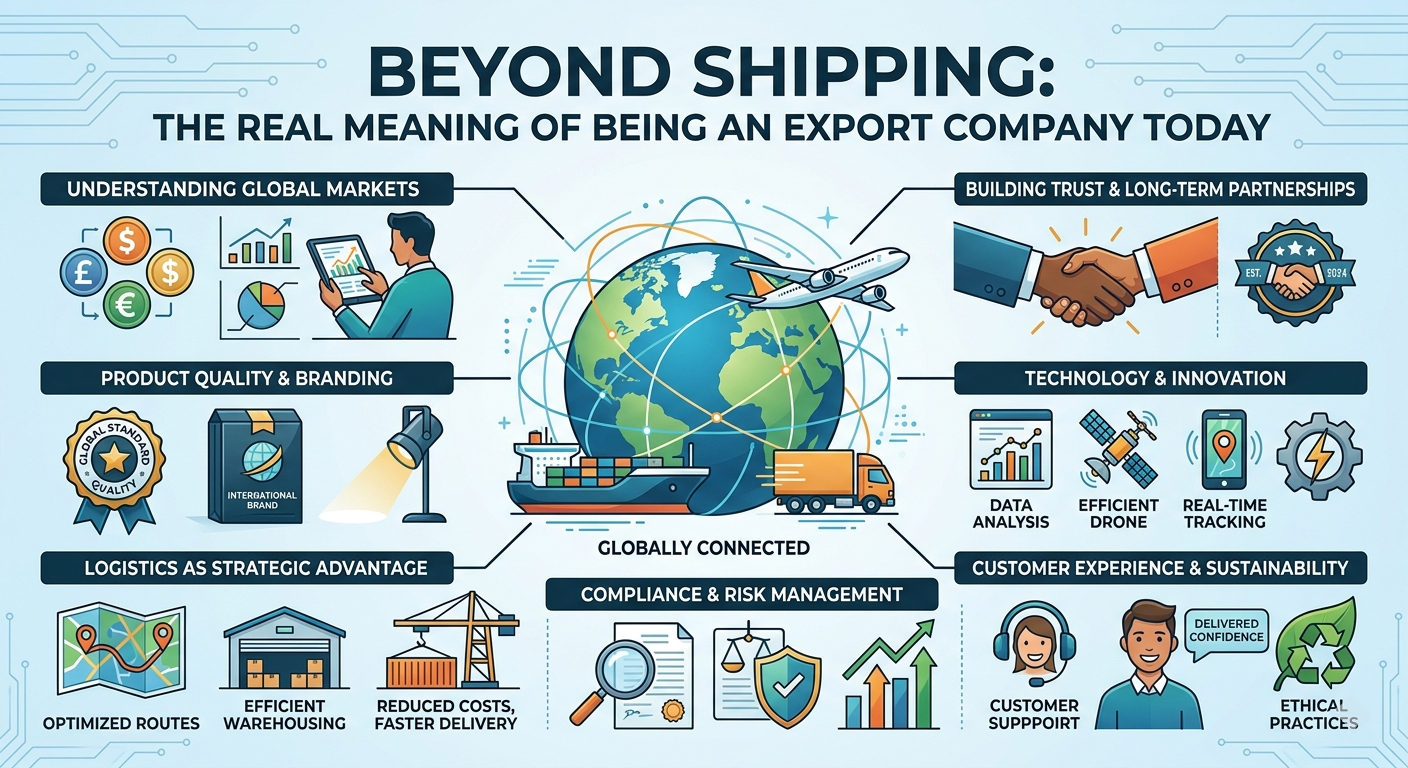
In today’s interconnected global economy, the role of an export company has evolved far beyond the traditional concept of simply shipping goods from one country to another. Modern exporters are strategic partners, brand ambassadors, and problem-solvers who contribute to the success of businesses across borders. From understanding international markets to delivering exceptional customer experiences, exporting is now about creating value, building trust, and sustaining long-term relationships.
This blog explores the deeper meaning of being an export company today and highlights the critical factors that define success in global trade.
1. Introduction: Exporting is More Than Transportation:
Exporting is no longer limited to logistics and delivery. Today’s export companies are responsible for creating a seamless experience that combines quality, reliability, and service. They act as a bridge between cultures, economies, and expectations. The true value lies in how efficiently and consistently they fulfil commitments, ensuring that clients receive not just products, but confidence and trust in every shipment.
2. Understanding Global Market Dynamics:
Success in exporting begins with a deep understanding of global markets. Exporters must analyse economic trends, customer preferences, cultural behaviours, and regional demands before entering any market. What works in one country may not succeed in another. By studying these dynamics, companies can position their products strategically, ensuring relevance and competitiveness in diverse international landscapes.
3. Building Trust Across Borders:
Trust is the foundation of every successful export relationship. Unlike local businesses, exporters often operate without face-to-face interaction. This makes consistency, transparency, and reliability even more important. Meeting deadlines, maintaining quality, and honouring commitments help build credibility. Over time, trust transforms business transactions into long-term partnerships.
4. Product Quality as a Global Standard:
In the global marketplace, quality is non-negotiable. Export companies must adhere to international standards rather than just local benchmarks. Consistency in quality ensures that buyers receive the same experience every time, regardless of location. High-quality products not only reduce complaints and returns but also strengthen brand reputation worldwide.
5. Branding Beyond Borders:
A strong brand identity is essential for standing out in global markets. Exporters must create a brand that resonates with different cultures while maintaining a consistent core message. This includes visual identity, packaging, communication tone, and overall perception. A well-established brand builds recognition, trust, and loyalty across multiple regions.
6. The Role of Communication in Export Success:
Clear and professional communication is a key driver of export success. Timely updates, accurate information, and responsiveness help build confidence among international clients. Miscommunication can lead to delays, misunderstandings, and financial losses. Effective communication ensures smooth coordination and strengthens business relationships.
7. Customization for Different Markets:
Every market has unique requirements, and successful exporters understand the importance of customization. Whether it is product specifications, packaging design, or labelling standards, adapting to local preferences enhances market acceptance. Customization demonstrates flexibility and a customer-centric approach, giving exporters a competitive advantage.
8. Compliance and Documentation Excellence:
Exporting involves complex regulations, certifications, and documentation processes. Accuracy and compliance are critical to avoid delays, penalties, or shipment rejections. Professional exporters maintain a strong understanding of international trade laws and ensure that all paperwork is precise and complete. This reduces risks and ensures smooth operations.
9. Logistics as a Strategic Advantage:
Logistics is no longer just about transportation, it is a strategic function. Efficient logistics planning can reduce costs, improve delivery timelines, and enhance reliability. From selecting the right shipping methods to optimizing supply chains, exporters who treat logistics as a competitive advantage can significantly improve their overall performance.
10. Technology in Modern Export Businesses:
Technology is transforming the export industry. Digital tools, automation, and data analytics help streamline operations, improve decision-making, and enhance efficiency. From inventory management to real-time tracking and communication, technology enables exporters to operate faster, smarter, and more accurately in a competitive global environment.
11. Customer Experience Beyond Delivery:
The export journey does not end with delivery. After-sales service, feedback management, and continuous engagement are essential for building lasting relationships. Exporters who prioritize customer experience create trust and loyalty, leading to repeat business and positive word-of-mouth in international markets.
12. Risk Management in International Trade:
Exporting involves various risks, including currency fluctuations, political instability, and supply chain disruptions. Successful exporters identify potential risks and implement strategies to manage them effectively. This includes diversification, proper planning, and financial safeguards, ensuring business continuity even in uncertain conditions.
13. Sustainability and Ethical Practices:
Global buyers are increasingly prioritizing sustainability and ethical sourcing. Export companies must adopt environmentally responsible practices and ensure ethical production processes. This not only meets international expectations but also enhances brand image and long-term credibility in global markets.
14. Building Long-Term Global Partnerships:
Modern exporting is about relationships, not transactions. Successful exporters focus on long-term collaboration with their clients. By understanding customer needs, maintaining consistency, and delivering value, they create partnerships that grow over time. These relationships provide stability and open doors to new opportunities.
Conclusion: The Evolving Identity of Export Companies:
The identity of export companies has transformed significantly in today’s global economy. They are no longer just suppliers or logistics providers they are strategic partners who contribute to business growth, brand development, and market expansion.
To succeed, exporters must combine quality, trust, innovation, and adaptability. By focusing on long-term relationships, embracing technology, and understanding global markets, they can create a strong and sustainable presence worldwide.
In essence, being an export company today means going beyond shipping, it means delivering value, building connections, and shaping the future of global trade.