

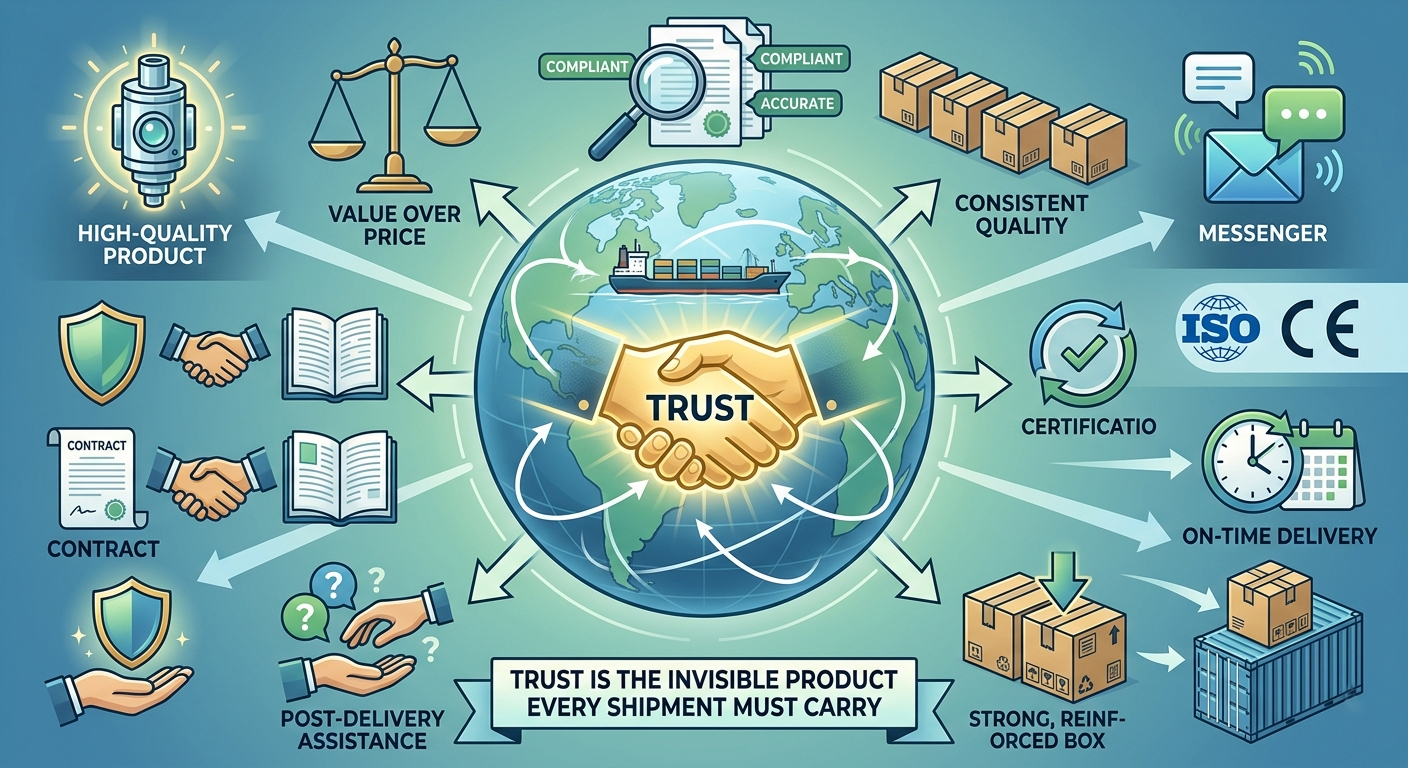
In the world of international trade, products may travel thousands of miles, cross borders, and pass through multiple hands before reaching their final destination. While quality, design, and pricing are important, there is one invisible element that truly defines the success of every export – trust.
For a company like Fea Ceramics, exporting is not just about delivering tiles or ceramic products; it’s about delivering confidence, reliability, and long-term assurance. Trust is the silent companion in every shipment, shaping relationships and determining future business opportunities.
1. Understanding Trust in Global Trade:
Trust is an intangible yet powerful asset in international business. Unlike physical goods, it cannot be measured in weight or volume, but its impact is far greater. In global trade, trust represents the confidence a buyer places in a supplier to deliver exactly what was promised.
It is built over time through consistent actions, transparent dealings, and professional conduct. Without trust, even the best products struggle to find a stable market internationally.
2. Why Trust Matters More Than the Product Itself:
In competitive global markets, buyers often have multiple supplier options. What sets one exporter apart from another is not just the product, but the reliability behind it.
Importers prefer partners who consistently meet commitments rather than those who offer slightly lower prices. A dependable exporter reduces risk, ensures smooth operations, and ultimately becomes a preferred long-term partner.
3. First Impressions Through Documentation:
Before the product even reaches the buyer, documentation creates the first impression. Accurate invoices, packing lists, certificates, and compliance documents reflect professionalism and attention to detail.
Errors in documentation can lead to delays, penalties, or mistrust. Clear and precise paperwork reassures buyers that they are dealing with a competent and reliable exporter.
4. Consistency in Product Quality:
One successful shipment is not enough to build trust. Consistency is key. Buyers expect the same quality standards in every order, regardless of volume or frequency.
Maintaining uniformity in size, finish, durability, and design helps build confidence and reduces the chances of disputes. Consistency transforms one-time buyers into loyal clients.
5. Transparency in Communication:
Clear and honest communication is the backbone of trust. Keeping buyers informed about production progress, potential delays, or shipping updates demonstrates accountability.
Instead of hiding challenges, proactive communication builds credibility. Buyers appreciate exporters who keep them informed and involved throughout the process.
6. Meeting International Standards and Certifications:
Certifications such as ISO, CE, and other international standards act as proof of quality and compliance. They assure buyers that the products meet global benchmarks.
For exporters, these certifications are not just formalities but essential tools to build credibility in international markets. They signal that the company adheres to strict quality and safety norms.
7. Timely Deliveries as a Trust Builder:
In global trade, time is critical. Delays can disrupt entire supply chains, leading to financial losses for buyers.
Meeting delivery deadlines consistently builds reliability. It shows that the exporter respects the buyer’s timelines and business commitments, strengthening long-term relationships.
8. Secure and Professional Packaging:
Packaging is more than protection – it reflects professionalism. Secure packaging ensures that products arrive in perfect condition, while well-designed packaging enhances brand perception.
Poor packaging can damage both the product and the company’s reputation. Thoughtful packaging demonstrates care, precision, and responsibility.
9. Handling Logistics with Reliability:
Efficient logistics management is crucial in exporting. Choosing dependable shipping partners, planning routes, and ensuring proper handling during transit all contribute to a smooth delivery process.
Reliable logistics minimize risks, prevent delays, and reinforce the buyer’s confidence in the exporter’s capabilities.
10. Ethical Business Practices in Exporting:
Honesty and integrity form the foundation of trust. Transparent pricing, clear contracts, and honouring commitments are essential in building strong business relationships.
Unethical practices may offer short-term gains but can severely damage long-term credibility. Ethical exporting ensures sustainable growth and respect in global markets.
11. After-Sales Support and Responsiveness:
The relationship with the buyer does not end after delivery. Providing prompt after-sales support, addressing concerns, and resolving issues strengthens trust.
Responsive exporters show that they value their clients beyond transactions, creating a sense of partnership rather than just business.
12. Building Long-Term Relationships Over One-Time Deals:
Successful exporters focus on building lasting relationships rather than chasing one-time profits. Trust nurtures loyalty, leading to repeat orders and long-term collaborations.
Strong relationships also open doors to new opportunities through referrals and expanded networks.
13. Managing Risks and Accountability:
In international trade, challenges such as delays, damages, or errors are sometimes unavoidable. What matters is how they are handled.
Taking responsibility, offering solutions, and compensating fairly when needed demonstrates accountability. This strengthens trust even in difficult situations.
14. Reputation in the Global Market:
Trust directly impacts a company’s reputation. A reliable exporter earns positive word-of-mouth, strong reviews, and repeat business.
Over time, this reputation becomes a valuable asset, helping the company stand out in competitive global markets.
15. Trust as a Competitive Advantage:
In today’s global economy, trust is not just a value – it is a competitive advantage. Companies that consistently deliver reliability, transparency, and quality gain a strong position in international markets.
Exporting trust ensures repeat business, long-term growth, and global recognition, making it the most valuable product any exporter can offer.
Conclusion:
At its core, exporting is not just about moving goods across borders – it is about building relationships across cultures, countries, and businesses. While products may vary, the one constant that defines success is trust.
For Fea Ceramics, every shipment carries more than just ceramic products – it carries a promise of quality, reliability, and integrity. By focusing on trust as the foundation of global trade, businesses can create lasting partnerships and achieve sustainable growth in international markets.
In the end, the most successful exporters are not just those who deliver products – but those who consistently deliver trust.