

Introduction:
Wooden plank tiles have become a defining element in modern interior design, especially across European and American homes. Combining the timeless charm of natural wood with the durability of ceramic or porcelain, these tiles offer a practical yet stylish flooring solution. As homeowners and designers increasingly seek low-maintenance and long-lasting materials, wooden plank tiles have emerged as the perfect alternative to traditional hardwood flooring.
From cosy Scandinavian homes to elegant American interiors, wooden plank tiles provide versatility, aesthetic appeal, and performance. This blog explores the best designs, trends, and applications tailored specifically for Western markets, helping manufacturers, exporters, and buyers make informed decisions.
1. Introduction to Wooden Plank Tiles:
Wooden plank tiles are designed to replicate the natural look and texture of real wood while offering superior durability. Made primarily from ceramic or porcelain, these tiles mimic wood grains, knots, and textures with remarkable accuracy. Unlike natural wood, they are resistant to moisture, termites, and wear, making them ideal for both residential and commercial applications.
Their growing popularity stems from their ability to combine aesthetics with practicality. Homeowners no longer need to compromise between beauty and functionality. Wooden plank tiles deliver the warmth of wood with the resilience of tile, making them suitable for high-traffic areas and humid environments. Additionally, advancements in digital printing technology have made these tiles more realistic than ever, further increasing their demand in modern interiors.
2. Growing Demand in European & American Markets:
The demand for wooden plank tiles in Europe and the United States has seen significant growth over the past decade. This trend is driven by changing lifestyle preferences, where homeowners prioritize durability, sustainability, and ease of maintenance. Unlike hardwood flooring, wooden tiles do not warp or expand due to temperature changes, making them ideal for diverse climatic conditions.
In Europe, minimalist and eco-conscious living has fuelled the adoption of these tiles, while in the U.S., their versatility in both traditional and contemporary designs has made them a popular choice. Commercial spaces such as cafes, offices, and retail stores also prefer wooden plank tiles due to their long lifespan and cost-effectiveness. This increasing demand presents a lucrative opportunity for tile manufacturers targeting export markets.
3. Key Design Trends in Western Interiors:
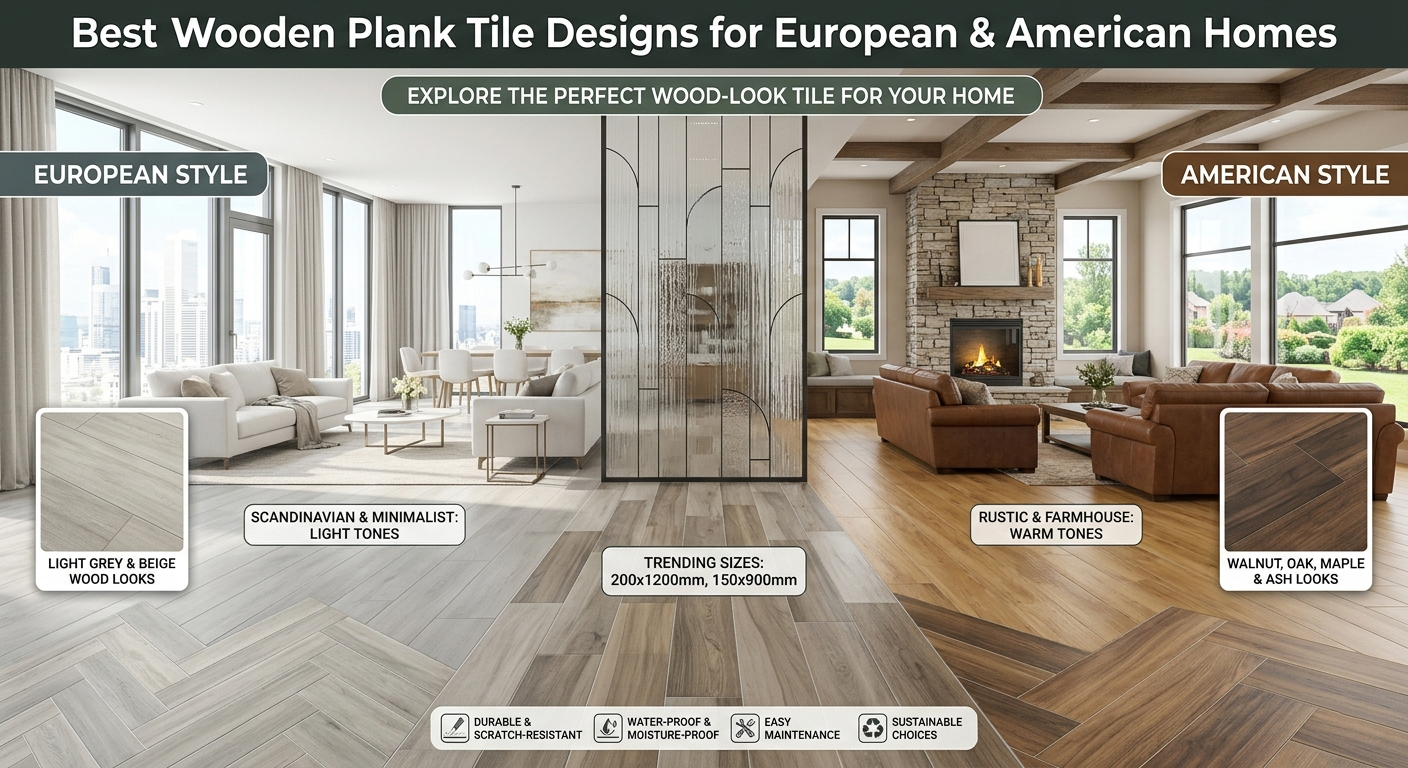
Western interior design trends play a crucial role in shaping wooden plank tile preferences. Styles such as Scandinavian, rustic, farmhouse, and modern minimalism dominate the European and American markets. Scandinavian interiors favour light, airy spaces with subtle textures, while rustic and farmhouse styles embrace natural imperfections and warm tones.
Modern minimalism, on the other hand, focuses on clean lines and neutral palettes, where wooden plank tiles add warmth without overwhelming the space. These design trends influence not only the colour and texture of tiles but also their finish and layout. Manufacturers who align their designs with these evolving trends can better cater to international customers and stay competitive in global markets.
4. Popular Wood Looks in Tiles:
Wood-inspired tile designs such as oak, walnut, maple, and ash are highly popular in Western countries. Oak-look tiles are widely preferred for their classic appeal and natural grain patterns, making them suitable for both traditional and modern interiors. Walnut designs, with their rich and deep tones, add a sense of luxury and sophistication.
Maple-inspired tiles offer a lighter and more uniform appearance, ideal for contemporary spaces, while ash designs provide subtle textures with a slightly rustic feel. These wood looks allow homeowners to achieve the desired aesthetic without the limitations of natural wood. The ability to replicate different wood species gives designers flexibility in creating unique and personalized interiors.
5. Colour Preferences for European Homes:
European homes, particularly those influenced by Scandinavian design, favour light and neutral colour palettes. Shades like beige, light grey, whitewashed wood, and soft pastels are commonly used to create bright and spacious interiors. Wooden plank tiles in these tones enhance natural light and give rooms an open, airy feel.
These colour preferences are not just aesthetic but also practical, as lighter shades make spaces appear larger and more inviting. They are especially popular in apartments and compact homes where maximizing space perception is essential. Manufacturers targeting European markets should focus on subtle textures and soft finishes to match these design sensibilities.
6. Colour Preferences for American Homes:
In contrast, American homes often lean towards warmer and richer tones. Colours such as honey, chestnut, caramel, and dark brown are widely preferred, reflecting a more classic and cosy interior style. These tones work well in both traditional homes and modern spaces that aim to create a warm and welcoming atmosphere.
Dark wooden plank tiles are particularly popular in larger homes and open floor plans, where they add depth and character. Additionally, mixed tones and distressed finishes are trending in the U.S., offering a blend of modern and rustic aesthetics. Understanding these preferences helps manufacturers create designs that resonate with American buyers.
7. Ideal Tile Sizes for Western Spaces:
Tile size plays a crucial role in achieving the desired visual impact. Larger plank sizes such as 200x1200mm and 150x900mm are highly preferred in Western markets. These formats closely resemble real wooden planks and create a seamless, elongated look that enhances the perception of space.
Longer tiles reduce the number of grout lines, resulting in a cleaner and more natural appearance. They are especially effective in open-plan layouts, which are common in European and American homes. Offering a variety of sizes allows designers and homeowners to experiment with different layouts and achieve customized results.
8. Matte vs Gloss Finish Preferences:
Matte and satin finishes dominate the Western tile market due to their natural and realistic appearance. Unlike glossy finishes, which can look artificial, matte tiles closely mimic the texture of real wood. They also provide better slip resistance, making them safer for residential use.
Satin finishes offer a slight sheen without being overly reflective, striking a balance between aesthetics and practicality. These finishes are particularly popular in living rooms and bedrooms, where comfort and subtle elegance are key. Manufacturers should prioritize these finishes to meet market expectations.
9. Applications in Different Spaces:
Wooden plank tiles are incredibly versatile and can be used in various spaces, including living rooms, bedrooms, kitchens, and bathrooms. In living areas, they create a warm and inviting ambiance, while in bedrooms, they add comfort and style.
In kitchens and bathrooms, their water-resistant properties make them a practical choice compared to natural wood. Their ability to withstand moisture and temperature changes ensures long-term performance. This versatility makes wooden plank tiles a preferred option for entire-home flooring solutions.
10. Durability and Maintenance Benefits:
One of the biggest advantages of wooden plank tiles is their durability. Unlike real wood, they are resistant to scratches, stains, and moisture. This makes them ideal for high-traffic areas and households with pets or children.
Maintenance is also significantly easier, as these tiles do not require polishing or special treatments. Regular cleaning is enough to keep them looking new. Their long lifespan and low maintenance costs make them a cost-effective investment for homeowners and commercial property owners alike.
11. Eco-Friendly and Sustainable Choice:
Wooden plank tiles are an environmentally friendly alternative to hardwood flooring. By reducing the need for natural wood, they help conserve forests and promote sustainable living. Many manufacturers also use eco-friendly production processes, further minimizing environmental impact.
For environmentally conscious consumers in Europe and the U.S., sustainability is a key purchasing factor. Offering eco-friendly tile solutions can significantly enhance brand value and appeal in these markets.
12. Installation Patterns & Layout Ideas:
Installation patterns play a vital role in enhancing the visual appeal of wooden plank tiles. Popular layouts include herringbone, chevron, staggered, and straight plank designs. Each pattern creates a unique look and can transform the overall aesthetic of a space.
Herringbone and chevron patterns add elegance and sophistication, while staggered layouts provide a more natural wood-like appearance. Straight plank installations are simple yet modern, making them a versatile choice. Providing multiple layout options allows designers to create distinctive interiors.
13. Outdoor and Commercial Applications:
Wooden plank tiles are not limited to indoor use. They are increasingly being used in outdoor spaces such as patios, balconies, and garden areas. Their resistance to weather conditions makes them a durable choice for exterior applications.
In commercial settings like cafes, restaurants, and retail stores, these tiles offer a combination of style and durability. They can withstand heavy foot traffic while maintaining their appearance, making them a practical and attractive flooring solution.
14. Export Opportunities for Manufacturers:
The growing demand for wooden plank tiles in Western markets presents a significant opportunity for Indian manufacturers. With competitive pricing, advanced production technology, and high-quality designs, Indian exporters can effectively cater to international markets.
Understanding regional preferences, design trends, and quality standards is essential for success in exports. By offering innovative designs and reliable supply, manufacturers can establish a strong presence in Europe and the United States.
15. Choosing the Right Wooden Plank Tile:
Selecting the right wooden plank tile involves considering factors such as design, size, colour, and finish. It is important to match the tile with the overall interior style and functional requirements of the space.
For European markets, lighter shades and minimal designs work best, while American markets prefer richer tones and textured finishes. Additionally, choosing the right size and layout pattern can significantly impact the final look. Providing expert guidance to customers ensures better satisfaction and long-term success.
Conclusion:
Wooden plank tiles have revolutionized modern flooring by offering the perfect blend of beauty, durability, and practicality. Their growing popularity in European and American homes highlights their versatility and adaptability to different design styles.
From light Scandinavian aesthetics to warm American interiors, these tiles cater to diverse preferences while maintaining high performance standards. For manufacturers and exporters, understanding market trends and customer expectations is key to success in global markets.
As demand continues to rise, investing in innovative designs, sustainable production, and quality assurance will ensure long-term growth and success in the wooden plank tile industry.