

Introduction: More Than Just Movement of Goods:
Exporting is often misunderstood as a simple process of moving goods from one place to another. In reality, it goes far beyond transportation. It is about delivering value, building trust, and representing a brand on a global stage. Every shipment carries not just products, but also the reputation, reliability, and promise of the company behind it. Successful exporters understand that logistics is not just an operational function, it is a strategic tool that shapes how the world perceives their business.
1. The Warehouse as the Starting Point of Global Dreams:
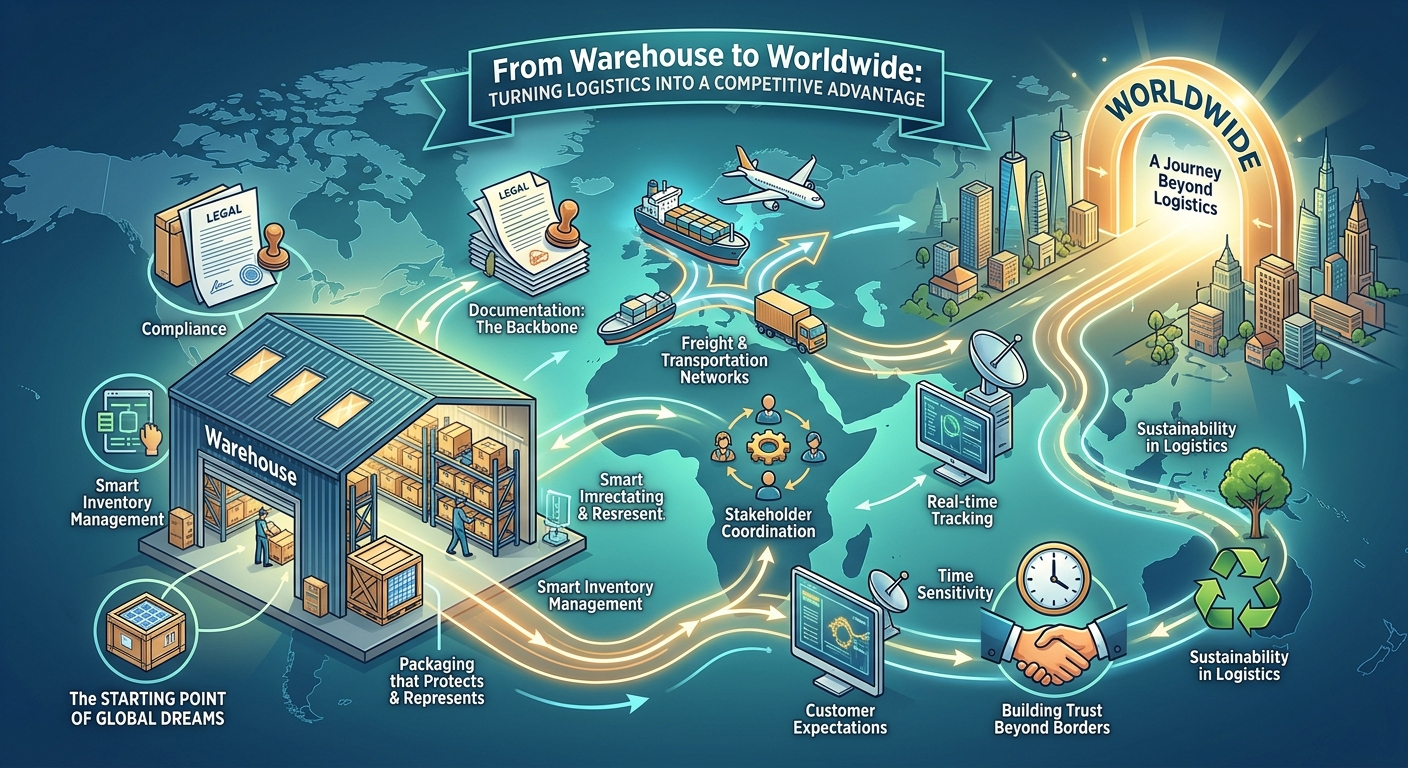
Every global journey begins somewhere, and in the world of exports, that starting point is the warehouse. What may seem like a storage facility is actually the backbone of international trade operations. A well-managed warehouse ensures that products are stored safely, organized efficiently, and prepared for dispatch without delays. It acts as a control centre where quality checks, sorting, and dispatch planning take place. For many businesses, the transformation from local supplier to global exporter begins right here.
2. Smart Inventory Management: The First Step to Efficiency:
Efficient inventory management is critical for smooth export operations. Without proper systems in place, businesses may face stock shortages, overstocking, or dispatch errors. Smart inventory practices such as real-time tracking, categorization, and demand forecasting help companies stay prepared for international orders. This not only improves operational efficiency but also enhances customer satisfaction by ensuring timely deliveries and accurate shipments.
3. Packaging That Protects and Represents:
Packaging plays a dual role in exporting. On one hand, it protects the product from damage during long-distance transportation. On the other, it represents the brand in international markets. High-quality packaging reflects professionalism and attention to detail. For exporters, especially in industries like ceramics, packaging must be strong enough to withstand handling while also visually appealing to leave a lasting impression on buyers.
4. Documentation: The Backbone of Global Trade:
Export documentation is one of the most crucial aspects of international trade. Documents such as commercial invoices, packing lists, bills of lading, and certificates of origin ensure that shipments move smoothly across borders. Any error or omission can lead to delays, penalties, or even shipment rejection. Proper documentation not only ensures compliance but also builds trust with international buyers by demonstrating professionalism and reliability.
5. Understanding International Regulations and Compliance:
Each country has its own set of rules, standards, and import regulations. Exporters must stay informed and compliant with these requirements to avoid complications. This includes product standards, labelling norms, safety certifications, and customs regulations. Understanding and adhering to these rules is essential for seamless market entry and long-term success in global trade.
6. The Role of Freight and Transportation Networks:
Choosing the right mode of transportation is a strategic decision in exporting. Whether it is sea freight for cost efficiency, air freight for speed, or land transport for regional trade, each option has its advantages. A well-planned logistics network ensures that goods reach their destination on time and in perfect condition. The right choice can significantly impact both cost and customer satisfaction.
7. Coordination Between Multiple Stakeholders:
Exporting is not a one-person operation, it involves coordination between various stakeholders. Exporters, freight forwarders, customs agents, logistics providers, and distributors all play a crucial role. Smooth communication and collaboration between these parties ensure that shipments move efficiently through every stage of the supply chain. Strong coordination minimizes errors and enhances overall performance.
8. Technology in Modern Logistics:
Technology has revolutionized the logistics industry. From real-time shipment tracking to automated warehouse systems, digital tools have made exporting more efficient and transparent. Businesses can now monitor their shipments, manage inventory, and communicate with partners across the globe with ease. Adopting modern technology not only improves efficiency but also gives companies a competitive edge.
9. Managing Risks in Global Shipping:
Global shipping comes with its own set of challenges, including delays, damages, and customs-related issues. Unexpected disruptions such as weather conditions or port congestion can also impact deliveries. Successful exporters prepare for these risks by implementing contingency plans, investing in insurance, and working with reliable logistics partners. Risk management is essential to maintain consistency and protect business interests.
10. Time Sensitivity and Delivery Commitments:
In international trade, time is everything. Meeting delivery deadlines is crucial for maintaining trust and credibility. Delays can disrupt supply chains and damage relationships with buyers. Exporters who consistently meet their commitments are more likely to build long-term partnerships and secure repeat business. Timely delivery is not just an operational goal, it is a key factor in customer satisfaction.
11. Customer Expectations in Global Markets:
Global buyers expect more than just quality products. They look for consistency, clear communication, and professional service. From order confirmation to final delivery, every interaction matter. Exporters must understand these expectations and align their processes accordingly. Providing a seamless experience builds confidence and strengthens business relationships.
12. Building Trust Beyond Borders:
Trust is the foundation of successful exporting. Reliable logistics, consistent quality, and transparent communication help build strong relationships with international clients. When buyers trust an exporter, they are more likely to continue doing business and recommend the brand to others. Over time, this trust becomes a valuable asset that drives growth and global recognition.
13. Sustainability in Logistics and Exporting:
As global awareness of environmental issues grows, sustainability has become an important aspect of logistics. Exporters are now focusing on eco-friendly packaging, reducing waste, and optimizing transportation to lower their carbon footprint. Sustainable practices not only benefit the environment but also enhance brand reputation in international markets where buyers increasingly value responsible businesses.
Conclusion: Turning Logistics into a Competitive Advantage:
The journey from warehouse to worldwide is not just about logistics, it is about strategy, efficiency, and vision. Every step, from inventory management to final delivery, plays a crucial role in shaping the success of an export business. Companies that invest in strong logistics systems, embrace technology, and prioritize customer satisfaction can transform their operations into a powerful competitive advantage.
In today’s global marketplace, logistics is no longer just a support function, it is a key driver of growth, trust, and long-term success.