

Introduction
Israel’s architectural landscape has undergone a remarkable transformation over the past decade. From contemporary urban apartments in Tel Aviv to luxurious villas overlooking the Mediterranean coast, architects and designers are increasingly embracing innovative materials that combine aesthetics, functionality, and durability. Among these materials, porcelain tiles have emerged as one of the most influential design elements shaping modern Israeli architecture.
Driven by evolving design preferences, sustainability goals, and advancements in manufacturing technology, porcelain tiles are now widely used in residential, commercial, hospitality, and public infrastructure projects across Israel. Their ability to replicate natural materials while offering superior performance makes them a preferred choice for architects and property developers seeking long-lasting and visually appealing solutions.
This article explores the latest porcelain tile trends influencing modern architecture in Israel and how these trends are transforming contemporary living and commercial spaces.
1. The Growing Role of Porcelain Tiles in Israeli Architecture
Porcelain tiles have become an essential component of modern architectural projects throughout Israel. The country’s diverse climate, ranging from coastal humidity to desert heat, demands building materials that can withstand varying environmental conditions while maintaining their appearance and structural integrity. Porcelain tiles meet these requirements exceptionally well due to their low water absorption, high durability, and resistance to wear.
Architects favour porcelain tiles because they offer versatility in both indoor and outdoor applications. Whether used in luxury residences, office buildings, hotels, shopping centers, or public spaces, porcelain surfaces provide a sophisticated aesthetic while reducing maintenance requirements. Additionally, their availability in numerous designs, textures, and formats allows designers to create distinctive architectural environments that align with contemporary Israeli lifestyles and global design standards.
2. Most Popular Tile Colours in Israel
Colour plays a significant role in Israeli architectural design, with porcelain tile selections often reflecting the country’s natural surroundings and modern urban aesthetics.
White Marble-Look Tiles
White marble-inspired porcelain tiles remain among the most sought-after choices for luxury interiors. Their bright and elegant appearance helps maximize natural light while creating a spacious and sophisticated atmosphere. These tiles are commonly used in living rooms, hotel lobbies, kitchens, and premium commercial environments.
Light Grey and Concrete-Inspired Shades
Modern Israeli apartments frequently incorporate light grey porcelain tiles that mimic concrete surfaces. These neutral tones complement minimalist interiors and provide a clean, contemporary appearance suitable for urban living spaces and office environments.
Beige and Sand-Tone Tiles
Inspired by Israel’s Mediterranean coastline and desert landscapes, beige and sand-coloured porcelain tiles bring warmth and natural character to interiors. These tones create relaxing environments while seamlessly blending with natural wood furnishings and modern décor elements.
Natural Stone-Look Surfaces
Stone-inspired porcelain tiles continue to gain popularity due to their authentic appearance and practical advantages. They replicate limestone, travertine, and other natural stones while offering greater durability and easier maintenance than traditional stone materials.
3. Large Format Tiles Dominating Modern Spaces
Large-format porcelain tiles have become a defining feature of modern Israeli architecture. Their ability to create seamless surfaces with minimal grout lines contributes to the clean and sophisticated aesthetics favoured in contemporary design.
Popular tile sizes include:
These larger formats visually expand spaces, making rooms appear more open and luxurious. Architects frequently use them in living areas, hotel projects, corporate offices, and retail environments where a sleek and uninterrupted appearance is desired. Reduced grout lines also simplify cleaning and maintenance, making large-format porcelain tiles both practical and visually appealing.
4. Marble-Look Porcelain Tiles for Luxury Interiors
Luxury residential and hospitality projects throughout Israel increasingly feature marble-look porcelain tiles inspired by renowned Italian stones such as Statuario, Calacatta, and Carrara. These designs offer the timeless beauty of natural marble without the maintenance challenges associated with genuine stone.
Marble-inspired porcelain surfaces create an atmosphere of elegance and prestige while providing superior resistance to stains, moisture, and scratches. Designers often utilize these tiles for flooring, walls, bathroom surfaces, feature walls, and luxury commercial interiors. The realistic veining patterns produced through advanced digital printing technologies further enhance their appeal, making them nearly indistinguishable from natural marble.
5. Concrete and Industrial-Inspired Tile Trends
Industrial-inspired design has become increasingly popular across Israel’s urban developments. Concrete-look porcelain tiles provide the perfect foundation for minimalist interiors that emphasize simplicity, functionality, and modern sophistication.
These tiles are widely used in apartments, creative office spaces, cafes, restaurants, and retail stores. Their neutral colour palette allows architects to incorporate bold furniture, metal accents, and contemporary lighting features while maintaining a cohesive design aesthetic. Concrete-look porcelain surfaces also deliver the durability and low-maintenance benefits required in high-traffic commercial environments.
6. Outdoor Porcelain Tiles for Mediterranean Living
Israel’s pleasant climate encourages outdoor living, making exterior design an important aspect of architectural planning. Porcelain tiles designed specifically for outdoor use have become highly popular for balconies, terraces, patios, pool decks, and entertainment areas.
Anti-slip porcelain surfaces provide safety while maintaining visual continuity with interior spaces. Their resistance to UV exposure, moisture, temperature fluctuations, and heavy foot traffic makes them ideal for outdoor applications. As homeowners increasingly invest in functional outdoor living spaces, durable porcelain solutions continue to play a vital role in modern architectural designs.
7. Sustainable and Eco-Friendly Building Materials
Sustainability has become a major focus within Israel’s construction industry. Architects and developers are increasingly selecting materials that contribute to environmentally responsible building practices while offering long-term performance.
Porcelain tiles support sustainable construction due to their exceptional durability, long lifespan, and minimal maintenance requirements. Their resistance to wear reduces the need for replacement, minimizing material waste over time. Many modern manufacturing processes also incorporate environmentally conscious production methods that reduce energy consumption and resource usage. As green building initiatives continue to expand, porcelain tiles remain an attractive solution for sustainable architectural projects.
8. Wood-Look Porcelain Tiles for Warm Contemporary Designs
Wood-look porcelain tiles offer the perfect combination of natural beauty and modern performance. These surfaces replicate the textures, grains, and tones of genuine hardwood while eliminating concerns related to moisture damage, scratching, and maintenance.
Israeli homeowners increasingly prefer wood-inspired porcelain tiles for living rooms, bedrooms, kitchens, and commercial spaces. Their warm and inviting appearance enhances contemporary interiors while maintaining the durability necessary for busy lifestyles. Available in various shades and plank sizes, wood-look porcelain collections provide versatile design possibilities suitable for both traditional and modern architectural styles.
9. Seamless Indoor-Outdoor Design Concepts
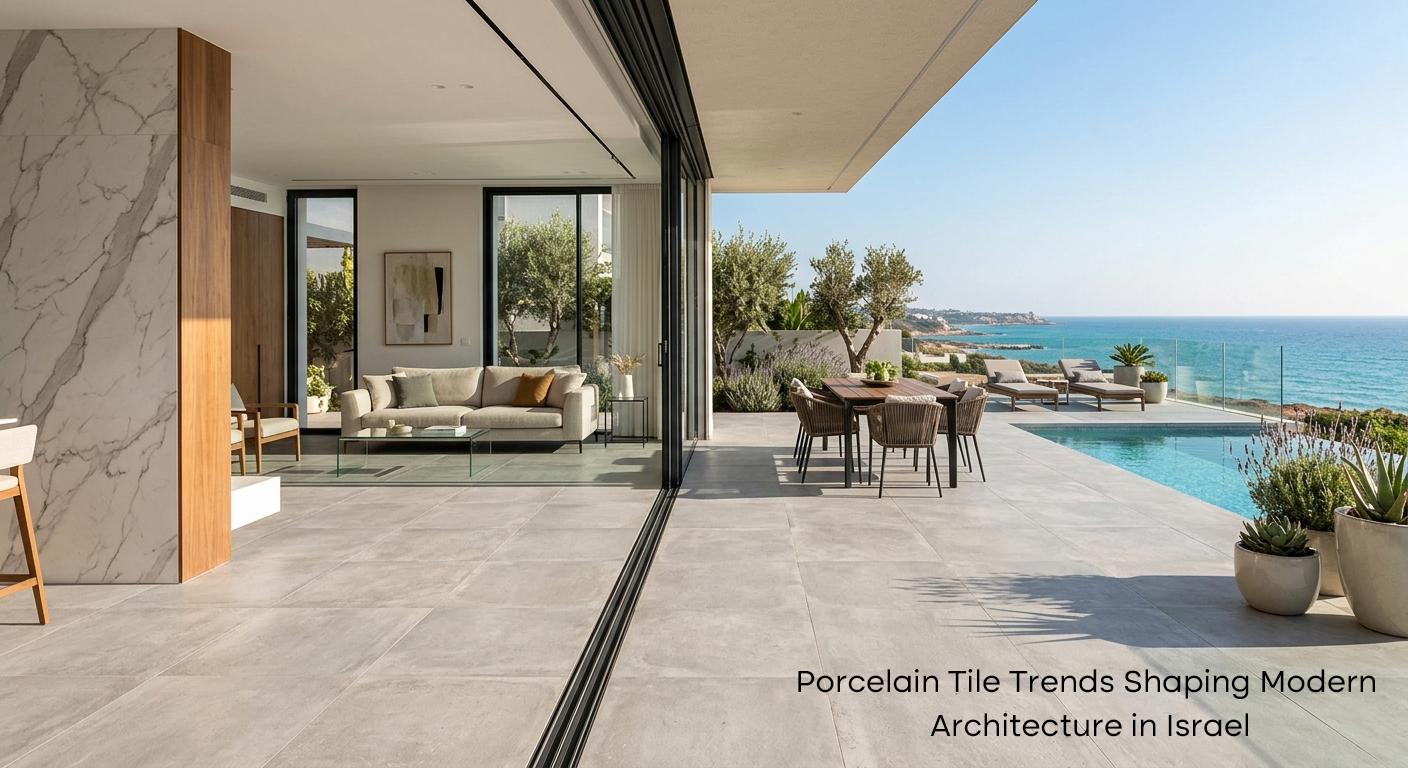
One of the most influential architectural trends in Israel involves creating a seamless connection between indoor and outdoor living areas. Porcelain tiles play a critical role in achieving this design objective.
Architects often specify matching tile collections for interior floors and exterior surfaces, allowing spaces to flow naturally from living rooms to patios and terraces. This approach visually enlarges properties while enhancing the overall user experience. By utilizing consistent colours, textures, and formats throughout the project, designers can establish harmony between architecture and surrounding landscapes, creating a unified and contemporary aesthetic.
10. Smart Surface Technologies and Easy Maintenance
Modern consumers increasingly prioritize materials that simplify daily maintenance while supporting healthier living environments. Porcelain tile manufacturers have responded by developing advanced surface technologies that enhance functionality.
Many contemporary porcelain surfaces offer stain resistance, scratch resistance, antibacterial properties, and easy-to-clean finishes. These features make porcelain tiles particularly attractive for kitchens, bathrooms, healthcare facilities, hospitality projects, and commercial spaces. The combination of durability and hygiene contributes to their growing popularity among homeowners and property developers seeking practical long-term solutions.
11. Digital Printing Technology Creating Realistic Designs
Technological innovation has revolutionized porcelain tile manufacturing. Advanced digital printing systems now enable manufacturers to reproduce highly realistic representations of natural materials with remarkable precision.
Modern porcelain collections can accurately mimic marble, stone, wood, concrete, and other architectural surfaces. Sophisticated printing techniques create detailed textures, veining patterns, colour variations, and natural imperfections that enhance authenticity. These advancements provide architects with greater design flexibility while ensuring consistent quality and performance across large-scale projects.
12. Future Tile Trends Influencing Israeli Architecture
Several emerging trends are expected to shape the next generation of architectural projects in Israel.
Ultra-Large Slabs
Large porcelain slabs continue gaining popularity for walls, flooring, countertops, and architectural cladding applications.
Sustainable Materials
Environmental responsibility will remain a driving factor in material selection and product development.
Textured Surfaces
Architects increasingly seek tactile finishes that add depth and character to modern interiors.
Minimal Grout-Line Installations
Larger formats and precision manufacturing support cleaner, more seamless visual aesthetics.
Customized Architectural Solutions
Personalized tile collections and project-specific designs are becoming increasingly desirable for distinctive architectural concepts.
13. Fea Ceramics: Delivering Premium Porcelain Tile Solutions Worldwide
Fea Ceramics has established itself as a trusted manufacturer and exporter of premium porcelain tiles designed to meet evolving global architectural requirements. The company continuously develops innovative collections that align with modern design trends while maintaining exceptional quality standards.
By combining advanced manufacturing technologies with contemporary design expertise, Fea Ceramics delivers products that satisfy the needs of architects, interior designers, distributors, and developers across international markets. The company’s commitment to quality, innovation, and customer satisfaction has contributed to its growing global reputation within the porcelain tile industry.
14. Extensive Range of Sizes, Finishes, and Designs
Fea Ceramics offers a comprehensive portfolio of porcelain tile solutions suitable for diverse architectural applications. The collection includes large-format porcelain tiles, marble-look surfaces, wood-inspired designs, stone-effect collections, and contemporary concrete finishes.
Available in multiple sizes and surface finishes, these products provide architects with extensive creative freedom when designing residential, commercial, hospitality, and public projects. Whether the objective is achieving luxury elegance, modern minimalism, or natural warmth, Fea Ceramics delivers solutions tailored to current market demands and future design trends.
15. Trusted Export Partner for International Markets
As a reliable global supplier, Fea Ceramics supports customers worldwide through consistent product quality, advanced manufacturing standards, competitive pricing, and dependable logistics services. The company’s export expertise enables seamless project execution across various international markets.
Architects, distributors, wholesalers, contractors, and project developers rely on Fea Ceramics for high-performance porcelain tile solutions that meet international quality expectations. Through continuous innovation and strong customer partnerships, the company continues expanding its presence as a preferred export partner within the global ceramic and porcelain tile industry.
Conclusion
Porcelain tiles have become one of the most influential materials shaping modern architecture in Israel. From luxurious marble-inspired interiors and minimalist concrete aesthetics to sustainable construction solutions and seamless indoor-outdoor living concepts, porcelain surfaces continue to redefine contemporary design standards. Large-format tiles, advanced digital printing technologies, eco-friendly materials, and smart surface innovations are driving the next generation of architectural developments throughout the country.
As these trends continue to evolve, manufacturers such as Fea Ceramics remain at the forefront of innovation by offering premium porcelain tile collections that meet the demands of modern architects, designers, and developers worldwide. With superior durability, aesthetic versatility, and sustainable performance, porcelain tiles will continue to play a central role in shaping Israel’s architectural future.