

Introduction:
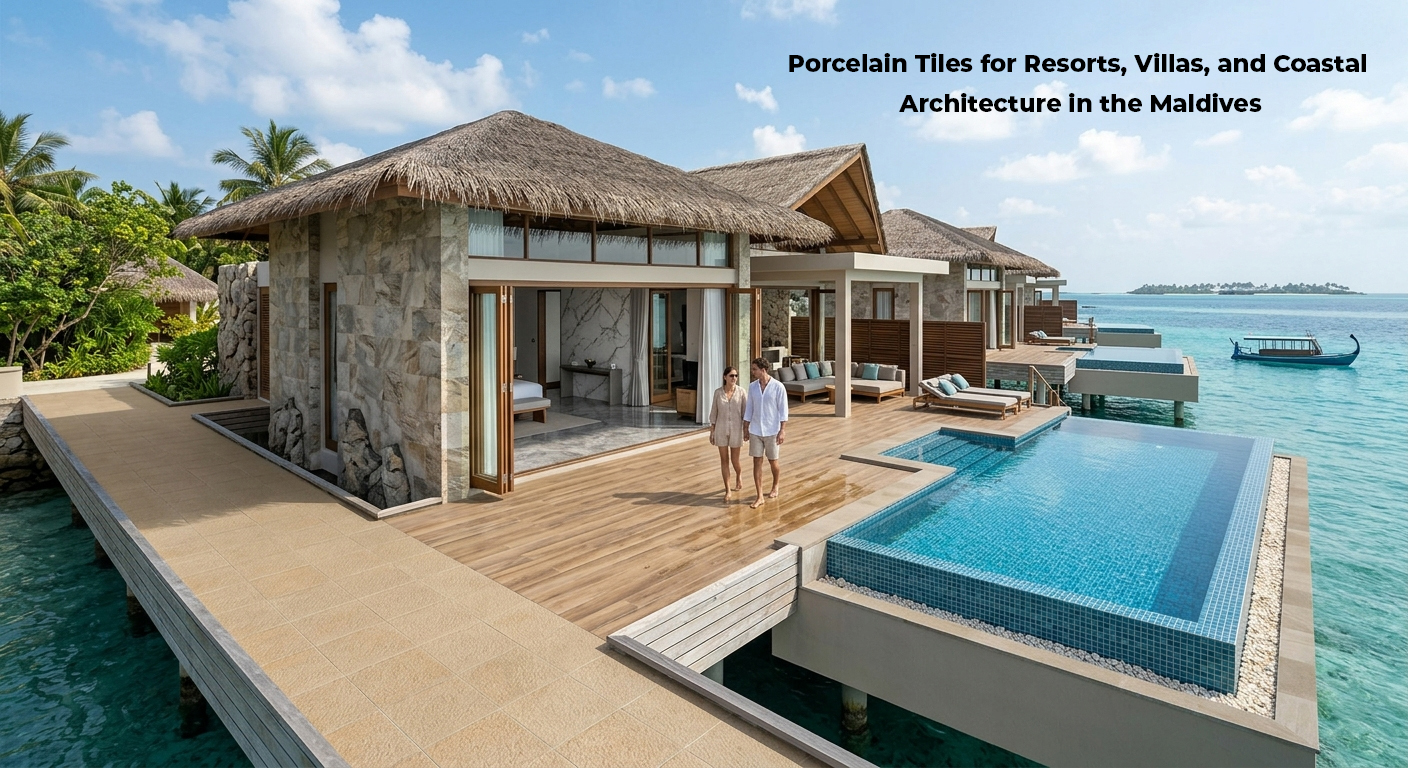
The Maldives is globally recognized for its luxury tourism, private island resorts, and breath-taking coastal architecture. With increasing demand for high-end villas, overwater bungalows, and eco-luxury resorts, the choice of construction materials plays a crucial role in both aesthetics and performance. Among all flooring and wall solutions, porcelain tiles have emerged as the most preferred option for architects and developers in tropical island environments. Their strength, elegance, and resistance to extreme coastal conditions make them ideal for resort applications. From beachfront walkways to infinity pools and luxury interiors, porcelain tiles offer a perfect blend of durability and design sophistication, enhancing both functionality and guest experience in paradise destinations.
1. Overview of luxury tourism-driven architecture in the Maldives:
The Maldives’ architectural landscape is heavily influenced by luxury tourism, which demands visually stunning and highly functional structures. Resorts and villas are designed to blend seamlessly with the natural surroundings while offering world-class comfort. This has led to the rise of modern tropical architecture that emphasizes open spaces, natural light, and ocean-facing designs. Materials used in such projects must withstand harsh marine environments while maintaining luxury appeal. Porcelain tiles play a key role in this transformation, offering both structural reliability and aesthetic refinement. Their ability to replicate natural textures like stone and wood allows architects to create immersive tropical environments without compromising durability. As tourism continues to grow, architectural innovation in the Maldives increasingly relies on advanced surfacing materials like porcelain tiles.
2. Growing demand for premium construction materials in coastal resorts:
Coastal resorts in the Maldives are experiencing rising demand for premium construction materials due to increasing guest expectations and global luxury standards. Developers are investing heavily in high-performance materials that ensure longevity and visual excellence. Traditional flooring options often fail in humid and salt-heavy environments, creating a need for more resilient solutions. Porcelain tiles have become a preferred choice because they offer unmatched strength, water resistance, and design flexibility. Luxury resorts now prioritize materials that reduce long-term maintenance costs while enhancing aesthetic appeal. This shift is also driven by the need to maintain a consistent brand image across villas, spas, and public spaces. As a result, porcelain tiles are now a core element in high-end coastal construction projects across the Maldives.
3. Why porcelain tiles are the preferred choice for tropical island projects:
Porcelain tiles are ideal for tropical island projects due to their superior performance in extreme climatic conditions. Unlike natural materials that may degrade in humidity, porcelain tiles remain stable and durable. They are manufactured at high temperatures, making them dense, non-porous, and highly resistant to water absorption. This makes them perfect for beachside resorts and overwater villas where exposure to moisture is constant. Additionally, their design versatility allows architects to achieve various aesthetic themes, from minimalist luxury to natural tropical styles. Porcelain tiles also provide long-term cost efficiency, as they require minimal maintenance and rarely need replacement. In tropical environments like the Maldives, where saltwater and humidity are persistent challenges, porcelain tiles offer a reliable and elegant solution for modern architecture.
4. Exceptional resistance to moisture, humidity, and saltwater exposure:
One of the most important advantages of porcelain tiles in coastal architecture is their exceptional resistance to moisture, humidity, and saltwater exposure. In island environments like the Maldives, materials are constantly exposed to high humidity levels and saline air, which can damage conventional flooring. Porcelain tiles, however, have a very low water absorption rate, making them highly resistant to swelling, staining, and deterioration. This ensures long-lasting performance even in bathrooms, outdoor decks, and beachfront areas. Their dense composition prevents salt crystals from penetrating the surface, reducing corrosion risks. This durability makes them especially suitable for luxury resorts where maintaining pristine aesthetics is essential. As a result, porcelain tiles are widely used in areas exposed directly to ocean conditions.
5. Anti-slip surface properties for safety in pool and beachfront areas:
Safety is a critical factor in resort design, especially in pool decks, spa areas, and beachfront walkways. Porcelain tiles offer advanced anti-slip surface properties that enhance guest safety without compromising design appeal. Special textured finishes and matte surfaces are engineered to provide better grip even when wet. This reduces the risk of slipping accidents in high-traffic wet zones, making them ideal for luxury hospitality environments. In the Maldives, where water-based activities are central to the guest experience, this feature is highly valuable. Architects often select porcelain tiles specifically designed for outdoor safety applications. These tiles maintain their slip resistance even under constant exposure to water, ensuring both safety and aesthetic consistency across resort landscapes.
6. High durability under constant foot traffic in resorts and villas:
Luxury resorts and villas in the Maldives experience continuous foot traffic from guests, staff, and service operations. Therefore, flooring materials must be highly durable and resistant to wear and tear. Porcelain tiles are engineered to withstand heavy loads and constant movement without losing their finish or structural integrity. Unlike softer materials, they do not scratch or fade easily, ensuring long-lasting visual appeal. This makes them ideal for lobbies, corridors, restaurants, and outdoor pathways. Their strength also reduces the need for frequent repairs or replacements, which is essential for operational efficiency in hospitality environments. Over time, this durability translates into cost savings while maintaining a premium appearance throughout the property.
7. Heat resistance performance under strong tropical sun conditions:
The Maldives experiences intense tropical sunlight, which can significantly affect outdoor surfaces. Porcelain tiles offer excellent heat resistance, making them suitable for sun-exposed areas such as pool decks, terraces, and outdoor lounges. Unlike materials that absorb excessive heat, many porcelain tile variants are designed to remain relatively cool under direct sunlight. This improves comfort for barefoot guests in resort environments. Additionally, porcelain does not warp or degrade under UV exposure, ensuring long-term stability and colour retention. This makes it an ideal material for luxury resorts that require both performance and guest comfort. Its ability to withstand extreme heat conditions ensures consistent functionality throughout the year.
8. Low maintenance requirements for luxury hospitality environments:
Maintenance efficiency is a major priority in luxury hospitality operations. Porcelain tiles are highly valued for their low maintenance requirements, making them ideal for resorts and villas in the Maldives. Their non-porous surface prevents dirt, stains, and moisture from penetrating, allowing easy cleaning with minimal effort. This reduces the need for expensive maintenance teams and specialized cleaning chemicals. In high-end resorts, where cleanliness and presentation are critical, porcelain tiles help maintain a flawless appearance with minimal upkeep. This efficiency allows staff to focus more on guest services rather than maintenance tasks. Over time, this significantly reduces operational costs while ensuring consistent luxury standards.
9. Aesthetic versatility: modern, minimal, and natural design options:
Porcelain tiles offer unmatched aesthetic versatility, making them suitable for a wide range of architectural styles in the Maldives. Designers can choose from modern glossy finishes, minimal matte textures, or natural stone-inspired surfaces. This flexibility allows seamless integration into luxury resorts, beach villas, and spa environments. Whether the goal is a contemporary minimalist design or a tropical natural theme, porcelain tiles can achieve the desired look. Advanced printing technology enables highly realistic patterns that replicate marble, wood, and coral stone. This helps architects maintain visual harmony with the island’s natural surroundings while delivering a premium interior experience.
10. Use of wood-look porcelain tiles for tropical villa interiors:
Wood-look porcelain tiles are widely used in tropical villa interiors across the Maldives. They offer the warm and natural appearance of real wood while eliminating common issues such as warping, rotting, and termite damage. This makes them ideal for humid island environments where natural wood may not perform well. These tiles create a cozy, organic ambiance that blends perfectly with beachfront and jungle-inspired villa designs. They are commonly used in bedrooms, living areas, and spa-inspired bathrooms. Additionally, they require far less maintenance compared to real wood flooring, making them a practical yet luxurious choice for high-end hospitality projects.
11. Stone-look porcelain tiles for natural island-inspired architecture:
Stone-look porcelain tiles are essential in creating natural island-inspired architecture in the Maldives. They replicate the appearance of limestone, basalt, and coral stone commonly found in coastal landscapes. This allows architects to design structures that visually connect with the surrounding environment. These tiles are often used in exterior facades, pathways, and resort lobbies to create a grounded, earthy aesthetic. Their durability ensures they can withstand harsh marine conditions without losing texture or colour. Stone-look porcelain tiles provide the perfect balance between natural beauty and modern engineering, making them a preferred choice for luxury island developments.
12. Large-format tiles for seamless luxury flooring and wall cladding:
Large-format porcelain tiles are increasingly used in luxury resort architecture to create seamless and elegant surfaces. These tiles reduce grout lines, resulting in a cleaner and more expansive visual effect. In Maldives resorts, where open and uninterrupted views are essential, large tiles enhance spatial perception and luxury appeal. They are commonly used in lobby floors, infinity pool decks, and feature walls. Their installation creates a smooth, continuous surface that reflects modern architectural trends. Additionally, large-format tiles contribute to easier maintenance and improved hygiene, making them highly practical for high-traffic hospitality environments.
13. Applications in infinity pools, spa zones, and outdoor lounges:
Porcelain tiles are extensively used in infinity pools, spa zones, and outdoor lounges in Maldives resorts. Their water resistance and anti-slip properties make them ideal for wet and semi-wet environments. In infinity pools, they create a visually seamless transition between water and horizon, enhancing the luxury experience. In spa areas, their calming textures and natural finishes contribute to a relaxing atmosphere. Outdoor lounges benefit from their durability and aesthetic flexibility, allowing designers to create elegant and comfortable guest spaces. These applications highlight the versatility of porcelain tiles in enhancing both functionality and visual appeal in resort environments.
14. Sustainable construction benefits and eco-friendly building solutions:
Sustainability is becoming increasingly important in Maldives construction projects. Porcelain tiles contribute to eco-friendly building practices due to their long lifespan and low environmental impact during maintenance. Their durability reduces the need for frequent replacements, minimizing waste generation. Many modern porcelain tiles are also manufactured using sustainable processes and recyclable materials. In luxury resorts, this aligns with global eco-tourism standards and green building certifications. By choosing porcelain tiles, developers can reduce environmental impact while maintaining high design standards. This makes them a responsible choice for sustainable island development.
15. Enhancing guest experience through elegant and long-lasting surfaces:
Guest experience is the core focus of luxury resorts in the Maldives, and interior design plays a crucial role in shaping it. Porcelain tiles enhance this experience by providing elegant, comfortable, and visually appealing surfaces throughout the property. Their smooth textures, natural designs, and durability contribute to a sense of luxury and relaxation. Guests enjoy consistent beauty across rooms, outdoor spaces, and recreational areas. Additionally, their low maintenance ensures that resorts always maintain a pristine appearance. This combination of beauty, comfort, and reliability significantly elevates the overall guest experience.
Conclusion:
Porcelain tiles have become an essential material in the development of luxury resorts, villas, and coastal architecture in the Maldives. Their unmatched durability, moisture resistance, aesthetic versatility, and low maintenance requirements make them ideal for tropical island environments. From infinity pools to private villas and spa zones, they enhance both functionality and visual appeal. As the Maldives continues to grow as a global luxury tourism destination, porcelain tiles will remain a key element in shaping sustainable, elegant, and high-performance architectural designs that elevate guest experiences to world-class standards.